


Search
-
HVAC Equipment
-
Ductless Mini Splits
- Ductless Mini Splits
- Shop By Zone
- Shop by BTU
- Shop By Brand
- Components
- Accessories
-
HVAC Parts & Supplies
- HVAC Parts & Supplies
- HVAC Supplies
- HVAC Tools
-
HVAC Replacement Parts
- Blower Housing & Assemblies
- Blower Wheels
- Breakers, Contactors & Disconnects
- Capacitors & Transformers
- Control & Circuit Boards
- Filter Driers & Accumulators
- Gas Valves & Conversion Kits
- Heat Exchangers
- Thermal Expansion Valves (TXV)
- Temperature Controls
- Wall Brackets & Parts
- Miscellaneous Parts
- O-Rings & Gaskets
- Hydronics
- Motors
- Thermostats & Zoning
-
Plumbing
-
Pool
-
Electrical
-
Air Quality
-
Tools & Supplies
-
Door Security & Hardware


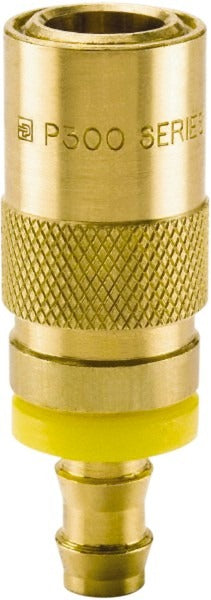
Parker PC316-BP 90 Deg Push-lok Hose Barb Coupler 200 Psi
Availability:
Out Of Stock
- $56.95
- $56.95
- Unit price
- / per
✓
Better Price in Cart
Manufacturer pricing rules prevent us from advertising our discount — no account or email required to see it.

Secure Payments
-
Easy Returns
-
Expert Advice
-
Fast Shipping
Product Description
The PARKER PC316-BP is a 90-degree Push-Lok hose barb coupler rated for 200 psi service. Part of the Moldmate series, this non-valved, non-threaded brass fitting is designed for push-on hose assembly without the need for clamps or additional tooling. It features a 3/8-inch body diameter and a 3/8-inch hose diameter, making it a compact, direct-connect solution. The brass construction supports a working temperature range of -20 degrees F to 400 degrees F. Licensed plumbers, hydraulic system technicians, and fluid-handling professionals install this type of fitting in low-to-medium-pressure fluid lines across a range of light industrial and OEM applications.
This coupler is suited for use in hydraulic hose assemblies where a 90-degree change in flow direction is required at a barbed connection point. The Push-Lok design accepts standard Push-Lok hose, seating securely under line pressure without additional clamps. Its non-valved configuration means flow is open through the fitting without any internal shutoff mechanism. Typical applications include light hydraulic circuits, fluid transfer lines, and OEM equipment plumbing where the 3/8-inch hose size and 200 psi pressure rating meet system requirements.
Key Features
- 90-degree Push-Lok hose barb design for clamp-free hose assembly
- 200 psi pressure rating for light-to-medium hydraulic and fluid service
- Brass construction for corrosion resistance in fluid-handling environments
- Non-valved, non-threaded body for simplified inline installation
- Wide temperature range: -20 degrees F to 400 degrees F
- 3/8-inch body and hose diameter for direct 3/8-inch Push-Lok hose compatibility
Compatibility
Designed for use with 3/8-inch Push-Lok hose in the PARKER Moldmate series. Compatible with standard Push-Lok hose assemblies requiring a 90-degree non-valved barb coupler at 200 psi rated pressure.
Installation Notes
Installation of Push-Lok hose barb fittings is typically performed by licensed plumbers or qualified hydraulic system technicians. Before servicing any fluid line, relieve system pressure completely and isolate the affected circuit. Insert the hose end fully onto the barb until it seats against the fitting body — line pressure activates the seal, so ensure the hose is pushed on to full depth before pressurizing. Follow all applicable fluid system codes and the equipment manufacturer's guidelines for hose routing and pressure testing after assembly.
Technical Specifications

Complete your install
We pulled together the parts most installs need for this unit, plus a few add-ons worth a look. Check what you need — nothing here blocks checkout.
Loading install accessories...
Add install kit to cart
—
Related Products
- Choosing a selection results in a full page refresh.