


Search
-
HVAC Equipment
-
Ductless Mini Splits
- Ductless Mini Splits
- Shop By Zone
- Shop by BTU
- Shop By Brand
- Components
- Accessories
-
HVAC Parts & Supplies
- HVAC Parts & Supplies
- HVAC Supplies
- HVAC Tools
-
HVAC Replacement Parts
- Blower Housing & Assemblies
- Blower Wheels
- Breakers, Contactors & Disconnects
- Capacitors & Transformers
- Control & Circuit Boards
- Filter Driers & Accumulators
- Gas Valves & Conversion Kits
- Heat Exchangers
- Thermal Expansion Valves (TXV)
- Temperature Controls
- Wall Brackets & Parts
- Miscellaneous Parts
- O-Rings & Gaskets
- Hydronics
- Motors
- Thermostats & Zoning
-
Plumbing
-
Pool
-
Electrical
-
Air Quality
-
Tools & Supplies
-
Door Security & Hardware


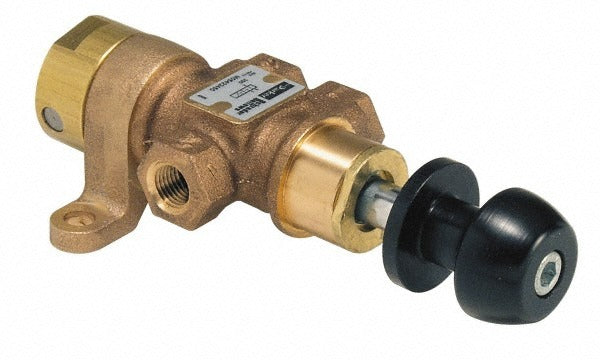
Parker M05422450 3-way Valve Knob Actuated 0.25 in Npt
Availability:
In Stock

Ships same day if ordered by 12 pm
- $352.81
- $352.81
- Unit price
- / per
✓
Better Price in Cart
Manufacturer pricing rules prevent us from advertising our discount — no account or email required to see it.
-
Secure Payments
-
Easy Returns
-
Expert Advice
-
Fast Shipping
Product Description
The PARKER M05422450 is a manually operated directional control valve designed for pneumatic or hydraulic circuit applications requiring precise, repeatable flow switching. Built around a 3-way, 2-position detent design with knob actuation, this valve stays in its selected position until the operator manually shifts it again. The ball detent return mechanism eliminates the need for continuous operator input, making it well suited for panel-mounted control stations. The 0.25 inch NPT outlet and a CV rating of 2.4 accommodate moderate flow demands in compact system configurations. Installation is handled by qualified fluid power technicians or licensed plumbers depending on the system type.
This valve is appropriate for use in industrial pneumatic systems, light hydraulic control panels, and process equipment where a manually selected, two-state flow path is required. The panel mounting style allows direct integration into control enclosures or machine frames. It is commonly used in applications where automated actuators are not necessary and the operator needs direct, tactile control over flow direction. The 3-way configuration supports functions such as cylinder extend-retract circuits or supply-exhaust switching depending on downstream plumbing.
Key Features
- 3-way, 2-position valve configuration supports directional flow control in pneumatic and light hydraulic circuits
- Ball detent return type holds the selected position without continuous operator force
- Knob actuator provides direct manual control at the panel
- Panel mounting style for integration into control enclosures or machine frames
- 0.25 inch NPT outlet for standard threaded pipe and fitting connections
- CV rating of 2.4 supports moderate flow capacity in compact installations
Compatibility
Designed as an OEM-style replacement or new-installation component for pneumatic or fluid power control panels requiring a panel-mount, knob-actuated 3-way directional valve with 0.25 inch NPT connections.
Installation Notes
Installation should be performed by a qualified fluid power technician or licensed tradesperson familiar with pneumatic or hydraulic system standards. Depressurize and isolate the system completely before removing any existing valve or making new connections. Apply thread sealant rated for the system fluid to all NPT connections and torque to fitting manufacturer specifications. Verify valve position and flow path labeling against the circuit diagram before returning the system to service.
Technical Specifications

Complete your install
We pulled together the parts most installs need for this unit, plus a few add-ons worth a look. Check what you need — nothing here blocks checkout.
Loading install accessories...
Add install kit to cart
—
Related Products
- Choosing a selection results in a full page refresh.