


Search
-
HVAC Equipment
-
Ductless Mini Splits
- Ductless Mini Splits
- Shop By Zone
- Shop by BTU
- Shop By Brand
- Components
- Accessories
-
HVAC Parts & Supplies
- HVAC Parts & Supplies
- HVAC Supplies
- HVAC Tools
-
HVAC Replacement Parts
- Blower Housing & Assemblies
- Blower Wheels
- Breakers, Contactors & Disconnects
- Capacitors & Transformers
- Control & Circuit Boards
- Filter Driers & Accumulators
- Gas Valves & Conversion Kits
- Heat Exchangers
- Thermal Expansion Valves (TXV)
- Temperature Controls
- Wall Brackets & Parts
- Miscellaneous Parts
- O-Rings & Gaskets
- Hydronics
- Motors
- Thermostats & Zoning
-
Plumbing
-
Pool
-
Electrical
-
Air Quality
-
Tools & Supplies
-
Door Security & Hardware


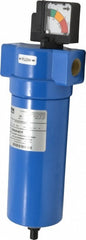
Parker HN3S-6CY Coalescing Air Filter 0.01 Micron 3/4 Npt
Availability:
In Stock

Ships same day if ordered by 12 pm
- $889.62
- $889.62
- Unit price
- / per
✓
Better Price in Cart
Manufacturer pricing rules prevent us from advertising our discount — no account or email required to see it.
-
Secure Payments
-
Easy Returns
-
Expert Advice
-
Fast Shipping
Product Description
The PARKER HN3S-6CY is a coalescing compressed air filter designed to remove oil aerosols, water mist, and submicron particulates from compressed air lines. Rated at 0.01 micron, it delivers high-efficiency filtration suitable for critical downstream equipment, instrumentation, and pneumatic tooling that cannot tolerate contamination. With a rated flow capacity of 80 SCFM and a 3/4 inch NPT port, it handles moderate to high-flow industrial and commercial compressed air systems. The automatic drain eliminates manual service intervals and reduces the risk of liquid carryover. The aluminum bowl and body construction keeps weight low while resisting corrosion from condensate and oil.
This filter is used in industrial facilities, manufacturing plants, HVAC control air systems, and compressed air distribution networks where clean, dry air is required. It is well suited for protecting pneumatic cylinders, solenoid valves, air-operated tools, and process instrumentation. The 3/4 inch NPT end connections allow direct inline installation into standard compressed air piping systems. Licensed industrial mechanics, pipefitters, and HVAC/R technicians routinely install this type of filtration equipment as part of air treatment assemblies alongside regulators and lubricators.
Key Features
- 0.01 micron coalescing filtration removes oil aerosols and fine water mist from compressed air
- 80 SCFM rated flow capacity for moderate to high-demand air systems
- 3/4 inch NPT end connections for standard inline pipe installation
- Automatic drain eliminates manual draining and reduces liquid carryover risk
- Aluminum bowl and body construction for corrosion resistance and reduced weight
- Parker Series H design for consistent OEM-level performance
Compatibility
Designed as an OEM-style inline coalescing filter for compressed air systems with 3/4 inch NPT piping connections and flow requirements up to 80 SCFM.
Installation Notes
Installation should be performed by a qualified pipefitter, industrial mechanic, or HVAC/R technician. Depressurize and lock out the compressed air system fully before installing or servicing this filter. Mount the unit vertically with the bowl facing downward to allow proper condensate drainage and ensure the automatic drain functions correctly. Follow all applicable piping codes and the system manufacturer guidelines for air treatment component placement and spacing.
Technical Specifications

Complete your install
We pulled together the parts most installs need for this unit, plus a few add-ons worth a look. Check what you need — nothing here blocks checkout.
Loading install accessories...
Add install kit to cart
—
Related Products
- Choosing a selection results in a full page refresh.