


Search
-
HVAC Equipment
-
Ductless Mini Splits
- Ductless Mini Splits
- Shop By Zone
- Shop by BTU
- Shop By Brand
- Components
- Accessories
-
HVAC Parts & Supplies
- HVAC Parts & Supplies
- HVAC Supplies
- HVAC Tools
-
HVAC Replacement Parts
- Blower Housing & Assemblies
- Blower Wheels
- Breakers, Contactors & Disconnects
- Capacitors & Transformers
- Control & Circuit Boards
- Filter Driers & Accumulators
- Gas Valves & Conversion Kits
- Heat Exchangers
- Thermal Expansion Valves (TXV)
- Temperature Controls
- Wall Brackets & Parts
- Miscellaneous Parts
- O-Rings & Gaskets
- Hydronics
- Motors
- Thermostats & Zoning
-
Plumbing
-
Pool
-
Electrical
-
Air Quality
-
Tools & Supplies
-
Door Security & Hardware


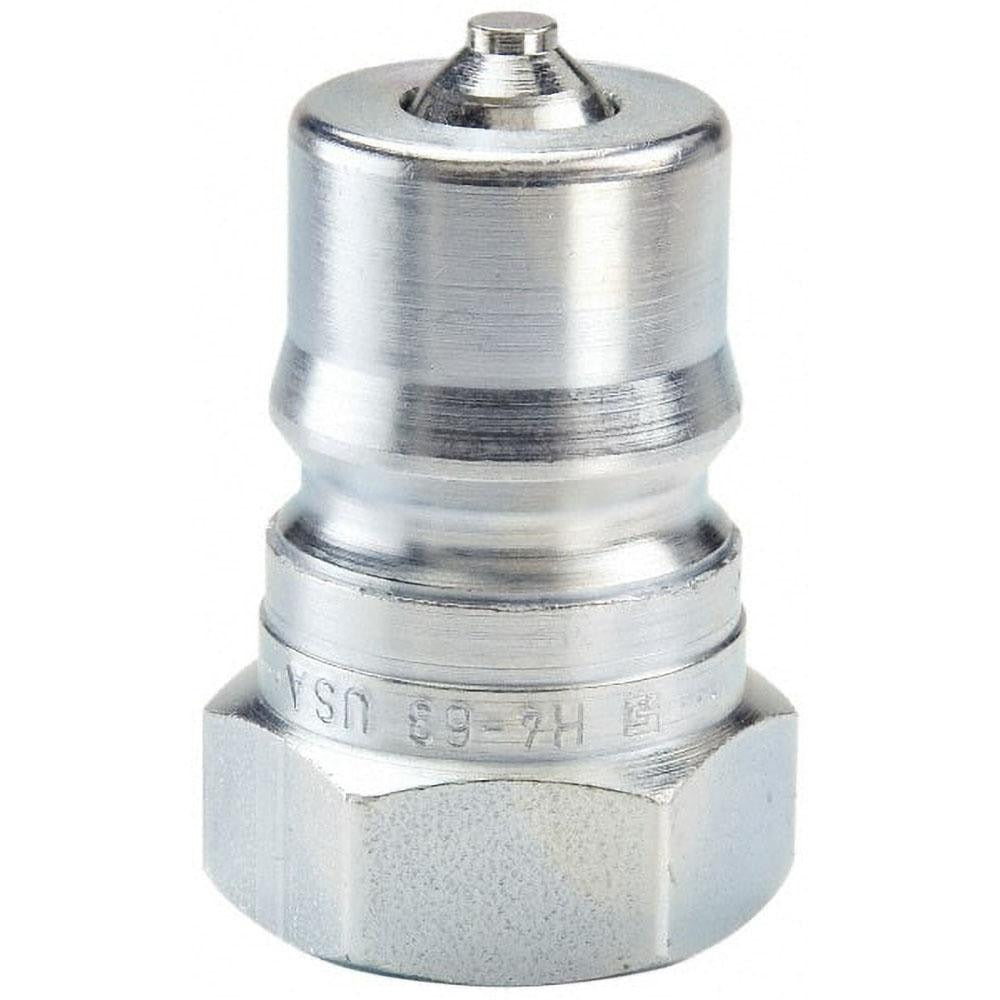

Parker H8-63-T16 Hydraulic Hose Nipple 1 in 2000 Psi
Availability:
In Stock

Ships same day if ordered by 12 pm
- $180.65
- $180.65
- Unit price
- / per
✓
Better Price in Cart
Manufacturer pricing rules prevent us from advertising our discount — no account or email required to see it.
-
Secure Payments
-
Easy Returns
-
Expert Advice
-
Fast Shipping
Product Description
The PARKER H8-63-T16 is a female straight thread nipple designed for hydraulic hose assemblies in high-pressure fluid and gas transfer systems. Built from steel with a threaded SAE ORB (O-Ring Boss) shaft connection, this fitting handles a maximum working pressure of 2,000 psi and a maximum flow rate of 50.00 GPM (189.00 LPM). The straight body profile and 1-5/16-12 thread size make it a direct, reliable interface between hose ends and hydraulic ports. Licensed hydraulic technicians and industrial maintenance professionals install this fitting across mobile equipment and stationary hydraulic circuits. It conforms to ISO 7241-1, Series B standards and is catalogued under Parker Series 60.
This fitting is suited for residential and commercial hydraulic line applications including industrial hydraulic circuits, mobile equipment hydraulics, food and chemical processing lines, gas transfer lines, and water and coolant systems. The 1 inch hose size and straight configuration make it a practical choice for straight-run connections where minimal flow restriction is critical. Technicians working on compact manifold assemblies or field hose repair will find the threaded SAE ORB interface a common and well-supported standard across most hydraulic platforms.
Key Features
- Maximum working pressure of 2,000 psi for demanding hydraulic service
- SAE ORB (O-Ring Boss) connection type provides leak-resistant sealing
- Steel construction for durability in industrial and mobile equipment environments
- Maximum flow rate of 50.00 GPM (189.00 LPM) supports high-volume hydraulic circuits
- Straight body shape simplifies inline hose-to-port installation
- Meets ISO 7241-1, Series B standards for hydraulic couplings
Compatibility
Designed for use with food and chemical processing lines, gas transfer systems, industrial hydraulic lines, mobile equipment hydraulic circuits, and water and coolant lines. Suitable for hose assemblies requiring a 1 inch hose size with a 1-5/16-12 female straight thread and SAE ORB shaft interface.
Installation Notes
Installation should be performed by a qualified hydraulic technician or industrial pipefitter. Depressurize and lock out the hydraulic system completely before removing or installing any fittings. Use appropriate thread sealant or O-ring lubrication as required by the SAE ORB specification and verify the O-ring is seated correctly before torquing. Follow applicable industry standards and equipment manufacturer guidelines for fitting assembly and system pressure testing after installation.
Technical Specifications

Complete your install
We pulled together the parts most installs need for this unit, plus a few add-ons worth a look. Check what you need — nothing here blocks checkout.
Loading install accessories...
Add install kit to cart
—
Related Products
- Choosing a selection results in a full page refresh.