


Search
-
HVAC Equipment
-
Ductless Mini Splits
- Ductless Mini Splits
- Shop By Zone
- Shop by BTU
- Shop By Brand
- Components
- Accessories
-
HVAC Parts & Supplies
- HVAC Parts & Supplies
- HVAC Supplies
- HVAC Tools
-
HVAC Replacement Parts
- Blower Housing & Assemblies
- Blower Wheels
- Breakers, Contactors & Disconnects
- Capacitors & Transformers
- Control & Circuit Boards
- Filter Driers & Accumulators
- Gas Valves & Conversion Kits
- Heat Exchangers
- Thermal Expansion Valves (TXV)
- Temperature Controls
- Wall Brackets & Parts
- Miscellaneous Parts
- O-Rings & Gaskets
- Hydronics
- Motors
- Thermostats & Zoning
-
Plumbing
-
Pool
-
Electrical
-
Air Quality
-
Tools & Supplies
-
Door Security & Hardware


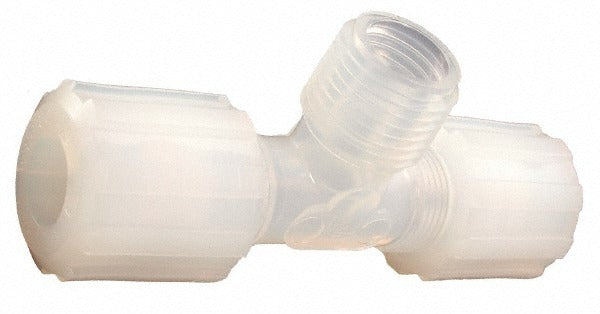
Parker FBMT-666 Compression Male Branch Tee 3/8 in
Availability:
Out Of Stock
- $139.21
- $139.21
- Unit price
- / per
✓
Better Price in Cart
Manufacturer pricing rules prevent us from advertising our discount — no account or email required to see it.

Secure Payments
-
Easy Returns
-
Expert Advice
-
Fast Shipping
Product Description
The PARKER FBMT-666 is a compression tube male branch tee designed for use in fluid handling and instrumentation tubing systems. It accepts 3/8 inch outside diameter tubing and uses a plastic grip-style compression fitting mechanism, eliminating the need for solder, flare, or thread sealant at the tube connections. The body is constructed from Perfluoroalkoxy (PFA) and Polytetrafluoroethylene (PTFE), making it suitable for applications where chemical resistance and low contamination are required. Licensed plumbers, instrumentation technicians, and industrial pipefitters install this type of fitting where a branch connection must be made off a main tubing run.
The FBMT-666 is used in laboratory, semiconductor, chemical processing, and high-purity fluid systems where PFA and PTFE materials are specified for their broad chemical compatibility and clean-room suitability. The male branch tee configuration allows a single inline run of tubing to accept a perpendicular male-threaded branch outlet, consolidating connections at one fitting. It is sold individually and is suited for both original installations and maintenance replacement of existing compression fittings in compatible tubing systems.
Key Features
- 3/8 inch tube OD compression connection on branch and run ports
- PFA and PTFE construction for broad chemical resistance and low extractables
- Plastic grip-style compression mechanism requires no solder, flare, or thread sealant at tube ports
- Male branch outlet for direct threaded connection to manifolds, valves, or instruments
- Lightweight design at 0.1 pounds, suitable for compact panel or rack installations
Compatibility
Designed as an OEM-style compression fitting replacement for instrumentation and high-purity fluid tubing systems using 3/8 inch outside diameter tubing with PFA or PTFE-compatible component requirements.
Installation Notes
Installation is performed by instrumentation technicians or licensed pipefitters familiar with compression-style tube fittings. Depressurize and drain the tubing system completely before disconnecting or installing any fitting. Ensure tube ends are cut square and deburred before insertion to achieve a leak-free compression seal. Follow applicable facility or process piping codes for high-purity or chemical service systems when selecting torque procedures and inspection intervals.
Technical Specifications

Complete your install
We pulled together the parts most installs need for this unit, plus a few add-ons worth a look. Check what you need — nothing here blocks checkout.
Loading install accessories...
Add install kit to cart
—
Related Products
- Choosing a selection results in a full page refresh.