


Search
-
HVAC Equipment
-
Ductless Mini Splits
- Ductless Mini Splits
- Shop By Zone
- Shop by BTU
- Shop By Brand
- Components
- Accessories
-
HVAC Parts & Supplies
- HVAC Parts & Supplies
- HVAC Supplies
- HVAC Tools
-
HVAC Replacement Parts
- Blower Housing & Assemblies
- Blower Wheels
- Breakers, Contactors & Disconnects
- Capacitors & Transformers
- Control & Circuit Boards
- Filter Driers & Accumulators
- Gas Valves & Conversion Kits
- Heat Exchangers
- Thermal Expansion Valves (TXV)
- Temperature Controls
- Wall Brackets & Parts
- Miscellaneous Parts
- O-Rings & Gaskets
- Hydronics
- Motors
- Thermostats & Zoning
-
Plumbing
-
Pool
-
Electrical
-
Air Quality
-
Tools & Supplies
-
Door Security & Hardware


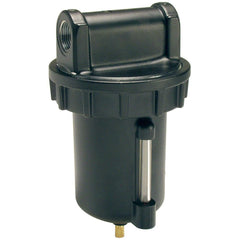
Parker F602-16WJR/M4 Compressed Air Filter 2 Inch Npt
Availability:
Out Of Stock
- $998.70
- $998.70
- Unit price
- / per
✓
Better Price in Cart
Manufacturer pricing rules prevent us from advertising our discount — no account or email required to see it.

Secure Payments
-
Easy Returns
-
Expert Advice
-
Fast Shipping
Product Description
The PARKER F602-16WJR/M4 is a heavy-duty compressed air filter designed to remove particulate contamination from compressed air systems. Rated at 1200 standard cubic feet per minute (SCFM), it handles high-flow industrial and commercial applications with a 40-micron polypropylene filter media. The 2-inch NPT port accommodates large-diameter piping commonly found in facility air distribution systems. An automatic drain removes accumulated condensate without manual intervention, and a built-in sight glass allows technicians to monitor bowl conditions at a glance. The zinc bowl construction provides durability in demanding service environments. Piping contractors, industrial maintenance technicians, and mechanical contractors typically install this filter as part of a point-of-use or main-line filtration assembly.
This filter is suited for compressed air systems in industrial plants, commercial facilities, and large mechanical rooms where high flow rates and reliable particulate removal are required. It fits into main-line compressed air distribution runs where a 2-inch NPT connection is present. The automatic drain and 16-ounce bowl capacity make it appropriate for installations where frequent manual servicing is not practical. It is typically installed upstream of air-operated equipment, pneumatic tools, or process instrumentation requiring clean, dry air.
Key Features
- 1200 SCFM flow capacity supports high-demand compressed air systems
- 40-micron polypropylene filter media removes particulate from airstream
- Automatic drain eliminates manual condensate removal between service intervals
- Integrated sight glass allows visual bowl inspection without disassembly
- Zinc bowl construction for durability in industrial service conditions
- 16-ounce bowl capacity handles significant condensate accumulation
Compatibility
Designed as an OEM-style heavy-duty compressed air filter for industrial and commercial compressed air distribution systems using 2-inch NPT piping connections.
Installation Notes
Installation should be performed by a licensed pipefitter or qualified mechanical technician. Depressurize and lock out the compressed air system completely before installing or servicing this filter. Apply thread sealant appropriate for compressed air service to all NPT connections and verify there are no leaks before returning the system to pressure. Consult applicable mechanical codes and the system design specifications for proper placement, flow direction, and service interval requirements.
Technical Specifications

Complete your install
We pulled together the parts most installs need for this unit, plus a few add-ons worth a look. Check what you need — nothing here blocks checkout.
Loading install accessories...
Add install kit to cart
—
Related Products
- Choosing a selection results in a full page refresh.