


Search
-
HVAC Equipment
-
Ductless Mini Splits
- Ductless Mini Splits
- Shop By Zone
- Shop by BTU
- Shop By Brand
- Components
- Accessories
-
HVAC Parts & Supplies
- HVAC Parts & Supplies
- HVAC Supplies
- HVAC Tools
-
HVAC Replacement Parts
- Blower Housing & Assemblies
- Blower Wheels
- Breakers, Contactors & Disconnects
- Capacitors & Transformers
- Control & Circuit Boards
- Filter Driers & Accumulators
- Gas Valves & Conversion Kits
- Heat Exchangers
- Thermal Expansion Valves (TXV)
- Temperature Controls
- Wall Brackets & Parts
- Miscellaneous Parts
- O-Rings & Gaskets
- Hydronics
- Motors
- Thermostats & Zoning
-
Plumbing
-
Pool
-
Electrical
-
Air Quality
-
Tools & Supplies
-
Door Security & Hardware


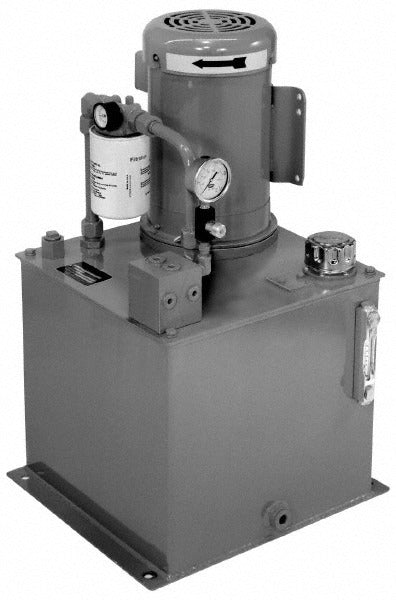
Parker D51.3DGOPO Hydraulic Power Unit 2 Hp 1.3 Gpm
Availability:
In Stock

Ships via freight in 1-3 business days
- $13,070.46
- $13,070.46
- Unit price
- / per
✓
Better Price in Cart
Manufacturer pricing rules prevent us from advertising our discount — no account or email required to see it.
LTL Delivery
This product weighs 120 lb each and will be shipped via LTL carrier. A lift gate option will be added free of charge for your convenience.
-
Secure Payments
-
Easy Returns
-
Expert Advice
-
Fast Shipping
Product Description
The PARKER D51.3DGOPO is a hydraulic power unit designed to deliver pressurized fluid flow for industrial and mobile hydraulic systems. Rated at 2 horsepower, it produces up to 2,310 psi maximum operating pressure and a flow rate of 1.3 GPM, making it suitable for powering cylinders, motors, and valves in compact hydraulic circuits. The unit runs on 208 to 230/460 volt three-phase power and draws 5.7 to 5.4 amps at 230 volts or 2.7 amps at 460 volts. It ships as a complete assembly weighing 120 pounds. Licensed hydraulic system technicians and industrial maintenance mechanics are the typical installers for this class of unit.
This hydraulic power unit fits light-to-medium duty applications where a self-contained reservoir and pump assembly is required. The 5-gallon tank provides adequate fluid volume for intermittent-duty cycles common in machine tool, lift, press, and material-handling equipment. The unit footprint measures 15 inches wide by 22.5 inches high, allowing installation in tight equipment enclosures or on mobile platforms. It is appropriate for both OEM machine builds and field replacement of failed hydraulic power assemblies in commercial and light industrial settings.
Key Features
- 2 HP motor with 208 to 230/460 volt multi-voltage input for flexible electrical integration
- 2,310 psi maximum pressure rating supports a wide range of hydraulic actuator loads
- 1.3 GPM flow rate suited to compact, low-to-medium cycle-rate hydraulic circuits
- Integrated 5-gallon reservoir keeps the assembly self-contained and reduces external plumbing
- Compact footprint of 15 inches wide by 22.5 inches high for space-constrained installations
Compatibility
Designed as an OEM-style replacement or new-installation hydraulic power unit for light-to-medium duty industrial hydraulic systems requiring a self-contained pump and reservoir assembly rated at 2 HP and up to 2,310 psi.
Installation Notes
Installation should be performed by a qualified hydraulic system technician or licensed industrial electrician familiar with fluid power systems and NEC requirements for motor branch circuits. Shut off and lock out all electrical supply and relieve system hydraulic pressure completely before disconnecting any existing unit. Verify the supply voltage matches the motor nameplate configuration before energizing. Ensure the reservoir is filled to the correct level with the appropriate hydraulic fluid type before initial startup to prevent pump cavitation damage.
Technical Specifications

Complete your install
We pulled together the parts most installs need for this unit, plus a few add-ons worth a look. Check what you need — nothing here blocks checkout.
Loading install accessories...
Add install kit to cart
—
Related Products
- Choosing a selection results in a full page refresh.