


Search
-
HVAC Equipment
-
Ductless Mini Splits
- Ductless Mini Splits
- Shop By Zone
- Shop by BTU
- Shop By Brand
- Components
- Accessories
-
HVAC Parts & Supplies
- HVAC Parts & Supplies
- HVAC Supplies
- HVAC Tools
-
HVAC Replacement Parts
- Blower Housing & Assemblies
- Blower Wheels
- Breakers, Contactors & Disconnects
- Capacitors & Transformers
- Control & Circuit Boards
- Filter Driers & Accumulators
- Gas Valves & Conversion Kits
- Heat Exchangers
- Thermal Expansion Valves (TXV)
- Temperature Controls
- Wall Brackets & Parts
- Miscellaneous Parts
- O-Rings & Gaskets
- Hydronics
- Motors
- Thermostats & Zoning
-
Plumbing
-
Pool
-
Electrical
-
Air Quality
-
Tools & Supplies
-
Door Security & Hardware


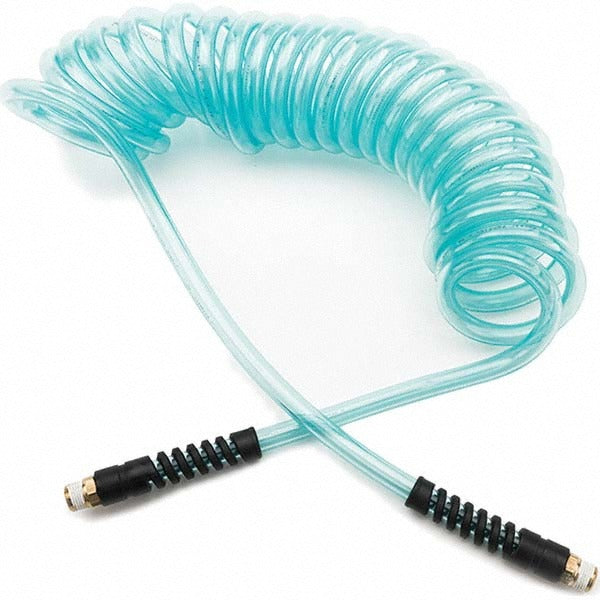
Parker 95UFS64TBL015 Coiled Hose 1/4 in Id 15 Ft Blue
Availability:
In Stock

Ships same day if ordered by 12 pm
- $109.75
- $109.75
- Unit price
- / per
✓
Better Price in Cart
Manufacturer pricing rules prevent us from advertising our discount — no account or email required to see it.
-
Secure Payments
-
Easy Returns
-
Expert Advice
-
Fast Shipping
Product Description
The PARKER 95UFS64TBL015 is a coiled self-storing polyurethane air hose rated for general-purpose pneumatic and fluid transfer applications. It features a 1/4-inch inside diameter and extends to 15 feet, retracting automatically to a compact coil when not in use. The hose operates at a maximum working pressure of 155 psi and handles temperatures from -40 degrees F to 180 degrees F. Both end fittings are brass MNPT swivel connections, making it compatible with standard 1/4-inch NPT ports. The blue polyurethane construction resists abrasion, kinking, and most shop chemicals. This hose is a practical choice for HVAC techs, plumbers, and maintenance trades who need a tidy, retractable air supply line at a workbench or service cart.
The 95UFS64TBL015 is suited for light-duty to medium-duty pneumatic service in residential and light commercial settings. Common install scenarios include compressed air drops at service benches, blow-gun stations, and portable compressor setups. The swivel fittings on both ends reduce torque stress during routing, which is especially useful in tight mechanical rooms or when connecting to a manifold. The hose is also a reasonable fit for inflation, blow-off, and low-pressure fluid transfer tasks where a self-storing coil keeps the work area organized.
Key Features
- Self-storing coil design returns hose to compact form after use, reducing trip hazards and clutter
- Polyurethane construction resists abrasion, kinking, and common shop fluids
- Brass MNPT swivel fittings on both ends allow easy connection without twisting the hose body
- 155 psi maximum working pressure suits standard shop compressor supply lines
- Wide temperature range of -40 degrees F to 180 degrees F supports year-round outdoor and indoor service
- Blue color aids quick visual identification on multi-hose setups
Compatibility
Designed as a replacement or add-on coiled air hose for pneumatic systems using standard 1/4-inch MNPT ports. Fits any compressor outlet, manifold, or tool inlet with a 1/4-inch NPT female connection.
Installation Notes
Depressurize the air supply line completely before disconnecting or connecting this hose. A licensed or qualified technician should verify that the supply pressure does not exceed the 155 psi maximum working pressure rating. Use thread sealant tape on NPT connections as required by local codes. Do not overtighten swivel fittings; hand-tighten plus a modest wrench turn is sufficient to seat the connection without damaging the brass threads.
Technical Specifications

Complete your install
We pulled together the parts most installs need for this unit, plus a few add-ons worth a look. Check what you need — nothing here blocks checkout.
Loading install accessories...
Add install kit to cart
—
Related Products
- Choosing a selection results in a full page refresh.