


Search
-
HVAC Equipment
-
Ductless Mini Splits
- Ductless Mini Splits
- Shop By Zone
- Shop by BTU
- Shop By Brand
- Components
- Accessories
-
HVAC Parts & Supplies
- HVAC Parts & Supplies
- HVAC Supplies
- HVAC Tools
-
HVAC Replacement Parts
- Blower Housing & Assemblies
- Blower Wheels
- Breakers, Contactors & Disconnects
- Capacitors & Transformers
- Control & Circuit Boards
- Filter Driers & Accumulators
- Gas Valves & Conversion Kits
- Heat Exchangers
- Thermal Expansion Valves (TXV)
- Temperature Controls
- Wall Brackets & Parts
- Miscellaneous Parts
- O-Rings & Gaskets
- Hydronics
- Motors
- Thermostats & Zoning
-
Plumbing
-
Pool
-
Electrical
-
Air Quality
-
Tools & Supplies
-
Door Security & Hardware


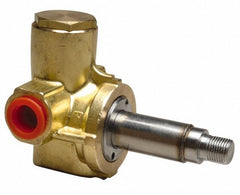
Parker 73212BN63N00 Solenoid Valve 1 Inch Nc Brass
Availability:
In Stock

Ships same day if ordered by 12 pm
- $525.87
- $525.87
- Unit price
- / per
✓
Better Price in Cart
Manufacturer pricing rules prevent us from advertising our discount — no account or email required to see it.
-
Secure Payments
-
Easy Returns
-
Expert Advice
-
Fast Shipping
Product Description
The PARKER 73212BN63N00 is a normally closed solenoid valve designed for fluid control applications in industrial, HVAC, and process piping systems. It features a 1-inch port with a matching 1-inch orifice and a Cv factor of 11.0, making it suitable for moderate to high flow applications. The brass body offers solid corrosion resistance for water and compatible fluid service, while the NBR seal provides reliable performance across a broad range of media. This valve requires a separately sourced integrated coil to complete the assembly and is typically installed by licensed plumbers, pipefitters, or HVAC technicians working on fluid or refrigerant control circuits.
This solenoid valve is well suited for residential and light commercial systems where automated on/off fluid control is needed. Common install scenarios include hydronic heating systems, water supply shutoffs, irrigation controls, and industrial process lines. The normally closed design means the valve defaults to the closed position when de-energized, which is the preferred fail-safe configuration in most fluid control and safety shutoff applications. A minimum operating pressure differential of 5 psi is required for proper operation.
Key Features
- Normally closed (NC) unactuated state for fail-safe fluid shutoff
- 1-inch port and 1-inch orifice with a Cv factor of 11.0 for strong flow capacity
- Brass body construction for durability in water and compatible fluid service
- NBR seal material compatible with a wide range of media including water and light oils
- Maximum operating temperature of 185 degrees F
- Requires a separately integrated coil — valve body only as supplied
Compatibility
Designed as an OEM-style solenoid valve body for 1-inch port fluid control applications; a compatible integrated coil must be sourced separately to complete the valve assembly.
Installation Notes
Installation should be performed by a licensed plumber, pipefitter, or qualified HVAC technician in accordance with applicable local codes and IFGC or IPC requirements. Shut off system pressure and de-energize all related circuits before beginning installation or service. Confirm coil voltage compatibility before connecting the integrated coil to the valve body. Do not exceed the rated maximum operating temperature of 185 degrees F or operate below the minimum pressure differential of 5 psi.
WARNING: This product can expose you to chemicals including lead, which are known to the State of California to cause cancer and birth defects or other reproductive harm. For more information go to www.P65Warnings.ca.gov.
Technical Specifications

Complete your install
We pulled together the parts most installs need for this unit, plus a few add-ons worth a look. Check what you need — nothing here blocks checkout.
Loading install accessories...
Add install kit to cart
—
Related Products
- Choosing a selection results in a full page refresh.