


Search
-
HVAC Equipment
-
Ductless Mini Splits
- Ductless Mini Splits
- Shop By Zone
- Shop by BTU
- Shop By Brand
- Components
- Accessories
-
HVAC Parts & Supplies
- HVAC Parts & Supplies
- HVAC Supplies
- HVAC Tools
-
HVAC Replacement Parts
- Blower Housing & Assemblies
- Blower Wheels
- Breakers, Contactors & Disconnects
- Capacitors & Transformers
- Control & Circuit Boards
- Filter Driers & Accumulators
- Gas Valves & Conversion Kits
- Heat Exchangers
- Thermal Expansion Valves (TXV)
- Temperature Controls
- Wall Brackets & Parts
- Miscellaneous Parts
- O-Rings & Gaskets
- Hydronics
- Motors
- Thermostats & Zoning
-
Plumbing
-
Pool
-
Electrical
-
Air Quality
-
Tools & Supplies
-
Door Security & Hardware


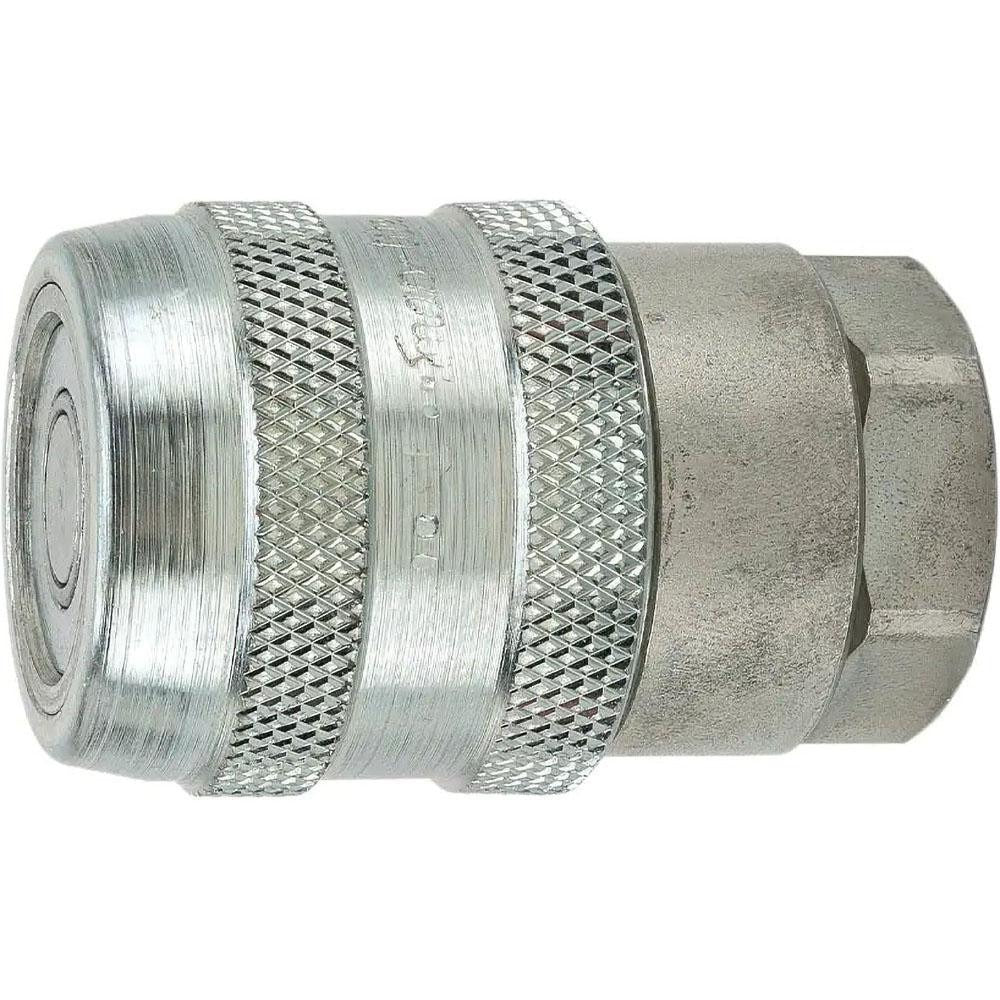

Parker 71-3C16-20F Hydraulic Hose Valve Fitting 7500 Psi
Availability:
Out Of Stock
- $470.12
- $470.12
- Unit price
- / per
✓
Better Price in Cart
Manufacturer pricing rules prevent us from advertising our discount — no account or email required to see it.

Secure Payments
-
Easy Returns
-
Expert Advice
-
Fast Shipping
Product Description
The PARKER 71-3C16-20F is a straight hydraulic hose valve fitting designed for high-pressure industrial fluid power systems. Built from steel with a threaded NPT connection, it provides a reliable interface between hydraulic hose assemblies and valve ports. Rated to 7,500 psi maximum working pressure, this Series 71 fitting handles demanding duty cycles without deformation or leakage. It accommodates a 1 inch hose size and a 1-1/4 inch NPT thread, with an overall installed length of 3.32 inches. Licensed hydraulic technicians and industrial mechanics install this type of fitting during hose assembly fabrication or system maintenance.
This fitting is suited for industrial hydraulic lines and off-shore drilling applications where consistent pressure integrity is critical. The straight configuration simplifies routing in tight plumbing layouts where angled fittings are not required. Its steel construction and NPT thread form make it compatible with standard hydraulic valve bodies and manifold ports found in mobile equipment, stationary power units, and marine hydraulic systems. It is sold individually, making it practical for single-hose repair work or new assembly builds.
Key Features
- 7,500 psi maximum working pressure for high-demand hydraulic circuits
- Steel construction provides durability in industrial and offshore environments
- NPT threaded connection type for standard valve and manifold port fitment
- Straight shape simplifies hose routing without added angular offset
- Operating temperature range of -35 degrees F to 250 degrees F
- Overall length of 3.32 inches keeps installation profile compact
Compatibility
Designed for use with industrial hydraulic lines and off-shore drilling applications per Parker Series 71 specifications. Fits 1 inch hydraulic hose with a 1-1/4 inch NPT threaded valve or manifold port connection.
Installation Notes
Installation should be performed by a qualified hydraulic technician or industrial mechanic familiar with high-pressure fluid power systems. Depressurize and isolate the hydraulic circuit fully before removing or installing any fitting, and confirm the system is at zero pressure before breaking a connection. NPT threads require proper thread sealant applied per the fitting manufacturer guidance — do not overtighten, as NPT is a tapered thread and excess torque can crack the port boss. Verify hose end preparation and ensure the mating hose end is correctly swaged or crimped before pressurizing the assembly.
Technical Specifications

Complete your install
We pulled together the parts most installs need for this unit, plus a few add-ons worth a look. Check what you need — nothing here blocks checkout.
Loading install accessories...
Add install kit to cart
—
Related Products
- Choosing a selection results in a full page refresh.