


Search
-
HVAC Equipment
-
Ductless Mini Splits
- Ductless Mini Splits
- Shop By Zone
- Shop by BTU
- Shop By Brand
- Components
- Accessories
-
HVAC Parts & Supplies
- HVAC Parts & Supplies
- HVAC Supplies
- HVAC Tools
-
HVAC Replacement Parts
- Blower Housing & Assemblies
- Blower Wheels
- Breakers, Contactors & Disconnects
- Capacitors & Transformers
- Control & Circuit Boards
- Filter Driers & Accumulators
- Gas Valves & Conversion Kits
- Heat Exchangers
- Thermal Expansion Valves (TXV)
- Temperature Controls
- Wall Brackets & Parts
- Miscellaneous Parts
- O-Rings & Gaskets
- Hydronics
- Motors
- Thermostats & Zoning
-
Plumbing
-
Pool
-
Electrical
-
Air Quality
-
Tools & Supplies
-
Door Security & Hardware


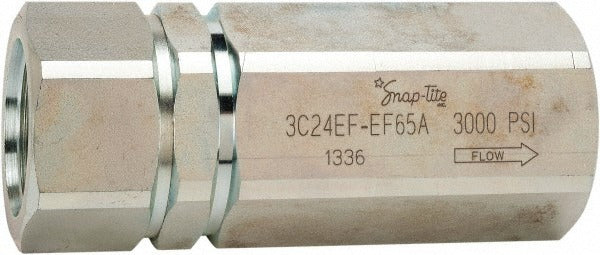
Parker 3C20EF-EF5 Hydraulic Check Valve 90 Gpm 3000 Psi
Availability:
In Stock

Ships same day if ordered by 12 pm
- $391.20
- $391.20
- Unit price
- / per
✓
Better Price in Cart
Manufacturer pricing rules prevent us from advertising our discount — no account or email required to see it.
-
Secure Payments
-
Easy Returns
-
Expert Advice
-
Fast Shipping
Product Description
The PARKER 3C20EF-EF5 is a hydraulic control check valve designed to allow flow in one direction while preventing backflow in hydraulic systems. Built from steel with fluorocarbon seals, it handles a maximum working pressure of 3000 psi and a maximum flow rate of 90 GPM. The 1-5/8-12 female SAE threaded inlet provides a secure, leak-resistant connection compatible with standard hydraulic plumbing. At 5.76 inches in overall length and 2 inches in both width and height, the unit is compact enough for installation in tight hydraulic manifold assemblies or inline plumbing runs. This valve is installed by hydraulic system technicians and industrial maintenance professionals working on mobile or stationary hydraulic equipment.
The 3C20EF-EF5 is suited for use in industrial and mobile hydraulic circuits where controlled unidirectional flow and backflow prevention are required. Typical applications include hydraulic cylinders, motor circuits, and pressure-holding systems operating at or below 3000 psi. The female SAE thread standard makes it a straightforward fit for existing hydraulic plumbing that uses SAE straight-thread or compatible fittings. The fluorocarbon seal material offers resistance to a wide range of hydraulic fluids, making it appropriate for systems using petroleum-based or synthetic hydraulic oil.
Key Features
- Maximum working pressure of 3000 psi for high-pressure hydraulic circuit use
- Maximum flow rate of 90 GPM supports high-volume hydraulic applications
- 1-5/8-12 female SAE threaded inlet for standard hydraulic plumbing connections
- Steel body construction for durability in demanding industrial environments
- Fluorocarbon seals provide compatibility with petroleum-based and synthetic hydraulic fluids
- Compact envelope at 5.76 inches long, 2 inches wide, and 2 inches tall
Compatibility
Designed as an OEM-style replacement or direct-install control check valve for hydraulic systems utilizing 1-5/8-12 female SAE threaded connections and operating within 90 GPM and 3000 psi ratings.
Installation Notes
Installation should be performed by a qualified hydraulic technician. Depressurize and isolate the hydraulic circuit fully before removing any fittings or installing this valve. Verify that the system fluid type is compatible with fluorocarbon seal material prior to installation. Torque all fittings according to the equipment manufacturer specifications and inspect for leaks before returning the system to service.
Technical Specifications

Complete your install
We pulled together the parts most installs need for this unit, plus a few add-ons worth a look. Check what you need — nothing here blocks checkout.
Loading install accessories...
Add install kit to cart
—
Related Products
- Choosing a selection results in a full page refresh.