


Search
-
HVAC Equipment
-
Ductless Mini Splits
- Ductless Mini Splits
- Shop By Zone
- Shop by BTU
- Shop By Brand
- Components
- Accessories
-
HVAC Parts & Supplies
- HVAC Parts & Supplies
- HVAC Supplies
- HVAC Tools
-
HVAC Replacement Parts
- Blower Housing & Assemblies
- Blower Wheels
- Breakers, Contactors & Disconnects
- Capacitors & Transformers
- Control & Circuit Boards
- Filter Driers & Accumulators
- Gas Valves & Conversion Kits
- Heat Exchangers
- Thermal Expansion Valves (TXV)
- Temperature Controls
- Wall Brackets & Parts
- Miscellaneous Parts
- O-Rings & Gaskets
- Hydronics
- Motors
- Thermostats & Zoning
-
Plumbing
-
Pool
-
Electrical
-
Air Quality
-
Tools & Supplies
-
Door Security & Hardware


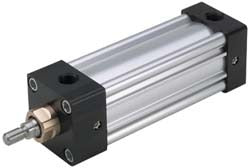
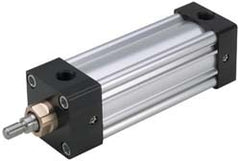
Parker 3.25TEF4MAU14A03.00 Rodless Air Cylinder 3-1/4 in
Availability:
In Stock

Ships same day if ordered by 12 pm
- $467.96
- $467.96
- Unit price
- / per
✓
Better Price in Cart
Manufacturer pricing rules prevent us from advertising our discount — no account or email required to see it.
-
Secure Payments
-
Easy Returns
-
Expert Advice
-
Fast Shipping
Product Description
The PARKER 3.25TEF4MAU14A03.00 is a double acting rodless air cylinder designed for pneumatic linear motion applications in industrial and automation systems. It features a 3-1/4 inch bore and a 3 inch stroke, with a maximum working pressure rating of 250 psi. The aluminum body keeps weight manageable at 9 pounds while providing the structural integrity needed for demanding duty cycles. The cylinder uses a 1/2 NPTF port and a 3/4-16 female rod thread. Nitrile butadiene rubber (NBR) seals provide reliable performance across standard compressed-air service conditions. Licensed pneumatic technicians and industrial maintenance professionals are the typical installers of this component.
This cylinder is suited for use in factory automation, material handling, conveyor systems, and general industrial machinery where a compact, rodless design is required. The basic mount style allows for flexible integration into custom machine frames and fixtures. With an overall length of 7-1/4 inches and an overall width of 3-3/4 inches, it fits space-constrained installations where a traditional rod cylinder would not be practical. The double acting configuration allows air pressure to drive the carriage in both directions, making it appropriate for applications requiring controlled bidirectional force output.
Key Features
- Double acting operation provides powered movement in both extend and retract directions
- 3-1/4 inch bore delivers substantial force output at standard shop air pressures up to 250 psi
- Aluminum body construction reduces overall assembly weight while maintaining structural durability
- NBR seals compatible with standard compressed-air service and typical lubricated air lines
- 1/2 NPTF port integrates directly with standard industrial pneumatic plumbing
- Basic mount style supports custom mounting configurations in machine frames and fixtures
Compatibility
Designed as an OEM-style pneumatic cylinder for industrial automation and machine-building applications requiring a double acting rodless air cylinder with a 3-1/4 inch bore and basic mount configuration.
Installation Notes
Installation should be performed by a qualified pneumatic or industrial maintenance technician. Depressurize the air supply and bleed all downstream pressure before removing or installing the cylinder. Verify that supply air is clean, dry, and filtered to the system requirements before connecting to the 1/2 NPTF port. Secure all mounting hardware to the machine frame before returning the system to pressure, and confirm that the stroke path is free of obstructions prior to commissioning.
Technical Specifications

Complete your install
We pulled together the parts most installs need for this unit, plus a few add-ons worth a look. Check what you need — nothing here blocks checkout.
Loading install accessories...
Add install kit to cart
—
Related Products
- Choosing a selection results in a full page refresh.