


Search
-
HVAC Equipment
-
Ductless Mini Splits
- Ductless Mini Splits
- Shop By Zone
- Shop by BTU
- Shop By Brand
- Components
- Accessories
-
HVAC Parts & Supplies
- HVAC Parts & Supplies
- HVAC Supplies
- HVAC Tools
-
HVAC Replacement Parts
- Blower Housing & Assemblies
- Blower Wheels
- Breakers, Contactors & Disconnects
- Capacitors & Transformers
- Control & Circuit Boards
- Filter Driers & Accumulators
- Gas Valves & Conversion Kits
- Heat Exchangers
- Thermal Expansion Valves (TXV)
- Temperature Controls
- Wall Brackets & Parts
- Miscellaneous Parts
- O-Rings & Gaskets
- Hydronics
- Motors
- Thermostats & Zoning
-
Plumbing
-
Pool
-
Electrical
-
Air Quality
-
Tools & Supplies
-
Door Security & Hardware


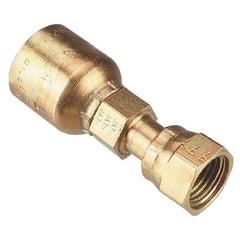
Parker 1JS43-10-10 Female Seal-lok Swivel Fitting 5/8 in
Availability:
In Stock

Ships same day if ordered by 12 pm
- $78.71
- $78.71
- Unit price
- / per
✓
Better Price in Cart
Manufacturer pricing rules prevent us from advertising our discount — no account or email required to see it.
-
Secure Payments
-
Easy Returns
-
Expert Advice
-
Fast Shipping
Product Description
The PARKER 1JS43-10-10 is a female Seal-Lok swivel fitting designed for use with hydraulic hose assemblies in fluid power systems. Constructed from steel, this straight, threaded fitting accepts a 5/8-inch (10 mm) hose inside diameter and provides a leak-resistant Seal-Lok connection at the mating port. At 3.07 inches overall length, it is suited for tight routing in mobile equipment, industrial machinery, and hydraulic power units. Installation is typically performed by hydraulic technicians assembling or replacing hose end fittings on high-pressure fluid circuits. The Seal-Lok interface meets ISO 12151-1 requirements, making it compatible with metric and inch hydraulic systems worldwide.
This fitting is used in hydraulic hose assembly applications where a reliable, swivel-style female connection is required at the hose end. The swivel design allows the fitting to rotate during installation, reducing hose twist and stress on the assembly. It is appropriate for residential and commercial fluid power applications, including construction equipment, agricultural machinery, and industrial hydraulic systems. Per the supplier data, this fitting is compatible with a broad range of Parker hose series commonly found in high-pressure hydraulic circuits.
Key Features
- Female Seal-Lok swivel design reduces hose twist during assembly and service
- Steel construction provides durability in high-pressure hydraulic environments
- Straight shape simplifies inline hose-to-port connections
- Threaded connection type ensures secure, leak-resistant engagement
- Meets ISO 12151-1 standard for hydraulic fluid power hose fittings
- Series 43 fitting — sold individually, minimum order quantity of 1
Compatibility
Designed for use with Parker hose series 187 (TC, ST), 302, 304, 387 (TC, ST), 422, 424, 426, 436, 471TC, 471ST, 472TC, 482TC, 482ST, 487 (TC, ST), 722 (TC, ST), 787 (TC, ST), 797 (TC, ST), and 881 hoses with a 5/8-inch inside diameter.
Installation Notes
Installation should be performed by a qualified hydraulic technician familiar with fluid power hose assembly procedures. Depressurize and isolate the hydraulic circuit completely before removing or installing any hose end fittings. Use appropriate hose assembly tooling to crimp or swage the fitting per the manufacturer's assembly specifications. Verify torque requirements and thread engagement against the applicable system design documentation before returning the circuit to service.
Technical Specifications

Complete your install
We pulled together the parts most installs need for this unit, plus a few add-ons worth a look. Check what you need — nothing here blocks checkout.
Loading install accessories...
Add install kit to cart
—
Related Products
- Choosing a selection results in a full page refresh.