


Search
-
HVAC Equipment
-
Ductless Mini Splits
- Ductless Mini Splits
- Shop By Zone
- Shop by BTU
- Shop By Brand
- Components
- Accessories
-
HVAC Parts & Supplies
- HVAC Parts & Supplies
- HVAC Supplies
- HVAC Tools
-
HVAC Replacement Parts
- Blower Housing & Assemblies
- Blower Wheels
- Breakers, Contactors & Disconnects
- Capacitors & Transformers
- Control & Circuit Boards
- Filter Driers & Accumulators
- Gas Valves & Conversion Kits
- Heat Exchangers
- Thermal Expansion Valves (TXV)
- Temperature Controls
- Wall Brackets & Parts
- Miscellaneous Parts
- O-Rings & Gaskets
- Hydronics
- Motors
- Thermostats & Zoning
-
Plumbing
-
Pool
-
Electrical
-
Air Quality
-
Tools & Supplies
-
Door Security & Hardware


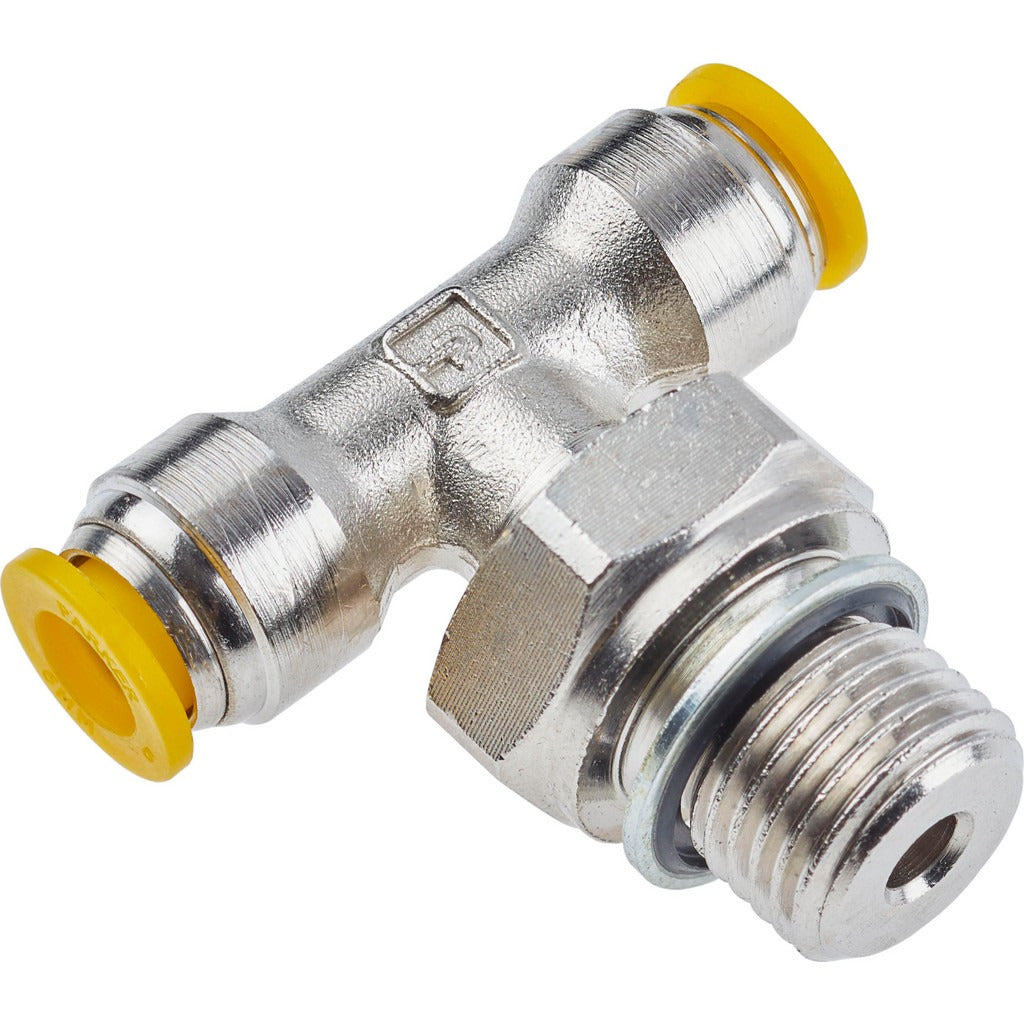
Parker 172PLP-8M-6G Swivel Male Branch Tee 8mm 300 Psi
Availability:
In Stock

Ships same day if ordered by 12 pm
- $24.77
- $24.77
- Unit price
- / per
✓
Better Price in Cart
Manufacturer pricing rules prevent us from advertising our discount — no account or email required to see it.
-
Secure Payments
-
Easy Returns
-
Expert Advice
-
Fast Shipping
Product Description
The PARKER 172PLP-8M-6G is a push-to-connect swivel male branch tee fitting designed for pneumatic and fluid tubing systems. It connects two tube runs and a male branch port in a single body, allowing quick, tool-free tube insertion while the swivel male end permits alignment adjustments during installation. Built from nickel-plated brass, this fitting handles working pressures up to 300 psi and operates across a temperature range of 0 degrees F to 200 degrees F. The yellow release button enables fast tube removal without cutting. Silicone-free grease makes it compatible with systems where silicone contamination is a concern.
This fitting is suited for compressed air, pneumatic control, and compatible fluid distribution lines in light industrial, HVAC controls, and automation applications. The 8mm tube outside diameter connection and BSPP male thread make it a common choice in metric tube systems. It installs in plumbing and instrumentation panels, air preparation assemblies, and branch circuit configurations where a tee connection is required without dedicated tooling. This fitting is sold individually and is typically installed by HVAC technicians, instrumentation technicians, or industrial maintenance professionals.
Key Features
- Push-to-connect design accepts 8mm OD tube without tools or ferrules
- Swivel male branch allows rotational positioning before final lock-down
- Nickel-plated brass body rated to 300 psi maximum working pressure
- Operating temperature range: 0 degrees F to 200 degrees F
- Silicone-free grease for compatibility with sensitive pneumatic and electronic environments
- UL94 V-0 flame resistance rating on internal components
Compatibility
Designed for use with 8mm outside diameter push-to-connect tubing systems using BSPP male thread connections. Verify thread type and tube OD before installation, as this fitting uses BSPP threading and is not interchangeable with NPT or metric parallel thread configurations.
Installation Notes
Depressurize and isolate the tubing system completely before removing or installing any push-to-connect fitting. Insert tube to full depth until resistance is felt to ensure the collet engages the tube wall. To remove, press the yellow release button inward while pulling the tube straight out. Hand-tighten the swivel male thread into the receiving port and confirm thread type compatibility before applying any additional torque.
WARNING: This product can expose you to chemicals including lead, which are known to the State of California to cause cancer and birth defects or other reproductive harm. For more information go to www.P65Warnings.ca.gov.
Technical Specifications

Complete your install
We pulled together the parts most installs need for this unit, plus a few add-ons worth a look. Check what you need — nothing here blocks checkout.
Loading install accessories...
Add install kit to cart
—
Related Products
- Choosing a selection results in a full page refresh.