


Search
-
HVAC Equipment
-
Ductless Mini Splits
- Ductless Mini Splits
- Shop By Zone
- Shop by BTU
- Shop By Brand
- Components
- Accessories
-
HVAC Parts & Supplies
- HVAC Parts & Supplies
- HVAC Supplies
- HVAC Tools
-
HVAC Replacement Parts
- Blower Housing & Assemblies
- Blower Wheels
- Breakers, Contactors & Disconnects
- Capacitors & Transformers
- Control & Circuit Boards
- Filter Driers & Accumulators
- Gas Valves & Conversion Kits
- Heat Exchangers
- Thermal Expansion Valves (TXV)
- Temperature Controls
- Wall Brackets & Parts
- Miscellaneous Parts
- O-Rings & Gaskets
- Hydronics
- Motors
- Thermostats & Zoning
-
Plumbing
-
Pool
-
Electrical
-
Air Quality
-
Tools & Supplies
-
Door Security & Hardware


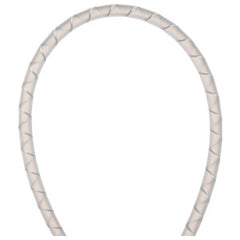
Panduit t25n-c Spiral Wrap Natural Nylon 6.6 100 Ft
Availability:
In Stock

Ships same day if ordered by 12 pm
- $192.66
- $192.66
- Unit price
- / per
✓
Better Price in Cart
Manufacturer pricing rules prevent us from advertising our discount — no account or email required to see it.
-
Secure Payments
-
Easy Returns
-
Expert Advice
-
Fast Shipping
Product Description
The PANDUIT t25n-c is a spiral wrap cable management sleeve made from Nylon 6.6, designed to bundle, route, and protect wire harnesses, cables, hoses, and tubing in electrical and control panel installations. The natural-colored wrap ships in a 100-foot length and accommodates a minimum bundle diameter of 0.1875 inches up to a maximum bundle diameter of 2 inches. The spiral construction allows technicians to add or remove individual conductors after installation without cutting or re-routing the entire bundle. An installation tool is included. Rated to 149 degrees F continuous service, the material carries a UL94-HB flammability rating and is UL Recognized under file E141152.
This spiral wrap is suited for residential and commercial electrical work, industrial control panels, automotive harness fabrication, and OEM equipment assembly. Electricians, panel builders, and equipment assemblers use it to consolidate multiple conductors and cables into a single manageable run while still allowing breakouts at any point along the bundle. The natural color works in applications where color coding is not required, and the flexible Nylon 6.6 construction provides reliable abrasion protection in environments where cables are routed near sharp edges or moving components.
Key Features
- Spiral construction allows mid-bundle breakouts of single or multiple cables without cutting
- Nylon 6.6 material provides abrasion resistance for wire, cables, hoses, and tubing
- Accommodates bundle diameters from 0.1875 inches up to 2 inches
- Rated to 149 degrees F with UL94-HB flammability rating
- UL Recognized - File E141152
- Installation tool included in package
Compatibility
Designed as a general-purpose spiral wrap for wire harness bundling and cable management applications in electrical, industrial, and OEM assembly environments.
Installation Notes
Electrical installers and panel builders should de-energize all circuits before routing or securing cable bundles. Use the included installation tool to wind the spiral wrap around the cable bundle, working from one end toward the desired breakout point. Route finished bundles away from heat sources that exceed the 149 degrees F temperature rating. Follow applicable NEC guidelines for cable bundling and derating when consolidating current-carrying conductors.
Technical Specifications

Related Products
- Choosing a selection results in a full page refresh.