


Search
-
HVAC Equipment
-
Ductless Mini Splits
- Ductless Mini Splits
- Shop By Zone
- Shop by BTU
- Shop By Brand
- Components
- Accessories
-
HVAC Parts & Supplies
- HVAC Parts & Supplies
- HVAC Supplies
- HVAC Tools
-
HVAC Replacement Parts
- Blower Housing & Assemblies
- Blower Wheels
- Breakers, Contactors & Disconnects
- Capacitors & Transformers
- Control & Circuit Boards
- Filter Driers & Accumulators
- Gas Valves & Conversion Kits
- Heat Exchangers
- Thermal Expansion Valves (TXV)
- Temperature Controls
- Wall Brackets & Parts
- Miscellaneous Parts
- O-Rings & Gaskets
- Hydronics
- Motors
- Thermostats & Zoning
-
Plumbing
-
Pool
-
Electrical
-
Air Quality
-
Tools & Supplies
-
Door Security & Hardware







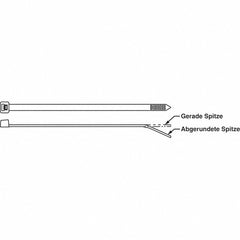
Panduit PLT1M-C Standard Cable Tie 3.9in 18lb Natural
Availability:
In Stock

Ships same day if ordered by 12 pm
- $14.99
- $14.99
- Unit price
- / per
✓
Better Price in Cart
Manufacturer pricing rules prevent us from advertising our discount — no account or email required to see it.
Manuals:

-
Secure Payments
-
Easy Returns
-
Expert Advice
-
Fast Shipping
Product Description
The PANDUIT PLT1M-C is a standard-duty nylon cable tie designed for bundling and securing wire harnesses, cable runs, and conduit assemblies in electrical and low-voltage installations. At 3.9 inches in overall length with an 18 lb tensile strength, this tie handles light to medium wire management tasks with a consistent, repeatable lock. Made from natural-colored nylon, it suits general indoor wiring applications where UV exposure and high heat are not primary concerns. Electricians and low-voltage installers use these ties during panel wiring, conduit work, and equipment rack buildouts. The tie conforms to UL 62275 Type 1 and Type 11 standards and carries UL Listed and UL Recognized status under File E56854.
The PLT1M-C is suited for residential and light commercial electrical installations, telecommunications wiring, and control panel assembly. It accommodates a maximum bundle diameter of 0.87 inches, making it appropriate for small to mid-size wire bundles typically found in junction boxes, panels, and structured cabling trays. Electricians, data and low-voltage technicians, and panel builders commonly deploy this tie in volume during new construction and retrofit work. It is sold with a minimum order quantity of 100 units, consistent with professional trade use where ties are consumed in bulk.
Key Features
- 18 lb tensile strength for reliable, consistent bundle retention
- 3.9-inch overall length accommodates bundles up to 0.87 inches in diameter
- Nylon construction rated from -76 degrees F to 185 degrees F
- UL 62275 Compliant Type 1 and Type 11; UL Listed and Recognized under File E56854
- Natural color for standard indoor electrical and low-voltage applications
- 0.043-inch thickness and 0.098-inch width for low-profile, space-efficient bundling
Compatibility
Designed as a standard OEM-style nylon cable tie for general electrical, low-voltage, and control panel wiring applications where UL 62275 compliance is required.
Installation Notes
Cable ties of this type are installed by electricians and low-voltage technicians in accordance with NEC wiring support and bundling requirements. De-energize circuits before dressing wire bundles in live panels or enclosures. Use a cable tie tensioning and cutting tool to achieve consistent pull force and a flush cut tail without a sharp edge. Do not over-tension ties on jacketed cables, as excessive force can deform insulation.
Technical Specifications

Complete your install
We pulled together the parts most installs need for this unit, plus a few add-ons worth a look. Check what you need — nothing here blocks checkout.
Loading install accessories...
Add install kit to cart
—
Related Products
- Choosing a selection results in a full page refresh.