


Search
-
HVAC Equipment
-
Ductless Mini Splits
- Ductless Mini Splits
- Shop By Zone
- Shop by BTU
- Shop By Brand
- Components
- Accessories
-
HVAC Parts & Supplies
- HVAC Parts & Supplies
- HVAC Supplies
- HVAC Tools
-
HVAC Replacement Parts
- Blower Housing & Assemblies
- Blower Wheels
- Breakers, Contactors & Disconnects
- Capacitors & Transformers
- Control & Circuit Boards
- Filter Driers & Accumulators
- Gas Valves & Conversion Kits
- Heat Exchangers
- Thermal Expansion Valves (TXV)
- Temperature Controls
- Wall Brackets & Parts
- Miscellaneous Parts
- O-Rings & Gaskets
- Hydronics
- Motors
- Thermostats & Zoning
-
Plumbing
-
Pool
-
Electrical
-
Air Quality
-
Tools & Supplies
-
Door Security & Hardware


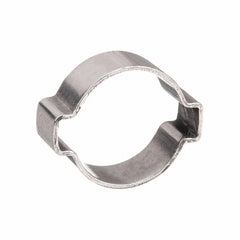
Oetiker 15100022 Two Ear Clamp 40.6-46mm Stainless Plain
Availability:
In Stock

Ships same day if ordered by 12 pm
- $196.78
- $196.78
- Unit price
- / per
✓
Better Price in Cart
Manufacturer pricing rules prevent us from advertising our discount — no account or email required to see it.
-
Secure Payments
-
Easy Returns
-
Expert Advice
-
Fast Shipping
Product Description
The OETIKER 15100022 is a two-ear hose clamp engineered for secure, permanent hose and tubing connections across a wide range of trade and industrial applications. It features a 0.27-inch band width and accommodates hose diameters from 40.6 mm (1.598 inches) to 46 mm (1.811 inches), size reference 4346R. Constructed from plain-finish stainless steel, it delivers strong corrosion resistance and maintains structural integrity under high-temperature and vibratory service conditions. The two-ear design allows a single clamp to span a greater range of hose diameters compared to single-ear styles. Plumbers, HVAC technicians, and mechanical contractors install this clamp using standard ear clamp pincer tools wherever a reliable, low-profile connection is required.
This clamp is well-suited for one-time use applications involving pliable tubing and hoses, including those subject to thermal cycling or vibration. Typical installation scenarios include coolant hose connections, HVAC condensate or flexible duct connections, and plumbing supply line terminations in both residential and light commercial settings. The plain stainless steel finish makes it an economical choice where parts are changed out regularly or where the installation environment does not demand an additional protective coating.
Key Features
- Two-ear design spans a broader hose diameter range than single-ear clamps
- Stainless steel construction resists corrosion and holds strength at elevated temperatures
- Plain finish provides an economical option for frequently serviced or low-corrosion environments
- 0.27-inch band width provides a low-profile footprint on the hose
- Suited for thermal and vibratory service conditions
- Made in the United States
Compatibility
Designed for use with pliable tubing and hoses in the 40.6 mm to 46 mm outside diameter range. Suitable for one-time permanent installation in HVAC, plumbing, and general mechanical applications requiring a two-ear style ear clamp.
Installation Notes
Installation requires a dedicated ear clamp pincer tool to close the ears evenly and achieve proper seating against the hose. Power down or depressurize the system and allow it to cool before removing or replacing any hose clamp. Once the ears are crimped, the clamp is not intended to be reopened or reused. Follow applicable codes and the equipment manufacturer's service procedures when working on pressurized fluid or refrigerant lines.
Technical Specifications

Complete your install
We pulled together the parts most installs need for this unit, plus a few add-ons worth a look. Check what you need — nothing here blocks checkout.
Loading install accessories...
Add install kit to cart
—
Related Products
- Choosing a selection results in a full page refresh.