


Search
-
HVAC Equipment
-
Ductless Mini Splits
- Ductless Mini Splits
- Shop By Zone
- Shop by BTU
- Shop By Brand
- Components
- Accessories
-
HVAC Parts & Supplies
- HVAC Parts & Supplies
- HVAC Supplies
- HVAC Tools
-
HVAC Replacement Parts
- Blower Housing & Assemblies
- Blower Wheels
- Breakers, Contactors & Disconnects
- Capacitors & Transformers
- Control & Circuit Boards
- Filter Driers & Accumulators
- Gas Valves & Conversion Kits
- Heat Exchangers
- Thermal Expansion Valves (TXV)
- Temperature Controls
- Wall Brackets & Parts
- Miscellaneous Parts
- O-Rings & Gaskets
- Hydronics
- Motors
- Thermostats & Zoning
-
Plumbing
-
Pool
-
Electrical
-
Air Quality
-
Tools & Supplies
-
Door Security & Hardware


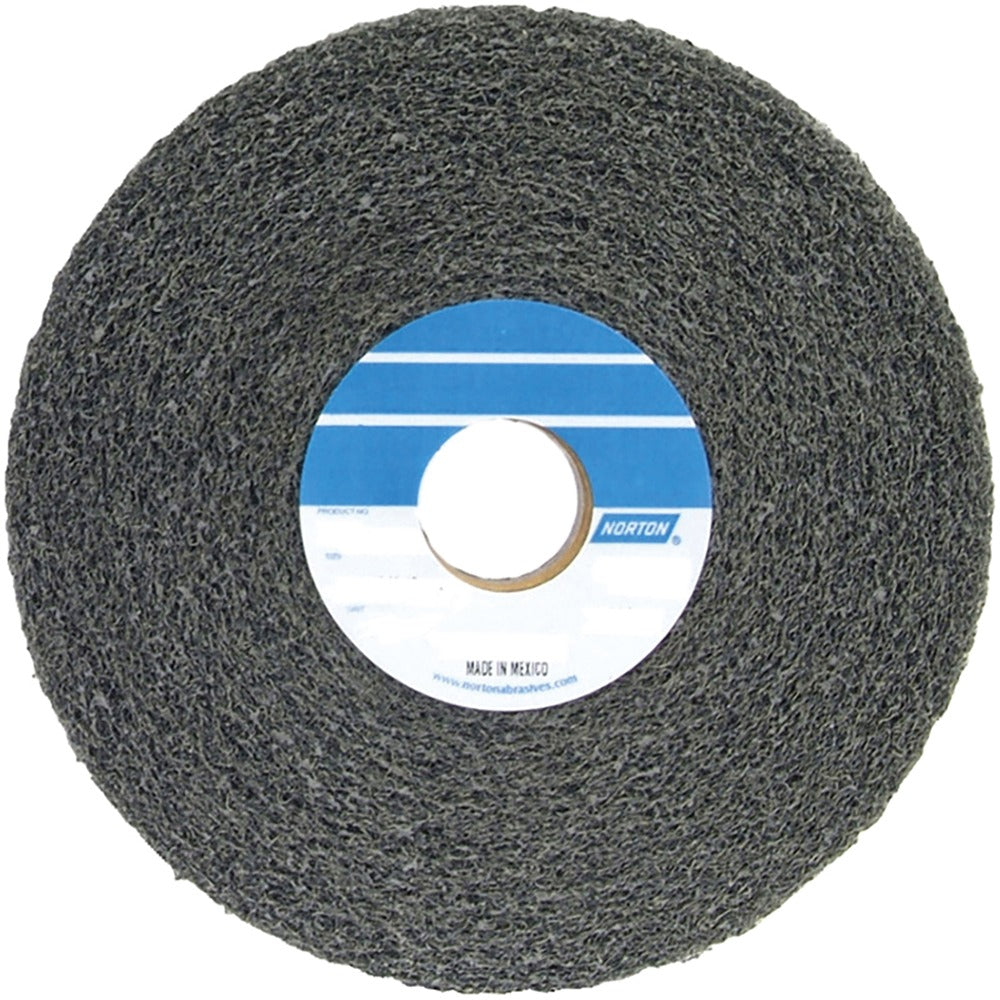
Norton 66261058501 Deburring Wheel 4 Inch Silicon Carbide
Availability:
In Stock

Ships same day if ordered by 12 pm
- $51.59
- $51.59
- Unit price
- / per
✓
Better Price in Cart
Manufacturer pricing rules prevent us from advertising our discount — no account or email required to see it.
-
Secure Payments
-
Easy Returns
-
Expert Advice
-
Fast Shipping
Product Description
The NORTON 66261058501 is a convolute deburring wheel designed for removing burrs, sharp edges, and surface scale from metal workpieces. Built with a silicon carbide abrasive, this wheel operates at a maximum rated speed of 4,000 RPM and carries a density grade of 4, making it well suited for medium-pressure deburring passes on a variety of ferrous and non-ferrous substrates. At 4 inches in diameter with a 1-inch face width and a 1-inch center hole, it mounts directly to standard bench and pedestal grinder arbors. Machinists, fabricators, and shop technicians use this wheel as part of a finishing workflow to achieve clean, safe part edges before assembly or inspection.
This deburring wheel is intended for use on bench grinders and pedestal grinders in machine shops, fabrication facilities, and production environments. The convolute construction — where abrasive material is wound in layers around the core — delivers consistent cut rate across the full face width as the wheel wears. It is appropriate for edge conditioning, light blending, and burr removal on metal parts where a controlled, repeatable result is needed. The silicon carbide abrasive is particularly effective on harder non-ferrous metals, cast iron, and ceramics.
Key Features
- Silicon carbide abrasive for effective deburring on non-ferrous metals, cast iron, and ceramics
- Convolute wheel construction provides consistent performance as the wheel wears
- 4,000 RPM maximum rated speed — confirm grinder speed before mounting
- Density grade 4 for medium material aggressiveness and controlled stock removal
- 1-inch center hole fits standard bench and pedestal grinder arbors
- Compact 4-inch diameter suits benchtop grinder setups with limited clearance
Compatibility
Designed for use with bench grinders and pedestal grinders; verify that the grinder arbor speed does not exceed the 4,000 RPM maximum rating of this wheel before installation.
Installation Notes
Installation should be performed by a qualified machinist or shop technician following the grinder manufacturer's wheel-mounting procedures. Power down and lock out the grinder before removing the existing wheel or mounting this deburring wheel. Confirm the grinder's no-load RPM rating does not exceed the wheel's 4,000 RPM maximum. Always install the supplied flanges and blotter washers per ANSI B7.1 safety code requirements, and stand clear of the wheel plane during the initial startup inspection period.
Technical Specifications

Complete your install
We pulled together the parts most installs need for this unit, plus a few add-ons worth a look. Check what you need — nothing here blocks checkout.
Loading install accessories...
Add install kit to cart
—
Related Products
- Choosing a selection results in a full page refresh.