


Search
-
HVAC Equipment
-
Ductless Mini Splits
- Ductless Mini Splits
- Shop By Zone
- Shop by BTU
- Shop By Brand
- Components
- Accessories
-
HVAC Parts & Supplies
- HVAC Parts & Supplies
- HVAC Supplies
- HVAC Tools
-
HVAC Replacement Parts
- Blower Housing & Assemblies
- Blower Wheels
- Breakers, Contactors & Disconnects
- Capacitors & Transformers
- Control & Circuit Boards
- Filter Driers & Accumulators
- Gas Valves & Conversion Kits
- Heat Exchangers
- Thermal Expansion Valves (TXV)
- Temperature Controls
- Wall Brackets & Parts
- Miscellaneous Parts
- O-Rings & Gaskets
- Hydronics
- Motors
- Thermostats & Zoning
-
Plumbing
-
Pool
-
Electrical
-
Air Quality
-
Tools & Supplies
-
Door Security & Hardware


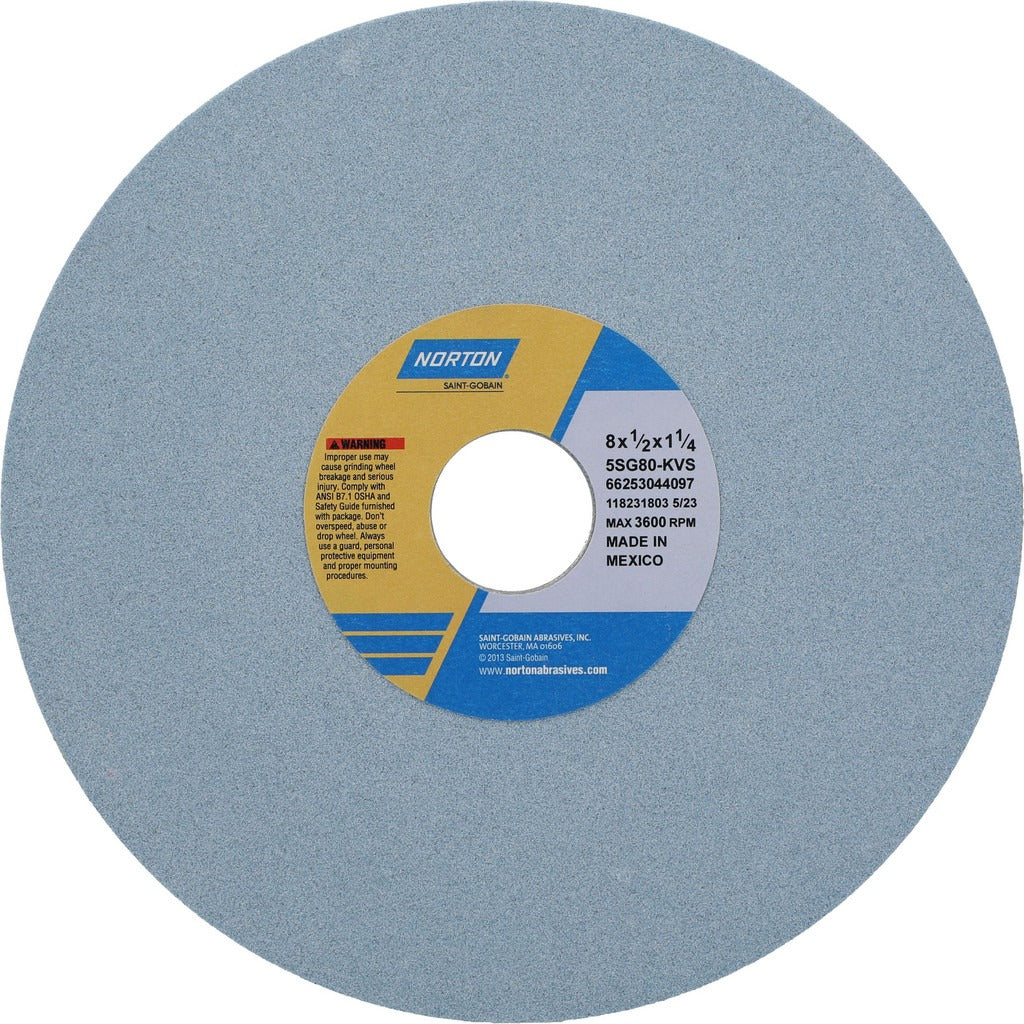
Norton 66253044097 Surface Grinding Wheel 8in 80 Grit
Availability:
In Stock

Ships same day if ordered by 12 pm
- $228.11
- $228.11
- Unit price
- / per
✓
Better Price in Cart
Manufacturer pricing rules prevent us from advertising our discount — no account or email required to see it.
-
Secure Payments
-
Easy Returns
-
Expert Advice
-
Fast Shipping
Product Description
The NORTON 66253044097 is a Type 1 surface grinding wheel designed for precision stock removal on hard ferrous metals and specialty alloys. Built with a ceramic abrasive grain and vitrified bond, this wheel delivers consistent cut rates and long service life on surface grinders and cylindrical grinders. It measures 8 inches in diameter, 1/2 inch thick, and carries a 1-1/4 inch arbor hole. The 80 grit, K hardness (medium grade) specification makes it well suited for moderate material removal while maintaining dimensional control. Rated at a maximum of 3600 RPM, this wheel meets the demands of production grinding environments. Licensed tradespeople and CNC machine operators are the primary installers and users.
This wheel is intended for use on surface grinders, cylindrical grinders, and CNC cutting tool machines in both shop and production settings. It is rated for aggressive materials including 400 Series stainless steel, hard carbon steels, tool steels, titanium, super alloys, cast iron, ductile iron, and gray iron. The porous, semi-friable ceramic grain structure helps the wheel stay free-cutting even under heavy loads, reducing heat buildup at the workpiece. This combination of material compatibility and grain structure makes it a practical choice for toolrooms and production grinding cells handling mixed alloy work.
Key Features
- Ceramic abrasive grain with vitrified bond for consistent, free-cutting action on hard and exotic alloys
- 80 grit, K hardness (medium grade) balances stock removal with surface finish control
- Porous, semi-friable grain structure reduces heat transfer to the workpiece during extended passes
- Type 1 straight wheel profile with no recess — compatible with standard surface grinder spindle setups
- Rated to 3600 RPM maximum for safe operation on production grinding equipment
- Blue wheel color matches 5SG series identification for quick shop-floor sorting
Compatibility
Rated for use with surface grinders, cylindrical grinders, and CNC cutting tool machines. Suitable for grinding 400 Series stainless steel, hard carbon steels, tool steels, titanium, super alloys, cast iron, ductile iron, and gray iron. Specification code 5SG80-KVS.
Installation Notes
Grinding wheel mounting and dressing should be performed by a qualified machinist or grinding equipment operator following ANSI B11.9 and OSHA 29 CFR 1910.215 guarding requirements. Always power down and lock out the grinder before mounting or removing the wheel. Inspect the wheel for cracks or chips before installation — never mount a damaged wheel. Perform a ring test and a no-load run-up before engaging the workpiece.
Technical Specifications

Complete your install
We pulled together the parts most installs need for this unit, plus a few add-ons worth a look. Check what you need — nothing here blocks checkout.
Loading install accessories...
Add install kit to cart
—
Related Products
- Choosing a selection results in a full page refresh.