


Search
-
HVAC Equipment
-
Ductless Mini Splits
- Ductless Mini Splits
- Shop By Zone
- Shop by BTU
- Shop By Brand
- Components
- Accessories
-
HVAC Parts & Supplies
- HVAC Parts & Supplies
- HVAC Supplies
- HVAC Tools
-
HVAC Replacement Parts
- Blower Housing & Assemblies
- Blower Wheels
- Breakers, Contactors & Disconnects
- Capacitors & Transformers
- Control & Circuit Boards
- Filter Driers & Accumulators
- Gas Valves & Conversion Kits
- Heat Exchangers
- Thermal Expansion Valves (TXV)
- Temperature Controls
- Wall Brackets & Parts
- Miscellaneous Parts
- O-Rings & Gaskets
- Hydronics
- Motors
- Thermostats & Zoning
-
Plumbing
-
Pool
-
Electrical
-
Air Quality
-
Tools & Supplies
-
Door Security & Hardware


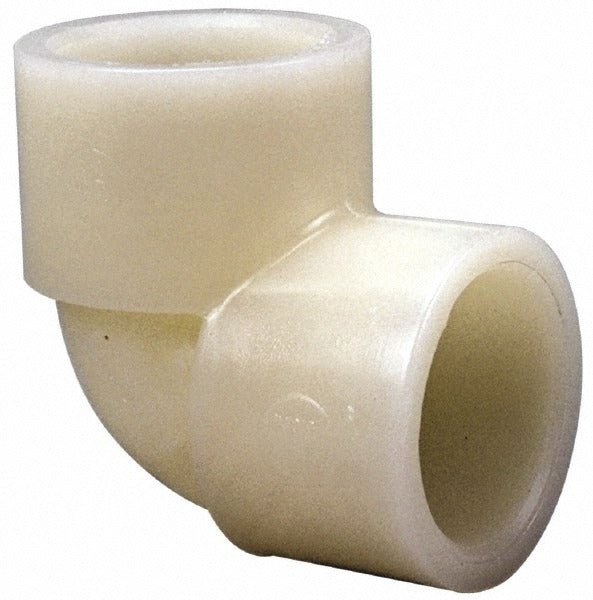
Nibco CE01300 Pvdf 90 Elbow 3/4 in Sch 80

Availability:
In Stock
Ships same day if ordered by 12 pm
- $158.21
- $158.21
- Unit price
- / per
✓
Better Price in Cart
Manufacturer pricing rules prevent us from advertising our discount — no account or email required to see it.
-
Secure Payments
-
Easy Returns
-
Expert Advice
-
Fast Shipping
Product Description
The NIBCO CE01300 is a 3/4 inch Schedule 80 90-degree elbow fitting made from PVDF (polyvinylidene fluoride), a high-performance thermoplastic well-suited for corrosive chemical and high-purity fluid systems. The fitting features Slip x SR FIPT end connections, allowing one socket solvent-weld end and one standard reinforced female iron pipe thread end. Schedule 80 wall thickness provides added pressure capacity compared to Schedule 40, making this fitting appropriate for demanding industrial and commercial piping installations. Plumbers and pipefitters working in chemical processing, semiconductor, or industrial process lines typically install this type of fitting.
This fitting is used in Schedule 80 PVDF piping systems handling aggressive chemicals, ultrapure water, or other fluids incompatible with metal or standard PVC fittings. Typical applications include industrial process lines, chemical transfer systems, and high-purity water distribution where corrosion resistance and material compatibility are critical. The 90-degree geometry routes piping around obstructions or changes flow direction within a piping network. It is sized at 3/4 inch to match standard pipe outside diameters at that nominal size.
Key Features
- PVDF construction provides excellent resistance to a broad range of corrosive chemicals and solvents
- Schedule 80 wall thickness delivers higher pressure ratings than Schedule 40 equivalents
- Slip x SR FIPT end connections support both solvent-weld and threaded assembly methods
- 90-degree elbow geometry for directional changes in process piping layouts
- Meets ASTM D3222 material standard for PVDF
Compatibility
Designed as an OEM-style replacement and new-installation fitting for Schedule 80 PVDF piping systems at 3/4 inch nominal pipe size with Slip x SR FIPT end connections.
Installation Notes
Installation of Schedule 80 PVDF fittings should be performed by a licensed plumber or pipefitter familiar with thermoplastic piping systems. Depressurize and drain the piping system fully before cutting into any existing line. The socket end requires compatible PVDF solvent cement applied per the cement manufacturer and applicable plumbing code; the SR FIPT end should be assembled with PTFE thread tape or compatible thread sealant rated for PVDF. Follow IPC and applicable local codes for pressure testing after assembly.
Technical Specifications

Complete your install
We pulled together the parts most installs need for this unit, plus a few add-ons worth a look. Check what you need — nothing here blocks checkout.
Loading install accessories...
Add install kit to cart
—
Related Products
- Choosing a selection results in a full page refresh.