


Search
-
HVAC Equipment
-
Ductless Mini Splits
- Ductless Mini Splits
- Shop By Zone
- Shop by BTU
- Shop By Brand
- Components
- Accessories
-
HVAC Parts & Supplies
- HVAC Parts & Supplies
- HVAC Supplies
- HVAC Tools
-
HVAC Replacement Parts
- Blower Housing & Assemblies
- Blower Wheels
- Breakers, Contactors & Disconnects
- Capacitors & Transformers
- Control & Circuit Boards
- Filter Driers & Accumulators
- Gas Valves & Conversion Kits
- Heat Exchangers
- Thermal Expansion Valves (TXV)
- Temperature Controls
- Wall Brackets & Parts
- Miscellaneous Parts
- O-Rings & Gaskets
- Hydronics
- Motors
- Thermostats & Zoning
-
Plumbing
-
Pool
-
Electrical
-
Air Quality
-
Tools & Supplies
-
Door Security & Hardware


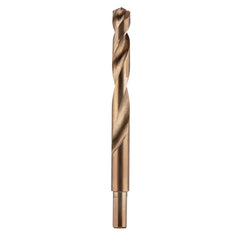
Milwaukee 48-89-2528 Cobalt Jobber Drill Bit 5.9 Inches

Ships in 4 - 5 Weeks
- $31.37
- $31.37
- Unit price
- / per
✓
Better Price in Cart
Manufacturer pricing rules prevent us from advertising our discount — no account or email required to see it.
-
Secure Payments
-
Easy Returns
-
Expert Advice
-
Fast Shipping
Product Description
The MILWAUKEE 48-89-2528 is a cobalt jobber-length twist drill bit built for cutting hard metals where standard high-speed steel bits fail quickly. It features a variable helix geometry that starts at a 35-degree angle and transitions to 15 degrees, promoting rapid chip evacuation and reducing heat buildup at the cutting edge. The 135-degree split point starts on contact without walking, giving the operator a fast, accurate hole entry. At 5.9 inches in overall length and weighing 0.23 pounds, this is a single-bit unit sold individually and sized in metric. It is intended for use by machinists, pipefitters, ironworkers, and any trade professional drilling into stainless, hardened steel, cast iron, or other hard ferrous materials.
This drill bit is suited for hard metal applications in both shop and field environments. The cobalt construction handles the heat generated when drilling stainless steel, tool steel, and other alloys that would dull a standard oxide-coated bit rapidly. The chip breaker geometry and variable helix work together to clear chips continuously, which keeps the cutting edge cooler over the duration of the hole. Typical use cases include drilling through structural steel, metal fabrication work, and mechanical service jobs where hole quality and bit longevity matter. The secure-grip shank geometry reduces slipping in the chuck under load.
Key Features
- Variable helix design transitions from 35 degrees to 15 degrees for continuous chip removal
- 135-degree split point starts on contact and prevents walking
- Cobalt construction rated for up to 10 times the life of black oxide bits in hard metal
- Chip breaker geometry reduces heat buildup at the cutting edge
- Secure-grip shank reduces slipping in the chuck under torque
- Metric sizing, sold individually
Compatibility
Designed as an OEM-style jobber-length twist drill bit compatible with standard 3-jaw keyed and keyless drill chucks that accept the corresponding metric shank diameter.
Installation Notes
Installation is performed by any trade professional using a corded or cordless drill, drill press, or magnetic base drill. Always secure the workpiece before drilling and use cutting fluid when drilling stainless steel or hardened alloys to extend bit life. Confirm the chuck is fully tightened on the shank before applying load. Allow the bit to cool between holes when working in thick material to avoid heat-related edge degradation.
Technical Specifications

Complete your install
We pulled together the parts most installs need for this unit, plus a few add-ons worth a look. Check what you need — nothing here blocks checkout.
Loading install accessories...
Add install kit to cart
—
Related Products
- Choosing a selection results in a full page refresh.