


Search
-
HVAC Equipment
-
Ductless Mini Splits
- Ductless Mini Splits
- Shop By Zone
- Shop by BTU
- Shop By Brand
- Components
- Accessories
-
HVAC Parts & Supplies
- HVAC Parts & Supplies
- HVAC Supplies
- HVAC Tools
-
HVAC Replacement Parts
- Blower Housing & Assemblies
- Blower Wheels
- Breakers, Contactors & Disconnects
- Capacitors & Transformers
- Control & Circuit Boards
- Filter Driers & Accumulators
- Gas Valves & Conversion Kits
- Heat Exchangers
- Thermal Expansion Valves (TXV)
- Temperature Controls
- Wall Brackets & Parts
- Miscellaneous Parts
- O-Rings & Gaskets
- Hydronics
- Motors
- Thermostats & Zoning
-
Plumbing
-
Pool
-
Electrical
-
Air Quality
-
Tools & Supplies
-
Door Security & Hardware


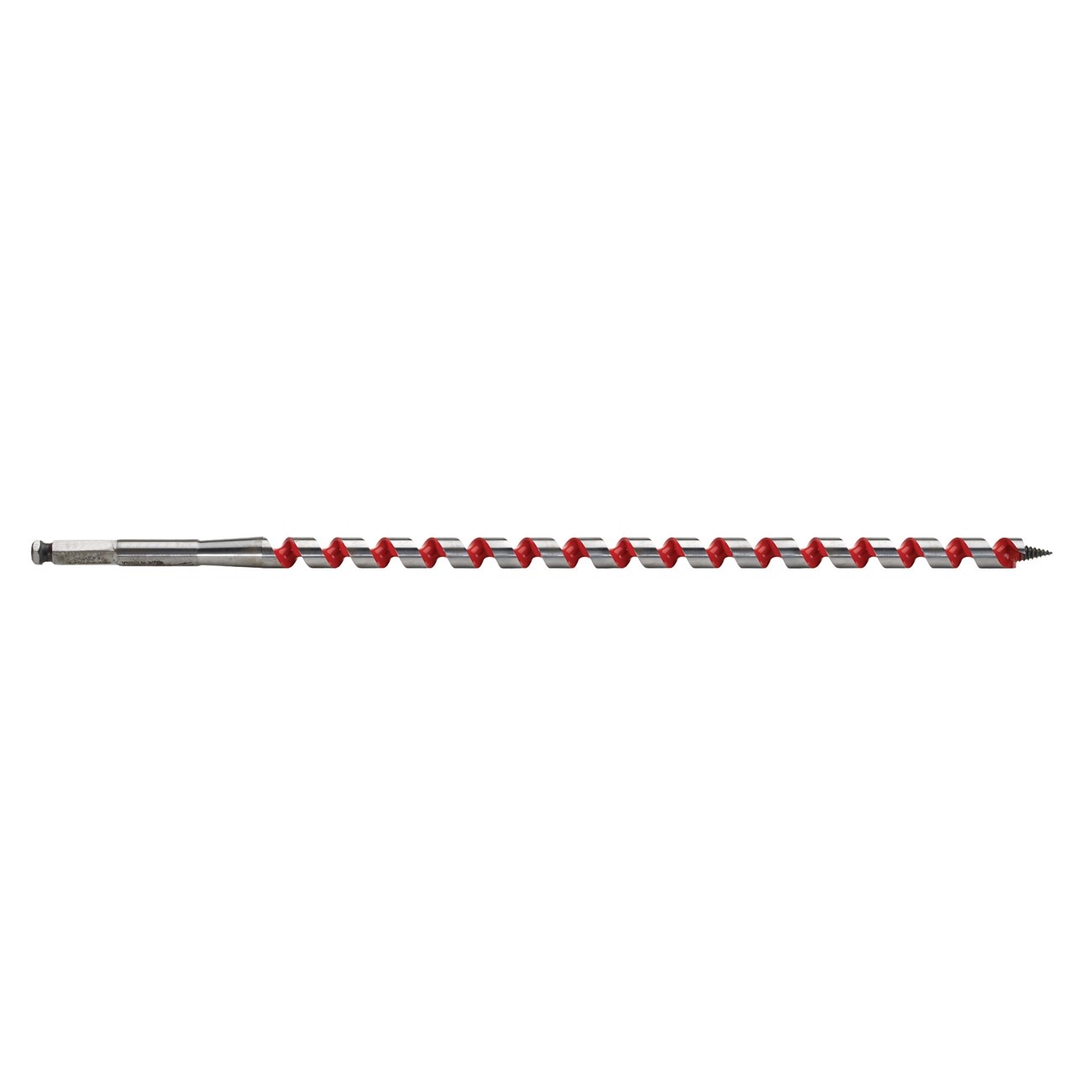
Milwaukee 48-13-5520 Ship Auger Bit 5/16 in Alloy Steel

Ships in 4 - 5 Weeks
- $39.31
- $39.31
- Unit price
- / per
✓
Better Price in Cart
Manufacturer pricing rules prevent us from advertising our discount — no account or email required to see it.
-
Secure Payments
-
Easy Returns
-
Expert Advice
-
Fast Shipping
Product Description
The MILWAUKEE 48-13-5520 is a ship auger bit designed for boring through wood in demanding trade applications. Built from alloy steel with a hardened, one-face 20-degree rake angle, it is engineered to drill through nail-embedded lumber without requiring frequent resharpening. The bit features a through-center cutting design that provides a solid striking point when contacting nails, outperforming ahead-of-center and behind-center alternatives. Wide, polished, and coated flutes promote maximum chip evacuation and resist clogging from sap or glue. The impact-rated shank allows use with an impact wrench in addition to a standard drill, making it a versatile choice for rough-in and structural boring work.
This ship auger bit is suited for residential and commercial installation work where drilling into wood members is required. Typical applications include running Romex wire, PEX water lines, rebar, bolts, and rope through framing, piers, playground equipment, and landscaping structures. The longer shaft length simplifies drilling in deep cavities or overhead positions without requiring a separate extension. Electricians, plumbers, and general contractors performing rough-in work will find this bit well suited for production drilling in both clean lumber and nail-embedded framing.
Key Features
- Hardened alloy steel construction with a one-face 20-degree rake angle for nail resistance and extended service life
- Through-center cutting design delivers a solid striking point against nails for consistent performance
- Polished and coated flutes resist chip adhesion from sap- or glue-containing material
- Wide flute geometry maximizes chip removal in deep holes
- Impact-rated shank compatible with impact wrenches and standard drills
Compatibility
Designed as a replacement or addition within the Milwaukee ship auger bit line, compatible with standard hex-shank drill chucks and impact-rated drivers used in electrical, plumbing, and general construction rough-in applications.
Installation Notes
Installation is performed by electricians, plumbers, or carpenters during rough-in framing stages. Confirm the drill or impact driver chuck is rated for the shank diameter before use. Keep the work area clear of energized conductors when boring through existing wall or floor assemblies. Follow applicable NEC or IPC guidelines when routing wire or pipe through structural members.
Technical Specifications

Complete your install
We pulled together the parts most installs need for this unit, plus a few add-ons worth a look. Check what you need — nothing here blocks checkout.
Loading install accessories...
Add install kit to cart
—
Related Products
- Choosing a selection results in a full page refresh.