


Search
-
HVAC Equipment
-
Ductless Mini Splits
- Ductless Mini Splits
- Shop By Zone
- Shop by BTU
- Shop By Brand
- Components
- Accessories
-
HVAC Parts & Supplies
- HVAC Parts & Supplies
- HVAC Supplies
- HVAC Tools
-
HVAC Replacement Parts
- Blower Housing & Assemblies
- Blower Wheels
- Breakers, Contactors & Disconnects
- Capacitors & Transformers
- Control & Circuit Boards
- Filter Driers & Accumulators
- Gas Valves & Conversion Kits
- Heat Exchangers
- Thermal Expansion Valves (TXV)
- Temperature Controls
- Wall Brackets & Parts
- Miscellaneous Parts
- O-Rings & Gaskets
- Hydronics
- Motors
- Thermostats & Zoning
-
Plumbing
-
Pool
-
Electrical
-
Air Quality
-
Tools & Supplies
-
Door Security & Hardware


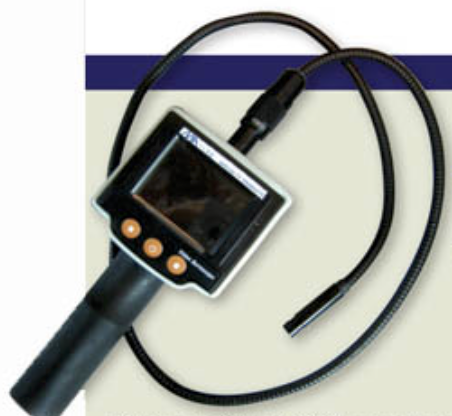

Ma-line ma-vid-1 Video Borescope with Case
Availability:
In Stock

Ships same day if ordered by 12 pm
- $193.54
- $193.54
- Unit price
- / per
✓
Better Price in Cart
Manufacturer pricing rules prevent us from advertising our discount — no account or email required to see it.
-
Secure Payments
-
Easy Returns
-
Expert Advice
-
Fast Shipping
Product Description
The MA-LINE ma-vid-1 is a handheld video borescope designed for visual inspection in confined, hard-to-reach areas. The camera head carries an IP67 water-resistant rating and measures 3.93 inches in outer diameter, making it suitable for pipe interiors, duct runs, wall cavities, and mechanical assemblies. Two dimmable white LEDs provide adjustable illumination at the tip. A 2.4-inch TFT LCD screen with 320 x 234 resolution displays live footage directly on the handset. The unit runs on four AA batteries (1.5 volts each) and includes a hard case for field storage and transport. HVAC technicians, plumbers, and inspection professionals are the primary users.
The ma-vid-1 is suited for residential and light commercial inspection work where a rigid or semi-rigid camera probe is needed to evaluate interior conditions without destructive access. Typical applications include drain line inspection, flue and vent channel review, wall cavity checks, and mechanical equipment inspection. The built-in NTSC composite video output port allows the feed to be routed to an external monitor or recording device when documentation is required. The three-button operation keeps fieldwork simple, and pressing the Up and Down keys simultaneously rotates the displayed image 180 degrees to correct for probe orientation.
Key Features
- IP67-rated water-resistant camera head, 3.93 inches in outer diameter
- Two dimmable white LEDs for adjustable tip illumination
- 2.4-inch TFT LCD display at 320 x 234 resolution
- NTSC composite video output port for external monitor or recorder connection
- Metal tube length of 35.75 inches; total device length of 45.75 inches
- Image rotation via simultaneous Up/Down key press; three-button total operation
- Includes hard carry case; powered by four standard AA batteries
Compatibility
Designed as a self-contained inspection tool compatible with any external NTSC-input monitor or display via the handler-end AVI port. No host system integration is required for standalone operation.
Installation Notes
The ma-vid-1 is a handheld inspection tool and does not require permanent installation. Before inserting the probe into any live system, verify that gas, water, or electrical services in the inspection area are isolated as appropriate to the task and local codes. Keep the camera head clear of sharp edges that could compromise the cable jacket. Do not force the probe through bends tighter than the cable's natural flex radius.
Technical Specifications

Complete your install
We pulled together the parts most installs need for this unit, plus a few add-ons worth a look. Check what you need — nothing here blocks checkout.
Loading install accessories...
Add install kit to cart
—
Related Products
- Choosing a selection results in a full page refresh.