


Search
-
HVAC Equipment
-
Ductless Mini Splits
- Ductless Mini Splits
- Shop By Zone
- Shop by BTU
- Shop By Brand
- Components
- Accessories
-
HVAC Parts & Supplies
- HVAC Parts & Supplies
- HVAC Supplies
- HVAC Tools
-
HVAC Replacement Parts
- Blower Housing & Assemblies
- Blower Wheels
- Breakers, Contactors & Disconnects
- Capacitors & Transformers
- Control & Circuit Boards
- Filter Driers & Accumulators
- Gas Valves & Conversion Kits
- Heat Exchangers
- Thermal Expansion Valves (TXV)
- Temperature Controls
- Wall Brackets & Parts
- Miscellaneous Parts
- O-Rings & Gaskets
- Hydronics
- Motors
- Thermostats & Zoning
-
Plumbing
-
Pool
-
Electrical
-
Air Quality
-
Tools & Supplies
-
Door Security & Hardware


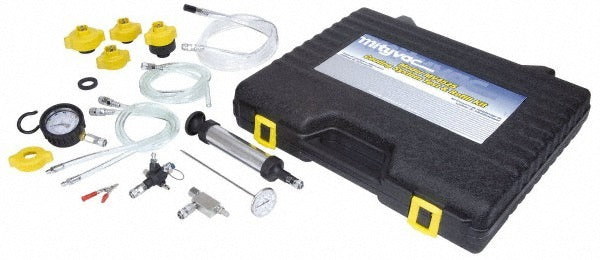

Lincoln MV4525 Cooling System Pressure Test Airevac Kit
Availability:
In Stock

Ships same day if ordered by 12 pm
- $663.87
- $663.87
- Unit price
- / per
✓
Better Price in Cart
Manufacturer pricing rules prevent us from advertising our discount — no account or email required to see it.
-
Secure Payments
-
Easy Returns
-
Expert Advice
-
Fast Shipping
Product Description
The LINCOLN MV4525 is a cooling system pressure test and air evacuation kit designed for automotive service professionals and knowledgeable DIYers working on domestic and Asian vehicles. The kit supports two critical cooling system service procedures: pressure testing to locate leaks and AirEvac refilling to purge air pockets and restore proper coolant flow. At 17 pieces, it includes everything needed to perform these tasks without sourcing additional adapters or tooling. The included pressure gauge and hand pump allow technicians to pressurize the cooling system and identify leaks quickly. The venturi valve enables vacuum-assisted coolant refill, reducing bleed time and the risk of air locks in the system.
This kit is suited for use on most domestic automobiles and a wide range of Asian-market vehicles. It is a practical addition to any automotive shop performing cooling system diagnostics, coolant flushes, or post-repair refills. The included adapters cover a broad range of radiator and coolant reservoir neck sizes, making the kit versatile across multiple vehicle makes. The hard case keeps all 17 components organized and protected between uses, which is important in a shop environment where loose adapter sets tend to go missing.
Key Features
- 17-piece kit covers both pressure testing and AirEvac coolant refill procedures
- Includes adapters for most domestic and several Asian vehicles
- Pressure gauge and hand pump included for leak detection without external air supply
- Venturi valve enables vacuum-assisted coolant fill to eliminate air pockets
- AirEvac hoses and junction hardware included for complete system service
- Hard carry case included for organized storage and transport
Compatibility
Designed for use on most domestic automobiles and several Asian-market vehicles. Includes adapters sized to fit a broad range of radiator and coolant reservoir neck configurations common in these vehicle categories.
Installation Notes
This kit is intended for use by automotive technicians performing cooling system service. Before pressure testing, allow the engine to cool completely and relieve any residual system pressure by slowly loosening the radiator or reservoir cap. Follow the kit instructions for venturi valve setup when performing AirEvac refills, and ensure the vehicle is on a level surface. Never exceed the cooling system pressure rating specified on the vehicle radiator cap.
Technical Specifications

Complete your install
We pulled together the parts most installs need for this unit, plus a few add-ons worth a look. Check what you need — nothing here blocks checkout.
Loading install accessories...
Add install kit to cart
—
Related Products
- Choosing a selection results in a full page refresh.