


Search
-
HVAC Equipment
-
Ductless Mini Splits
- Ductless Mini Splits
- Shop By Zone
- Shop by BTU
- Shop By Brand
- Components
- Accessories
-
HVAC Parts & Supplies
- HVAC Parts & Supplies
- HVAC Supplies
- HVAC Tools
-
HVAC Replacement Parts
- Blower Housing & Assemblies
- Blower Wheels
- Breakers, Contactors & Disconnects
- Capacitors & Transformers
- Control & Circuit Boards
- Filter Driers & Accumulators
- Gas Valves & Conversion Kits
- Heat Exchangers
- Thermal Expansion Valves (TXV)
- Temperature Controls
- Wall Brackets & Parts
- Miscellaneous Parts
- O-Rings & Gaskets
- Hydronics
- Motors
- Thermostats & Zoning
-
Plumbing
-
Pool
-
Electrical
-
Air Quality
-
Tools & Supplies
-
Door Security & Hardware


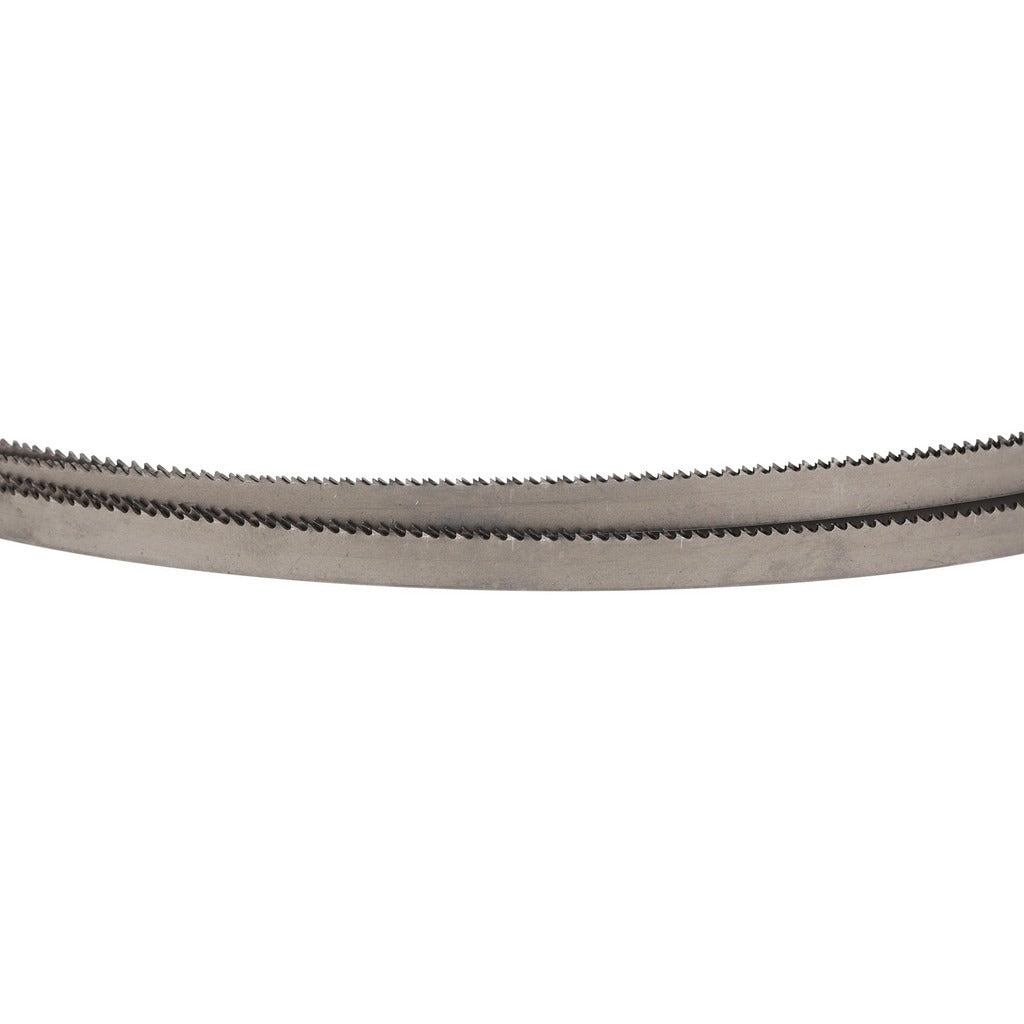
Lenox 82135D2B144445 Bandsaw Blade 14-18 Tpi Bi-metal

Availability:
In Stock
Ships same day if ordered by 12 pm
- $105.96
- $105.96
- Unit price
- / per
✓
Better Price in Cart
Manufacturer pricing rules prevent us from advertising our discount — no account or email required to see it.
-
Secure Payments
-
Easy Returns
-
Expert Advice
-
Fast Shipping
Product Description
The LENOX 82135D2B144445 is a welded bi-metal bandsaw blade engineered for demanding cutting applications across a wide range of metals and materials. Measuring 14 feet 7 inches in length and 0.5 inches wide with a 0.025-inch thickness, this blade features a variable pitch tooth form ranging from 14 to 18 TPI. The M42 high speed steel teeth are bonded to a spring steel back, giving the blade both edge retention and the flex needed to resist fatigue through continuous cuts. The wavy tooth set and 0.043-inch kerf width help clear chips efficiently during contour and straight-line cutting operations. This blade is part of the LENOX Classic series and is sold as a single unit.
This blade is suited for contour cutting on vertical bandsaws in professional shop, fabrication, and maintenance environments. Its multi-material capability makes it appropriate for production work involving alloy steel, carbon steel, stainless steel, tool steel, structural steel, aluminum, non-ferrous metals, and wood. The variable pitch design reduces harmonic vibration during the cut, making it particularly well-suited for cutting varying cross-sections or bundled stock. Fabricators, machinists, and industrial maintenance technicians are the primary installers and users of this blade.
Key Features
- Bi-metal construction: M42 high speed steel teeth bonded to a spring steel back for durability and flex resistance
- Variable pitch tooth form (14 to 18 TPI) reduces vibration and improves cut quality across varying material thicknesses
- Wavy tooth set with 0.043-inch kerf width for efficient chip clearance
- Contour cutting capable for use on vertical bandsaw machines
- Compatible with alloy steel, stainless steel, carbon steel, tool steel, aluminum, non-ferrous metals, and wood
- LENOX Classic series — welded construction for consistent loop integrity
Compatibility
Designed as an OEM-style replacement or direct-fit welded bandsaw blade for vertical bandsaws accepting a 14-foot 7-inch loop with a 0.5-inch blade width.
Installation Notes
Bandsaw blade installation should be performed by a qualified machinist or shop technician familiar with the specific saw model in use. Always power down and lockout the bandsaw before removing the old blade or threading the new one through blade guides and wheel guards. Verify blade tension and tracking according to the saw manufacturer's specifications before resuming operation. Wear cut-resistant gloves when handling the blade, as the teeth present a laceration hazard even when the machine is off.
Technical Specifications

Complete your install
We pulled together the parts most installs need for this unit, plus a few add-ons worth a look. Check what you need — nothing here blocks checkout.
Loading install accessories...
Add install kit to cart
—
Related Products
- Choosing a selection results in a full page refresh.