


Search
-
HVAC Equipment
-
Ductless Mini Splits
- Ductless Mini Splits
- Shop By Zone
- Shop by BTU
- Shop By Brand
- Components
- Accessories
-
HVAC Parts & Supplies
- HVAC Parts & Supplies
- HVAC Supplies
- HVAC Tools
-
HVAC Replacement Parts
- Blower Housing & Assemblies
- Blower Wheels
- Breakers, Contactors & Disconnects
- Capacitors & Transformers
- Control & Circuit Boards
- Filter Driers & Accumulators
- Gas Valves & Conversion Kits
- Heat Exchangers
- Thermal Expansion Valves (TXV)
- Temperature Controls
- Wall Brackets & Parts
- Miscellaneous Parts
- O-Rings & Gaskets
- Hydronics
- Motors
- Thermostats & Zoning
-
Plumbing
-
Pool
-
Electrical
-
Air Quality
-
Tools & Supplies
-
Door Security & Hardware


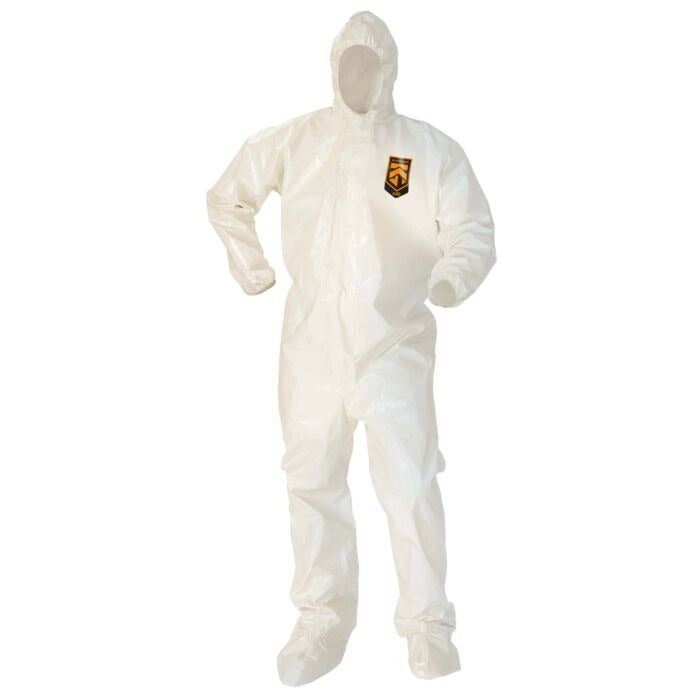
Kimberly-clark 45663 A80 Chemical Coveralls Hood Boots Large 12-pack

Availability:
In Stock
Ships same day if ordered by 12 pm
- $866.27
- $866.27
- Unit price
- / per
✓
Better Price in Cart
Manufacturer pricing rules prevent us from advertising our discount — no account or email required to see it.
-
Secure Payments
-
Easy Returns
-
Expert Advice
-
Fast Shipping
Product Description
The KIMBERLY-CLARK 45663 is a full-body chemical permeation and liquid jet protection coverall designed for workers in environments where exposure to hazardous chemical vapors, petrochemicals, or dangerous liquids is a risk. Built on the KleenGuard A80 platform, this coverall is constructed from Saranex 23-P film laminated to a durable fabric, delivering a soft, cloth-like feel while maintaining a high level of chemical barrier performance. Each case contains 12 coveralls in size Large. The garment has undergone ASTM F1001 Penetration Testing, making it a verified option for trades and industrial teams requiring compliant chemical PPE.
The 45663 is suited for chemical handling, mixing, and cleanup operations, hazardous material handling, waste cleanup, petrochemical facilities, utilities work, and industrial hazmat response. The A80 material and construction are intended for environments where direct contact with hazardous chemical vapors or liquid jets is a credible hazard. The included hood is designed for respirator compatibility, allowing this garment to integrate with complementary PPE such as supplied-air respirators or full-face respirators. Safety professionals, industrial hygienists, and licensed hazmat technicians typically specify and deploy this garment.
Key Features
- Saranex 23-P film laminated to durable fabric for chemical permeation and liquid jet protection
- ASTM F1001 Penetration Testing compliant for verified chemical barrier performance
- Respirator-fit hood designed for compatibility with complementary respiratory PPE
- Liquid-resistant, extra-long zipper with taped sealable storm flap for enhanced protection at the primary exposure area
- Elastic wrists and ankles plus integrated boots for full-body coverage
- Reflex design allows freedom of movement without compromising protection
Compatibility
Designed for use with complementary PPE including respirators and face shields where full chemical permeation and liquid jet protection is required. Intended for size Large wearers. Suitable applications include chemical handling and mixing, hazardous material and waste cleanup, petrochemical environments, utilities, and industrial hazmat operations.
Installation Notes
Donning and doffing of chemical protective coveralls should be performed according to site-specific hazmat protocols and applicable OSHA regulations. Power down or isolate chemical exposure sources before entry when possible. Inspect each garment for tears, punctures, or zipper defects before use. Dispose of used garments according to local regulations governing chemically contaminated PPE — these are single-use garments and must not be laundered or reused.
Technical Specifications

Complete your install
We pulled together the parts most installs need for this unit, plus a few add-ons worth a look. Check what you need — nothing here blocks checkout.
Loading install accessories...
Add install kit to cart
—
Related Products
- Choosing a selection results in a full page refresh.