


Search
-
HVAC Equipment
-
Ductless Mini Splits
- Ductless Mini Splits
- Shop By Zone
- Shop by BTU
- Shop By Brand
- Components
- Accessories
-
HVAC Parts & Supplies
- HVAC Parts & Supplies
- HVAC Supplies
- HVAC Tools
-
HVAC Replacement Parts
- Blower Housing & Assemblies
- Blower Wheels
- Breakers, Contactors & Disconnects
- Capacitors & Transformers
- Control & Circuit Boards
- Filter Driers & Accumulators
- Gas Valves & Conversion Kits
- Heat Exchangers
- Thermal Expansion Valves (TXV)
- Temperature Controls
- Wall Brackets & Parts
- Miscellaneous Parts
- O-Rings & Gaskets
- Hydronics
- Motors
- Thermostats & Zoning
-
Plumbing
-
Pool
-
Electrical
-
Air Quality
-
Tools & Supplies
-
Door Security & Hardware


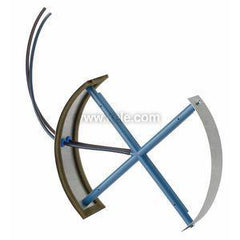
Johnson Controls RAA-14-X Flow Probe Kit 14 in Round

Availability:
Out Of Stock
- $126.39
- $126.39
- Unit price
- / per
✓
Better Price in Cart
Manufacturer pricing rules prevent us from advertising our discount — no account or email required to see it.
-
Secure Payments
-
Easy Returns
-
Expert Advice
-
Fast Shipping
Product Description
The JOHNSON CONTROLS RAA-14-X is a center averaging flow probe kit designed for round damper applications in commercial HVAC air distribution systems. The kit measures air velocity across a 14-inch round duct section using a center averaging probe array, providing a single averaged differential pressure signal that correlates to volumetric airflow. With a velocity range of 400 to 5,000 FPM and a stated accuracy of plus or minus 5 percent, the RAA-14-X gives HVAC controls technicians a reliable measurement point for balancing, commissioning, and demand-controlled ventilation applications. Maximum operating temperature is 120 degrees F. This kit is supplied without an actuator and without a differential pressure transmitter.
The RAA-14-X is suited for commercial and light-industrial HVAC installations where airflow measurement is required at a round duct or round damper station. Typical applications include air handling unit supply or return trunks, outside air intakes, and exhaust duct monitoring where a permanent, duct-mounted flow sensing element is needed. A differential pressure transmitter sourced separately connects to the probe ports to convert the sensed pressure difference into a velocity or flow signal for a building automation system or standalone controller. The probe kit is installed within the duct by a licensed HVAC or sheet metal contractor during system commissioning or retrofit.
Key Features
- Center averaging probe array delivers a single representative differential pressure reading across the full 14-inch round cross section
- Velocity measurement range of 400 to 5,000 FPM covers typical commercial HVAC airflow conditions
- Stated accuracy of plus or minus 5 percent for consistent air balancing and commissioning results
- Rated for duct air temperatures up to 120 degrees F
- Supplied without actuator and without differential pressure transmitter, allowing flexible pairing with existing controls hardware
- 14-inch round duct sizing for direct installation into matching round damper or duct section
Compatibility
Designed as an OEM-style round air flow station for 14-inch round duct and damper assemblies in commercial HVAC systems. A separately sourced differential pressure transmitter and, if required, a compatible round damper actuator are needed to complete the installation.
Installation Notes
Installation should be performed by a qualified HVAC or sheet metal technician familiar with duct-mounted instrumentation. Shut down the air handling unit and verify zero static pressure in the duct before inserting or removing the probe assembly. Follow the duct manufacturer and local mechanical code requirements for probe placement, minimum straight-run distances upstream and downstream, and penetration sealing. Connect the high and low pressure ports of the probe to a compatible differential pressure transmitter using appropriate tubing; do not cross-connect ports.
Technical Specifications

Complete your install
We pulled together the parts most installs need for this unit, plus a few add-ons worth a look. Check what you need — nothing here blocks checkout.
Loading install accessories...
Add install kit to cart
—
Related Products
- Choosing a selection results in a full page refresh.