


Search
-
HVAC Equipment
-
Ductless Mini Splits
- Ductless Mini Splits
- Shop By Zone
- Shop by BTU
- Shop By Brand
- Components
- Accessories
-
HVAC Parts & Supplies
- HVAC Parts & Supplies
- HVAC Supplies
- HVAC Tools
-
HVAC Replacement Parts
- Blower Housing & Assemblies
- Blower Wheels
- Breakers, Contactors & Disconnects
- Capacitors & Transformers
- Control & Circuit Boards
- Filter Driers & Accumulators
- Gas Valves & Conversion Kits
- Heat Exchangers
- Thermal Expansion Valves (TXV)
- Temperature Controls
- Wall Brackets & Parts
- Miscellaneous Parts
- O-Rings & Gaskets
- Hydronics
- Motors
- Thermostats & Zoning
-
Plumbing
-
Pool
-
Electrical
-
Air Quality
-
Tools & Supplies
-
Door Security & Hardware


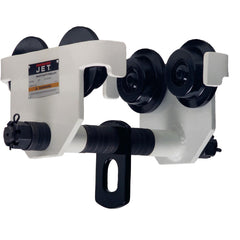
Jet 262005 Heavy Duty Manual Trolley 0.5 Ton
Ships in 4 - 5 Weeks
- $128.91
- $128.91
- Unit price
- / per
✓
Better Price in Cart
Manufacturer pricing rules prevent us from advertising our discount — no account or email required to see it.

Secure Payments
-
Easy Returns
-
Expert Advice
-
Fast Shipping
Product Description
The JET 262005 is a half-ton capacity heavy duty manual trolley designed for overhead material handling on compatible beam flanges. It allows operators to manually push or pull suspended loads along a runway beam, serving as a foundational component in hoist and rigging systems found in shops, warehouses, and industrial maintenance facilities. Rated at 0.5 tons, this trolley is built for reliable performance in demanding work environments. It weighs 12 pounds and is sold as an individual unit. Installation and use should be performed by qualified rigging or maintenance professionals familiar with overhead lifting equipment and applicable safety standards.
This manual trolley is suited for light-duty to moderate overhead lifting applications in fabrication shops, maintenance bays, and assembly areas. It works in conjunction with a manual chain hoist or similar lifting device mounted below the trolley body. Typical installations involve single-girder or monorail beam systems where push-pull load movement is required. The manual design eliminates the need for electrical connections, making it straightforward to integrate into existing beam systems where powered travel is not necessary or practical.
Key Features
- 0.5 ton load capacity for light to moderate overhead material handling
- Heavy duty manual push-pull travel along compatible beam flanges
- Compact and lightweight at 12 pounds for easier handling during installation
- No electrical components required, simplifying setup and maintenance
- Sold individually, allowing single-unit replacement or system expansion
Compatibility
Designed as an OEM-style replacement or new-installation manual trolley for use with compatible overhead monorail or single-girder beam systems rated for 0.5 ton capacity. Verify beam flange width compatibility before installation.
Installation Notes
Installation should be performed by a qualified rigging professional familiar with ASME B30.11 standards for underhung cranes and monorail systems. Before mounting, ensure the supporting beam and all structural connections are rated at or above the trolley and hoist system load. Inspect beam flange dimensions for compatibility with the trolley wheel spacing prior to assembly. Never exceed the rated load capacity and always follow the manufacturer's load test and inspection procedures before placing the system into service.
Technical Specifications

Complete your install
We pulled together the parts most installs need for this unit, plus a few add-ons worth a look. Check what you need — nothing here blocks checkout.
Loading install accessories...
Add install kit to cart
—
Related Products
- Choosing a selection results in a full page refresh.