


Search
-
HVAC Equipment
-
Ductless Mini Splits
- Ductless Mini Splits
- Shop By Zone
- Shop by BTU
- Shop By Brand
- Components
- Accessories
-
HVAC Parts & Supplies
- HVAC Parts & Supplies
- HVAC Supplies
- HVAC Tools
-
HVAC Replacement Parts
- Blower Housing & Assemblies
- Blower Wheels
- Breakers, Contactors & Disconnects
- Capacitors & Transformers
- Control & Circuit Boards
- Filter Driers & Accumulators
- Gas Valves & Conversion Kits
- Heat Exchangers
- Thermal Expansion Valves (TXV)
- Temperature Controls
- Wall Brackets & Parts
- Miscellaneous Parts
- O-Rings & Gaskets
- Hydronics
- Motors
- Thermostats & Zoning
-
Plumbing
-
Pool
-
Electrical
-
Air Quality
-
Tools & Supplies
-
Door Security & Hardware


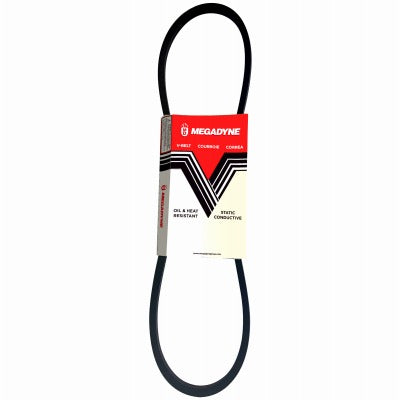
Jason Industrial A66 Rubber V-belt 0.5 X 68 Inches
Availability:
Out Of Stock
Ships in 3 - 4 Business Days
- $328.86
- $328.86
- Unit price
- / per
✓
Better Price in Cart
Manufacturer pricing rules prevent us from advertising our discount — no account or email required to see it.

Secure Payments
-
Easy Returns
-
Expert Advice
-
Fast Shipping
Product Description
The JASON INDUSTRIAL A66 is a black rubber V-belt designed for industrial power transmission applications. Sized at 0.5 inches wide by 68 inches in length, this A-section belt transfers rotational power between sheaves and pulleys in mechanical drive systems. It is typically installed by maintenance technicians, millwrights, and HVAC service professionals on equipment ranging from fans and blowers to compressors and pump drives. The rubber construction provides flexibility and durability under continuous load, making it a dependable replacement for worn or failed drive belts in both light industrial and commercial mechanical systems.
This belt is suited for A-section drive applications in industrial and commercial settings. Common install scenarios include air handling units, condenser fan assemblies, pump stations, and general-purpose machinery where a standard A-section V-belt is specified. The A66 designation identifies both the section profile and the effective belt length, allowing technicians to cross-reference against OEM drive specifications quickly. Packaged in quantities of 50 per case, this belt is appropriate for facilities and service fleets that maintain standing stock of drive belts.
Key Features
- A-section V-belt profile fits standard A-series sheaves and pulleys
- 0.5 inch width by 68 inch length for precise drive geometry
- Black rubber construction resists flex fatigue under sustained load
- Stocked in 50-unit case quantity for maintenance inventory programs
- Suitable for fan, blower, compressor, and pump drive applications
Compatibility
Designed as an OEM-style replacement for A-section V-belt drive systems requiring a 0.5 x 68 inch belt. Verify sheave groove profile and center-to-center distance against existing drive specifications before installation.
Installation Notes
A licensed or qualified mechanic or HVAC technician should de-energize and lock out the equipment before removing the old belt. Loosen the drive motor mounting to relieve tension before removing or seating the belt — never force a belt over a sheave flange using a pry tool, as this can damage belt cords. After seating the replacement belt, adjust center distance to achieve proper tension per the equipment manufacturer's specification, then re-check tension after the first few hours of operation.
Technical Specifications

Complete your install
We pulled together the parts most installs need for this unit, plus a few add-ons worth a look. Check what you need — nothing here blocks checkout.
Loading install accessories...
Add install kit to cart
—
Related Products
- Choosing a selection results in a full page refresh.