


Search
-
HVAC Equipment
-
Ductless Mini Splits
- Ductless Mini Splits
- Shop By Zone
- Shop by BTU
- Shop By Brand
- Components
- Accessories
-
HVAC Parts & Supplies
- HVAC Parts & Supplies
- HVAC Supplies
- HVAC Tools
-
HVAC Replacement Parts
- Blower Housing & Assemblies
- Blower Wheels
- Breakers, Contactors & Disconnects
- Capacitors & Transformers
- Control & Circuit Boards
- Filter Driers & Accumulators
- Gas Valves & Conversion Kits
- Heat Exchangers
- Thermal Expansion Valves (TXV)
- Temperature Controls
- Wall Brackets & Parts
- Miscellaneous Parts
- O-Rings & Gaskets
- Hydronics
- Motors
- Thermostats & Zoning
-
Plumbing
-
Pool
-
Electrical
-
Air Quality
-
Tools & Supplies
-
Door Security & Hardware


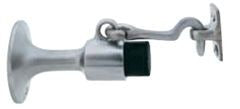
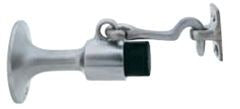
Ives WS44510B Wall Stop Holder Masonry Oil Rubbed Bronze
Availability:
In Stock

Ships same day if ordered by 12 pm
- $79.31
- $79.31
- Unit price
- / per
✓
Better Price in Cart
Manufacturer pricing rules prevent us from advertising our discount — no account or email required to see it.
-
Secure Payments
-
Easy Returns
-
Expert Advice
-
Fast Shipping
Product Description
The IVES WS44510B is a solid wall stop and holder designed to protect walls and doors from impact damage in commercial and residential door applications. It mounts directly to masonry surfaces, making it suitable for concrete block, brick, or poured concrete walls common in commercial construction. The unit features an oil rubbed bronze finish that coordinates with period and transitional architectural hardware schemes. At 3.75 inches in length with a 2.25-inch width and 2.25-inch height, the compact profile fits tight wall spaces without obstructing foot traffic. Installation requires masonry anchors appropriate to the substrate. This type of hardware is typically specified and installed by finish carpenters, facilities maintenance technicians, or commercial door hardware contractors.
The WS44510B is suited for interior door installations where standard stud or drywall mounting is not available or practical. Masonry-mounted wall stops are commonly found in commercial corridors, utility rooms, mechanical spaces, and public restrooms where CMU or concrete walls are the standard construction. The holder function allows the door to be held open at a fixed position, adding convenience in high-traffic areas. The oil rubbed bronze finish is appropriate for applications requiring a darker, antique-style aesthetic consistent with commercial and institutional hardware specifications.
Key Features
- Solid construction with masonry-specific mounting configuration for concrete and CMU walls
- Integrated holder function keeps door open at a fixed position
- Oil rubbed bronze finish coordinates with period and transitional architectural hardware
- Compact dimensions of 3.75 x 2.25 x 2.25 inches fit tight wall clearances
- Sold individually as a single unit
Compatibility
Designed as an OEM-style replacement or new-installation wall stop and holder for interior doors mounted adjacent to masonry or concrete surfaces.
Installation Notes
Installation should be performed by a qualified finish carpenter or door hardware technician familiar with masonry fastening systems. Select masonry anchors or fasteners rated for the specific substrate and load requirements per local building codes. Confirm door swing and stop placement before drilling to avoid conflict with door hardware or trim. Shut off any nearby electrical circuits before drilling into walls to avoid contact with concealed conduit or wiring.
WARNING: This product can expose you to chemicals including lead, which are known to the State of California to cause cancer and birth defects or other reproductive harm. For more information go to www.P65Warnings.ca.gov.
Technical Specifications

Complete your install
We pulled together the parts most installs need for this unit, plus a few add-ons worth a look. Check what you need — nothing here blocks checkout.
Loading install accessories...
Add install kit to cart
—
Related Products
- Choosing a selection results in a full page refresh.