


Search
-
HVAC Equipment
-
Ductless Mini Splits
- Ductless Mini Splits
- Shop By Zone
- Shop by BTU
- Shop By Brand
- Components
- Accessories
-
HVAC Parts & Supplies
- HVAC Parts & Supplies
- HVAC Supplies
- HVAC Tools
-
HVAC Replacement Parts
- Blower Housing & Assemblies
- Blower Wheels
- Breakers, Contactors & Disconnects
- Capacitors & Transformers
- Control & Circuit Boards
- Filter Driers & Accumulators
- Gas Valves & Conversion Kits
- Heat Exchangers
- Thermal Expansion Valves (TXV)
- Temperature Controls
- Wall Brackets & Parts
- Miscellaneous Parts
- O-Rings & Gaskets
- Hydronics
- Motors
- Thermostats & Zoning
-
Plumbing
-
Pool
-
Electrical
-
Air Quality
-
Tools & Supplies
-
Door Security & Hardware


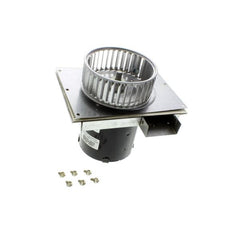
Honeywell swg-3 Sidewall Power Venter 70K Btu 3 Inch

Availability:
In Stock
Ships same day if ordered by 12 pm
- $904.67
- $904.67
- Unit price
- / per
✓
Better Price in Cart
Manufacturer pricing rules prevent us from advertising our discount — no account or email required to see it.
-
Secure Payments
-
Easy Returns
-
Expert Advice
-
Fast Shipping
Product Description
The HONEYWELL swg-3 is a sidewall power venter designed to mechanically exhaust flue gases from gas-fired heating appliances through an exterior wall. It handles a maximum venting capacity of 70,000 BTU/h and features a 3-inch inlet and 3-inch outlet, making it suited for small to mid-sized residential heating equipment. Licensed HVAC technicians install this unit when conventional natural-draft venting is impractical or when an appliance requires induced-draft sidewall termination. The power venter draws combustion byproducts out of the appliance and expels them horizontally through the sidewall rather than vertically through a flue or chimney.
The swg-3 is used in residential and light commercial applications where gas furnaces, boilers, or water heaters require sidewall exhaust venting. It is a common solution for retrofit installations where existing chimneys are unavailable, oversized, or lined for a different fuel type, and where sidewall termination meets local code requirements. The 3-inch connection size suits lower-input appliances up to 70,000 BTU/h. Installation typically follows IFGC and manufacturer guidelines for horizontal vent termination clearances.
Key Features
- Maximum venting capacity of 70,000 BTU/h for compatibility with smaller residential gas appliances
- 3-inch inlet and 3-inch outlet for straightforward connection to standard vent pipe
- Sidewall power venting eliminates the need for a conventional vertical chimney or B-vent
- Mechanically induced draft ensures reliable flue gas removal independent of natural convection
- Supports retrofit and new-installation scenarios where sidewall termination is required by design or code
Compatibility
Designed as an OEM-style replacement or new-installation sidewall power venter for residential gas-fired appliances requiring induced-draft sidewall exhaust with a 3-inch vent connection up to 70,000 BTU/h input.
Installation Notes
Installation should be performed by a licensed HVAC technician or qualified gas appliance service professional. Shut off gas supply and disconnect electrical power to the appliance before servicing or connecting the power venter. Sidewall termination location, clearances from openings, and vent pipe routing must comply with the IFGC, local mechanical codes, and the appliance manufacturer's venting instructions. Do not operate the appliance with the power venter disconnected or with the vent path obstructed.
Technical Specifications

Complete your install
We pulled together the parts most installs need for this unit, plus a few add-ons worth a look. Check what you need — nothing here blocks checkout.
Loading install accessories...
Add install kit to cart
—
Related Products
- Choosing a selection results in a full page refresh.