


Search
-
HVAC Equipment
-
Ductless Mini Splits
- Ductless Mini Splits
- Shop By Zone
- Shop by BTU
- Shop By Brand
- Components
- Accessories
-
HVAC Parts & Supplies
- HVAC Parts & Supplies
- HVAC Supplies
- HVAC Tools
-
HVAC Replacement Parts
- Blower Housing & Assemblies
- Blower Wheels
- Breakers, Contactors & Disconnects
- Capacitors & Transformers
- Control & Circuit Boards
- Filter Driers & Accumulators
- Gas Valves & Conversion Kits
- Heat Exchangers
- Thermal Expansion Valves (TXV)
- Temperature Controls
- Wall Brackets & Parts
- Miscellaneous Parts
- O-Rings & Gaskets
- Hydronics
- Motors
- Thermostats & Zoning
-
Plumbing
-
Pool
-
Electrical
-
Air Quality
-
Tools & Supplies
-
Door Security & Hardware


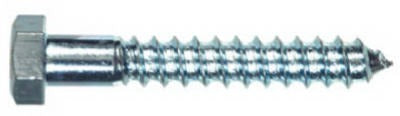
Hillman Fasteners 230021 Hex Head Lag Bolt 1/4x3 in Zinc 100pk
Availability:
In Stock

Ships same day if ordered by 12 pm
- $286.40
- $286.40
- Unit price
- / per
✓
Better Price in Cart
Manufacturer pricing rules prevent us from advertising our discount — no account or email required to see it.
-
Secure Payments
-
Easy Returns
-
Expert Advice
-
Fast Shipping
Product Description
The HILLMAN FASTENERS 230021 is a zinc-plated hex head lag bolt designed for heavy-duty fastening in wood-to-wood and hardware-to-wood structural applications. At 1/4 inch in diameter and 3 inches in length, this lag bolt provides reliable holding strength for framing, ledger boards, fencing, and general construction fastening tasks. The hex head drive style allows installation with a standard socket wrench or impact driver. Sold in a box of 100, this part suits contractors, carpenters, and tradespeople who require bulk quantities for jobsite efficiency. The zinc finish provides basic corrosion resistance for interior and protected exterior applications.
These lag bolts are used across residential and light commercial construction, including deck framing, fence post hardware, structural lumber connections, and equipment mounting to wood substrates. The 1/4 x 3 inch size is a common specification for mid-duty structural fastening where a through-bolt is not practical. Installers working on HVAC equipment mounting, electrical panel bracing, or plumbing support strut anchoring to wood framing will find this a standard-stock fastener size.
Key Features
- 1/4 inch diameter x 3 inch length — standard mid-duty structural lag bolt size
- Hex head drive accepts socket wrenches and impact drivers
- Zinc plating provides corrosion resistance for dry and protected applications
- 100-count bulk pack reduces jobsite restocking frequency
- Coarse-thread lag design for direct drive into wood without a nut
Compatibility
Designed as a general-purpose hex head lag bolt suitable for wood-to-wood and hardware-to-wood fastening applications requiring a 1/4 inch diameter, 3 inch length fastener.
Installation Notes
Lag bolts of this size typically require a pilot hole to prevent wood splitting — drill a pilot hole with a bit slightly smaller than the shank diameter before driving. Use a socket wrench or impact driver with the appropriate hex socket to seat the bolt fully without overdriving. For exterior structural connections, verify that a zinc finish meets the corrosion-resistance requirements of the applicable building code, as hot-dipped galvanized or stainless fasteners may be required in exposed or treated-lumber applications. Installation into structural members should follow applicable building code load and spacing requirements.
Technical Specifications

Related Products
- Choosing a selection results in a full page refresh.