


Search
-
HVAC Equipment
-
Ductless Mini Splits
- Ductless Mini Splits
- Shop By Zone
- Shop by BTU
- Shop By Brand
- Components
- Accessories
-
HVAC Parts & Supplies
- HVAC Parts & Supplies
- HVAC Supplies
- HVAC Tools
-
HVAC Replacement Parts
- Blower Housing & Assemblies
- Blower Wheels
- Breakers, Contactors & Disconnects
- Capacitors & Transformers
- Control & Circuit Boards
- Filter Driers & Accumulators
- Gas Valves & Conversion Kits
- Heat Exchangers
- Thermal Expansion Valves (TXV)
- Temperature Controls
- Wall Brackets & Parts
- Miscellaneous Parts
- O-Rings & Gaskets
- Hydronics
- Motors
- Thermostats & Zoning
-
Plumbing
-
Pool
-
Electrical
-
Air Quality
-
Tools & Supplies
-
Door Security & Hardware


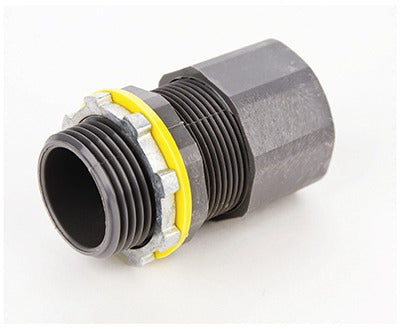

Halex/scott Fetzer 27693 Strain Relief Connector 1/2 Inches
Availability:
Out Of Stock
Ships in 3 - 4 Business Days
- $133.48
- $133.48
- Unit price
- / per
✓
Better Price in Cart
Manufacturer pricing rules prevent us from advertising our discount — no account or email required to see it.

Secure Payments
-
Easy Returns
-
Expert Advice
-
Fast Shipping
Product Description
The HALEX/SCOTT FETZER 27693 is a 1/2 inch non-metallic strain relief connector designed to secure flexible cord into steel outlet boxes and other metal enclosures. It accepts cord diameters ranging from .235 inches to .400 inches, making it compatible with a wide range of common flexible cord types including S, SO, ST, SJ, SJO, and SJT. The connector is rated for indoor use only and provides a secure, strain-relieving termination point where cord enters a metal enclosure. Electricians and maintenance technicians install this connector to protect cord insulation from abrasion at the knockout entry point and to prevent tensile load from reaching internal terminations. Each package contains 20 connectors.
This connector is used in residential and light commercial electrical applications where flexible cord must be routed into a steel outlet box or other metal enclosure. Typical install scenarios include connecting appliance cords, extension cord assemblies, and portable equipment leads to junction or outlet boxes. The indoor-only rating limits use to dry, protected environments. The .235 inch to .400 inch cord range covers most standard jacketed flexible cords in common service cord designations.
Key Features
- Fits 1/2 inch knockouts on steel outlet boxes and metal enclosures
- Cord range .235 inches to .400 inches accommodates multiple cord sizes
- Compatible with S, SO, ST, SJ, SJO, and SJT flexible cord types
- Non-metallic construction for corrosion resistance in indoor environments
- Rated for indoor use only, dry location applications
- Sold in a package of 20 connectors per unit of measure
Compatibility
Designed for use with S, SO, ST, SJ, SJO, and SJT flexible cords within the .235 inch to .400 inch cord range, connecting to steel outlet boxes or other metal enclosures with standard 1/2 inch knockouts.
Installation Notes
A licensed electrician should install strain relief connectors in accordance with NEC requirements for cord and flexible cable terminations. De-energize the circuit and verify absence of voltage before opening any enclosure for connector installation. Insert the connector body through the knockout from outside the box and secure with the provided locknut tightened by hand and then snugged with pliers. Do not overtighten the cord clamp, as excessive clamping force can damage cord insulation.
Technical Specifications

Complete your install
We pulled together the parts most installs need for this unit, plus a few add-ons worth a look. Check what you need — nothing here blocks checkout.
Loading install accessories...
Add install kit to cart
—
Related Products
- Choosing a selection results in a full page refresh.