


Search
-
HVAC Equipment
-
Ductless Mini Splits
- Ductless Mini Splits
- Shop By Zone
- Shop by BTU
- Shop By Brand
- Components
- Accessories
-
HVAC Parts & Supplies
- HVAC Parts & Supplies
- HVAC Supplies
- HVAC Tools
-
HVAC Replacement Parts
- Blower Housing & Assemblies
- Blower Wheels
- Breakers, Contactors & Disconnects
- Capacitors & Transformers
- Control & Circuit Boards
- Filter Driers & Accumulators
- Gas Valves & Conversion Kits
- Heat Exchangers
- Thermal Expansion Valves (TXV)
- Temperature Controls
- Wall Brackets & Parts
- Miscellaneous Parts
- O-Rings & Gaskets
- Hydronics
- Motors
- Thermostats & Zoning
-
Plumbing
-
Pool
-
Electrical
-
Air Quality
-
Tools & Supplies
-
Door Security & Hardware


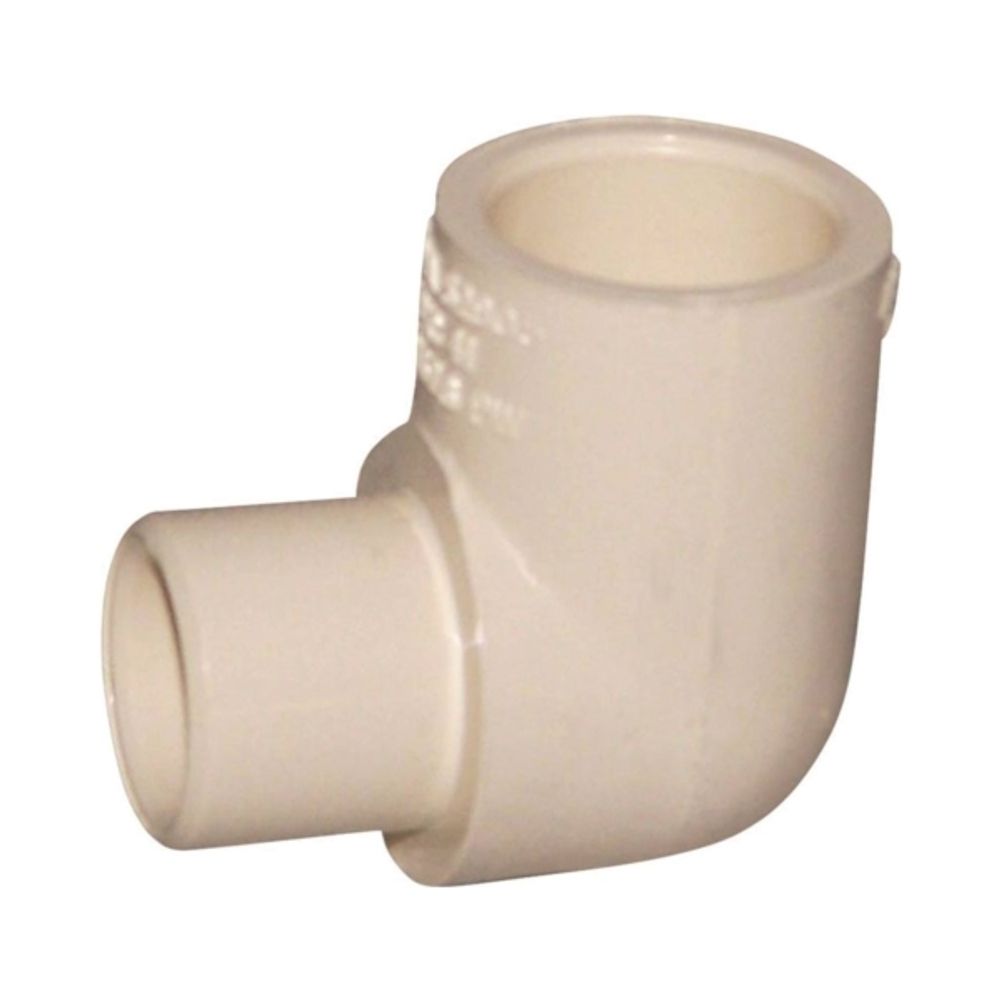

Genova 52905 Cpvc Street Elbow 1/2 in 90 Degree 400 Psi
Availability:
In Stock

Ships same day if ordered by 12 pm
- $14.99
- $14.99
- Unit price
- / per
✓
Better Price in Cart
Manufacturer pricing rules prevent us from advertising our discount — no account or email required to see it.
-
Secure Payments
-
Easy Returns
-
Expert Advice
-
Fast Shipping
Product Description
The GENOVA 52905 is a 1/2-inch CPVC street elbow designed to change direction in pressure piping systems at a 90-degree angle. It features a slip-joint socket on one end and a spigot on the other, allowing it to connect directly into a fitting socket without requiring an additional coupling. Rated at 400 psi and suitable for water temperatures up to 210 degrees F, this fitting is well-suited for hot and cold water distribution lines, including water heater relief valve drain applications. Licensed plumbers and pipefitters handle this fitting in both residential and light commercial plumbing rough-in work.
This street elbow is used in CPVC pressure piping systems where a compact 90-degree direction change is needed. The spigot end inserts directly into a standard CPVC fitting socket, eliminating one joint compared to a conventional elbow-plus-coupler assembly. It can also be used in combination with a conventional CPVC 90-degree elbow to fabricate a direction change at any angle. The outside diameter matches standard copper tube sizing, making this fitting compatible with copper-tube-sized CPVC systems accepted by all major model building codes. Its weighted average lead content of 0.25 percent meets applicable low-lead requirements for potable water service.
Key Features
- Spigot x slip-joint configuration eliminates an extra fitting joint in tight spaces
- 400 psi pressure rating for use in demanding cold and hot water supply lines
- Rated to 210 degrees F, suitable for water heater relief valve drain piping
- Copper-tube OD sizing accepted by all major model building codes
- Weighted average lead content of 0.25 percent for potable water compliance
- Can pair with a conventional CPVC 90-degree elbow to achieve any angle of direction change
Compatibility
Designed for use in copper-tube-sized CPVC pressure piping systems. Accepted by all major model building codes for residential and commercial hot and cold water distribution.
Installation Notes
Installation should be performed by a licensed plumber in accordance with the International Plumbing Code and local amendments. Shut off the water supply and relieve system pressure before cutting into any existing line. Use only CPVC-rated solvent cement and primer when making solvent-weld connections; do not substitute PVC cement. Allow full cure time per the cement manufacturer instructions before restoring pressure to the system.
Technical Specifications
- Material: CPVC
- Size: 1/2 inch
- Connection Type: Slip-Joint x Spigot
- Angle: 90 degrees
- Pressure Rating: 400 psi
- Maximum Temperature: 210 degrees F
- Lead Content: 0.25 percent weighted average
- Dimensions: 0.81 x 1.38 x 1.31 inches
- Weight: 0.02 pounds
Standard Information
- Brand: GENOVA
- Manufacturer Part Number: 52905

Complete your install
We pulled together the parts most installs need for this unit, plus a few add-ons worth a look. Check what you need — nothing here blocks checkout.
Loading install accessories...
Add install kit to cart
—
Related Products
- Choosing a selection results in a full page refresh.