


Search
-
HVAC Equipment
-
Ductless Mini Splits
- Ductless Mini Splits
- Shop By Zone
- Shop by BTU
- Shop By Brand
- Components
- Accessories
-
HVAC Parts & Supplies
- HVAC Parts & Supplies
- HVAC Supplies
- HVAC Tools
-
HVAC Replacement Parts
- Blower Housing & Assemblies
- Blower Wheels
- Breakers, Contactors & Disconnects
- Capacitors & Transformers
- Control & Circuit Boards
- Filter Driers & Accumulators
- Gas Valves & Conversion Kits
- Heat Exchangers
- Thermal Expansion Valves (TXV)
- Temperature Controls
- Wall Brackets & Parts
- Miscellaneous Parts
- O-Rings & Gaskets
- Hydronics
- Motors
- Thermostats & Zoning
-
Plumbing
-
Pool
-
Electrical
-
Air Quality
-
Tools & Supplies
-
Door Security & Hardware


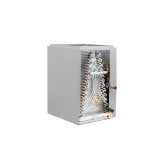

General Electric ncuc36bt4 Evaporator Coil 3 Ton Upflow

Availability:
Out Of Stock
Final Sale / No Returns
- $613.45
- $613.45
- Unit price
- / per
✓
Better Price in Cart
Manufacturer pricing rules prevent us from advertising our discount — no account or email required to see it.
This is a Final Sale item and cannot be returned or refunded. Exceptions apply for damaged or defective items.
LTL Delivery
This product weighs 75 lb each and will be shipped via LTL carrier. A lift gate option will be added free of charge for your convenience.
-
Secure Payments
-
Expert Advice
-
Fast Shipping
Product Description
The General Electric ncuc36bt4 is a cased, upflow evaporator coil rated at 3 tons (36,000 BTU/h) and designed for use with R410A refrigerant systems. It functions as the indoor heat-exchange component in a split-system air conditioner or heat pump, absorbing heat from return air as refrigerant evaporates through the coil assembly. The cased construction provides a factory-enclosed cabinet that simplifies installation into the airstream and helps maintain a sealed, efficient system. Licensed HVAC technicians install this coil as part of a complete cooling system, typically pairing it with a matched outdoor condensing unit and an air handler or furnace.
This upflow coil is suited for residential split-system cooling applications where conditioned air exits vertically upward from the air handler or furnace. The cased design integrates directly into the supply plenum above an upflow furnace or air handler cabinet. At 17.5 inches wide, 21 inches in length, and 23.25 inches tall, it is sized for standard residential equipment footprints. R410A compatibility makes it appropriate for current-generation residential cooling systems that have not yet transitioned away from that refrigerant.
Key Features
- 3-ton nominal capacity at 36,000 BTU/h for medium-sized residential cooling loads
- R410A refrigerant rated, compatible with current-generation split-system equipment
- Upflow air configuration for installation above upflow furnaces and air handlers
- Cased construction provides a factory-enclosed cabinet for a clean, sealed installation
- Compact item dimensions of 17.5 x 21 x 23.25 inches fit standard residential equipment openings
Compatibility
Designed as an OEM-style replacement or new-installation evaporator coil for residential upflow split-system air conditioners and heat pumps using R410A refrigerant.
Installation Notes
Installation must be performed by a licensed HVAC technician holding an EPA Section 608 certification for refrigerant handling. Always shut down and lock out the electrical supply to the air handler or furnace before accessing the coil cabinet. Verify that the coil dimensions and refrigerant type are compatible with the existing system before installation, and confirm proper drain pan and condensate line connections to prevent water damage. Follow local mechanical codes and the equipment manufacturer guidelines for refrigerant line sizing and system commissioning.
Technical Specifications

Complete your install
We pulled together the parts most installs need for this unit, plus a few add-ons worth a look. Check what you need — nothing here blocks checkout.
Loading install accessories...
Add install kit to cart
—
Related Products
- Choosing a selection results in a full page refresh.