


Search
-
HVAC Equipment
-
Ductless Mini Splits
- Ductless Mini Splits
- Shop By Zone
- Shop by BTU
- Shop By Brand
- Components
- Accessories
-
HVAC Parts & Supplies
- HVAC Parts & Supplies
- HVAC Supplies
- HVAC Tools
-
HVAC Replacement Parts
- Blower Housing & Assemblies
- Blower Wheels
- Breakers, Contactors & Disconnects
- Capacitors & Transformers
- Control & Circuit Boards
- Filter Driers & Accumulators
- Gas Valves & Conversion Kits
- Heat Exchangers
- Thermal Expansion Valves (TXV)
- Temperature Controls
- Wall Brackets & Parts
- Miscellaneous Parts
- O-Rings & Gaskets
- Hydronics
- Motors
- Thermostats & Zoning
-
Plumbing
-
Pool
-
Electrical
-
Air Quality
-
Tools & Supplies
-
Door Security & Hardware


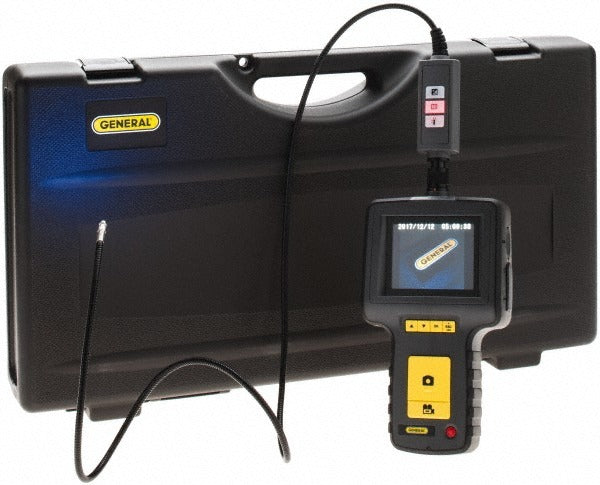

General DCS1600HP Video Borescope 1m Probe 620x480

Availability:
Out Of Stock
- $1,095.30
- $1,095.30
- Unit price
- / per
✓
Better Price in Cart
Manufacturer pricing rules prevent us from advertising our discount — no account or email required to see it.
-
Secure Payments
-
Easy Returns
-
Expert Advice
-
Fast Shipping
Product Description
The GENERAL DCS1600HP is a video borescope designed for visual inspection in hard-to-reach areas across HVAC, plumbing, electrical, and mechanical service applications. At its core, the system pairs a 1-meter (39-inch) flexible probe with a 4-inch TFT LCD display, delivering 620 x 480 pixel resolution for clear, real-time imaging. The probe head measures 0.22 inches in diameter and 0.78 inches in length, allowing it to navigate tight conduits, heat exchangers, drain lines, and confined mechanical spaces. The unit runs on a rechargeable lithium-ion battery included in the package, and ships with an 8 GB SD memory card for on-site recording of video and still images. Licensed trades use this tool for inspection, documentation, and diagnostic reporting without disassembly.
The DCS1600HP suits residential and light commercial inspection tasks where a compact, self-contained video inspection system is required. Typical applications include HVAC heat exchanger inspection, plumbing drain and pipe inspection, electrical conduit routing verification, and mechanical equipment diagnosis. The system is built around the H16 Console of the DCS1600 Recording Video Inspection System and uses the P16181HP probe. A 110-degree mirrored probe viewing tip is included, extending the effective field of view beyond the standard 60-degree camera angle for lateral inspection inside pipes and enclosures.
Key Features
- 1-meter flexible probe with 0.22-inch diameter fits tight conduits and access ports
- 620 x 480 pixel resolution on a 4-inch TFT LCD display for clear on-site viewing
- 60-degree field of view; 110-degree mirrored probe tip included for lateral inspection
- Wireless connection capability for extended system integration
- LED illumination at the camera head for low-light inspection environments
- Rechargeable lithium-ion battery and 8 GB SD card included; records video and stills
- Menu-driven interface; ships with RCA and USB cables plus AC adapter and charger
Compatibility
Designed for use with the GENERAL DCS1600 Recording Video Inspection System console (H16 Console). Compatible probe is the GENERAL P16181HP. Includes the AC2 AC adapter and charger. Verify console model before ordering if adding as a replacement probe-and-display kit.
Installation Notes
The DCS1600HP is a handheld inspection instrument and does not require permanent installation. Licensed HVAC technicians, plumbers, and electricians should power down and de-energize any equipment before inserting the probe near live electrical components or pressurized systems. Do not force the probe through bends tighter than the minimum bend radius of the cable. Inspect the probe and cable jacket for damage before each use to prevent contamination of the inspection environment.
Technical Specifications

Complete your install
We pulled together the parts most installs need for this unit, plus a few add-ons worth a look. Check what you need — nothing here blocks checkout.
Loading install accessories...
Add install kit to cart
—
Related Products
- Choosing a selection results in a full page refresh.