


Search
-
HVAC Equipment
-
Ductless Mini Splits
- Ductless Mini Splits
- Shop By Zone
- Shop by BTU
- Shop By Brand
- Components
- Accessories
-
HVAC Parts & Supplies
- HVAC Parts & Supplies
- HVAC Supplies
- HVAC Tools
-
HVAC Replacement Parts
- Blower Housing & Assemblies
- Blower Wheels
- Breakers, Contactors & Disconnects
- Capacitors & Transformers
- Control & Circuit Boards
- Filter Driers & Accumulators
- Gas Valves & Conversion Kits
- Heat Exchangers
- Thermal Expansion Valves (TXV)
- Temperature Controls
- Wall Brackets & Parts
- Miscellaneous Parts
- O-Rings & Gaskets
- Hydronics
- Motors
- Thermostats & Zoning
-
Plumbing
-
Pool
-
Electrical
-
Air Quality
-
Tools & Supplies
-
Door Security & Hardware


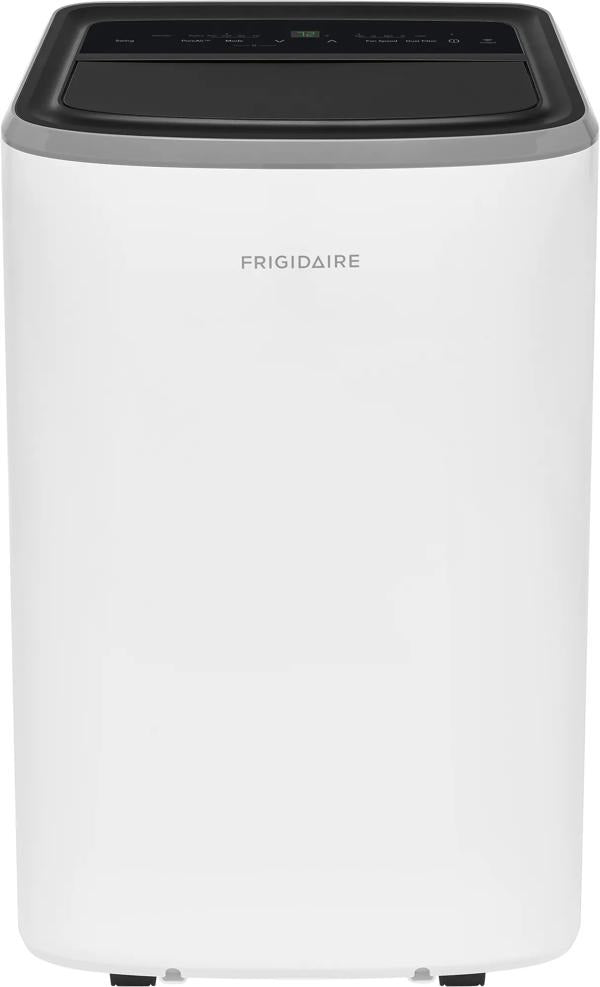
Frigidaire FHPW122AC1 Portable Air Conditioner 12000 Btu
Availability:
In Stock
Ships in 7 - 8 Business Days
- $510.42
- $510.42
- Unit price
- / per
✓
Better Price in Cart
Manufacturer pricing rules prevent us from advertising our discount — no account or email required to see it.

LTL Delivery
This product weighs 69 lb each and will be shipped via LTL carrier. A lift gate option will be added free of charge for your convenience.
-
Secure Payments
-
Easy Returns
-
Expert Advice
-
Fast Shipping
Product Description
The FRIGIDAIRE FHPW122AC1 is a portable room air conditioner rated at 12,000 BTU/h (ASHRAE) and 8,000 BTU/h (DOE) that cools, dehumidifies, and circulates air as a 3-in-1 unit. It connects to the Frigidaire app over Wi-Fi, allowing remote control of power, temperature, and fan speed from any location. A built-in clean air ionizer reduces airborne particles, and an auto-swing louver distributes conditioned air across the room. The unit rolls on caster wheels for portability between rooms. Licensed HVAC technicians and qualified service pros typically handle installation, though the portable design also suits knowledgeable owner-operators.
The FHPW122AC1 is suited for residential spot-cooling applications where a permanently installed window or split-system unit is not practical. Typical use cases include apartments with window restrictions, server closets, sunrooms, and temporary workspaces. The unit requires a single exhaust hose connection to a window kit for proper heat rejection. Multi-speed fan control and a dedicated Dry Mode allow the unit to manage both temperature and humidity independently, making it useful in climates where humidity is a significant comfort factor.
Key Features
- 12,000 BTU/h (ASHRAE) and 8,000 BTU/h (DOE) cooling capacity for residential spot-cooling
- Wi-Fi connected via the Frigidaire app for remote on/off, temperature, and fan speed control
- Built-in clean air ionizer reduces airborne particles
- Auto-swing louver with multiple fan speeds for optimized air distribution
- Dehumidifying Dry Mode for independent humidity control
- Programmable 24-hour on/off timer in 30-minute increments
- Sleep Mode gradually adjusts temperature for overnight energy savings
- Automatic restart resumes previous settings after a power interruption
- Washable dust filter and caster wheels for ease of maintenance and portability
Compatibility
Designed as a self-contained portable room air conditioner requiring a standard window exhaust kit connection; no additional central-system integration is required.
Installation Notes
Installation involves routing the exhaust hose through a compatible window kit to vent heat outdoors — ensure the window kit seals properly to prevent warm air re-entry. The unit should be plugged into a dedicated, properly grounded electrical circuit that matches its rated voltage and amperage requirements. Before servicing or relocating the unit, power it down completely and allow internal components to reach ambient temperature. Consult local building codes and the manufacturer installation guide for ventilation clearance requirements.
Technical Specifications

Complete your install
We pulled together the parts most installs need for this unit, plus a few add-ons worth a look. Check what you need — nothing here blocks checkout.
Loading install accessories...
Add install kit to cart
—
Related Products
- Choosing a selection results in a full page refresh.