


Search
-
HVAC Equipment
-
Ductless Mini Splits
- Ductless Mini Splits
- Shop By Zone
- Shop by BTU
- Shop By Brand
- Components
- Accessories
-
HVAC Parts & Supplies
- HVAC Parts & Supplies
- HVAC Supplies
- HVAC Tools
-
HVAC Replacement Parts
- Blower Housing & Assemblies
- Blower Wheels
- Breakers, Contactors & Disconnects
- Capacitors & Transformers
- Control & Circuit Boards
- Filter Driers & Accumulators
- Gas Valves & Conversion Kits
- Heat Exchangers
- Thermal Expansion Valves (TXV)
- Temperature Controls
- Wall Brackets & Parts
- Miscellaneous Parts
- O-Rings & Gaskets
- Hydronics
- Motors
- Thermostats & Zoning
-
Plumbing
-
Pool
-
Electrical
-
Air Quality
-
Tools & Supplies
-
Door Security & Hardware


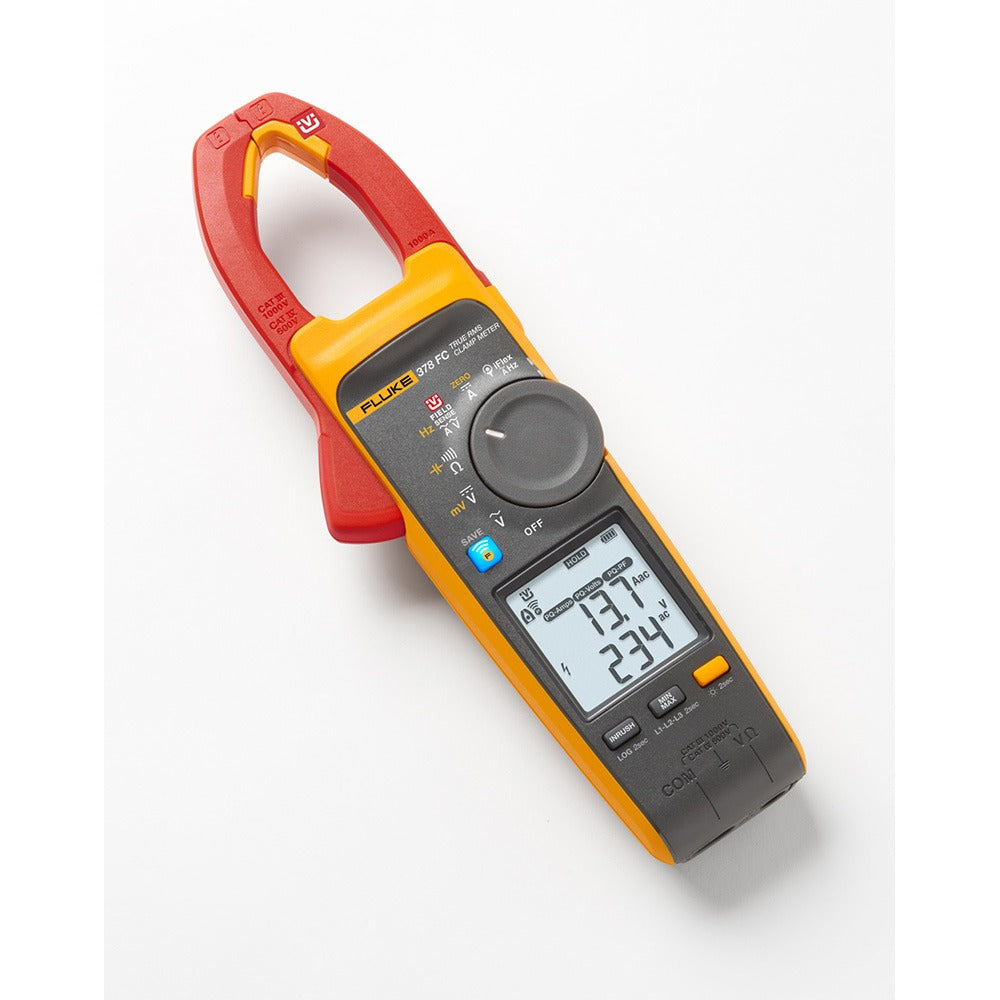
Fluke FLUKE-378 Fc True Rms Clamp Meter 1000V Cat Iii Iv

Availability:
In Stock
Ships same day if ordered by 12 pm
- $1,142.27
- $1,142.27
- Unit price
- / per
✓
Better Price in Cart
Manufacturer pricing rules prevent us from advertising our discount — no account or email required to see it.
-
Secure Payments
-
Easy Returns
-
Expert Advice
-
Fast Shipping
Product Description
The FLUKE FLUKE-378 FC is a True RMS clamp-on meter rated for 1000 VAC and 1000 VDC measurements, designed for licensed electricians and instrumentation technicians working on commercial and industrial electrical systems. The meter measures voltage, current, capacitance, resistance, and power in a single handheld tool. It features a digital display with True RMS AC wave measurement, ensuring accurate readings on non-sinusoidal loads common in variable-frequency drive circuits and other distorted-waveform environments. The FLUKE-378 FC ships as a complete kit including the meter, an iFlex flexible current probe, silicone-insulated test leads, adjustable test probes, a grounding clip, and a magnetic hanging kit.
The FLUKE-378 FC is suited for residential service panels, commercial electrical distribution, and light industrial applications where CAT III and CAT IV safety ratings are required. The included iFlex flexible current probe allows access to conductors in tight or congested panels where a rigid jaw clamp cannot fit. The meter supports a temperature measurement range of -10 to 50 degrees C, making it useful for basic thermal checks during commissioning or troubleshooting. The magnetic hanging kit adds hands-free convenience during single-technician service calls.
Key Features
- True RMS AC measurement for accurate readings on distorted waveforms and VFD-driven loads
- Measures capacitance, current, resistance, voltage, and power from a single instrument
- Rated CAT III and CAT IV for use in high-energy electrical environments
- 1000 VAC and 1000 VDC maximum voltage measurement
- Includes iFlex flexible current probe for access in congested panel wiring
- Complies with IEC 61326-1 and CISPR 11 Group 1 Class B electromagnetic compatibility standards
Compatibility
Designed as a general-purpose True RMS clamp meter for use on single-phase and multi-phase low-voltage electrical systems rated up to 1000 volts, suitable wherever CAT III or CAT IV measurement category compliance is required.
Installation Notes
Installation and use of this meter should be performed by a qualified electrician or instrumentation technician familiar with NEC safety practices for live electrical measurement. Always verify the circuit voltage does not exceed the meter's 1000-volt rating before taking a measurement. De-energize and lock out circuits whenever possible before connecting test leads to terminals. Inspect test leads and probes for insulation damage before each use.
Technical Specifications

Complete your install
We pulled together the parts most installs need for this unit, plus a few add-ons worth a look. Check what you need — nothing here blocks checkout.
Loading install accessories...
Add install kit to cart
—
Related Products
- Choosing a selection results in a full page refresh.