


Search
-
HVAC Equipment
-
Ductless Mini Splits
- Ductless Mini Splits
- Shop By Zone
- Shop by BTU
- Shop By Brand
- Components
- Accessories
-
HVAC Parts & Supplies
- HVAC Parts & Supplies
- HVAC Supplies
- HVAC Tools
-
HVAC Replacement Parts
- Blower Housing & Assemblies
- Blower Wheels
- Breakers, Contactors & Disconnects
- Capacitors & Transformers
- Control & Circuit Boards
- Filter Driers & Accumulators
- Gas Valves & Conversion Kits
- Heat Exchangers
- Thermal Expansion Valves (TXV)
- Temperature Controls
- Wall Brackets & Parts
- Miscellaneous Parts
- O-Rings & Gaskets
- Hydronics
- Motors
- Thermostats & Zoning
-
Plumbing
-
Pool
-
Electrical
-
Air Quality
-
Tools & Supplies
-
Door Security & Hardware


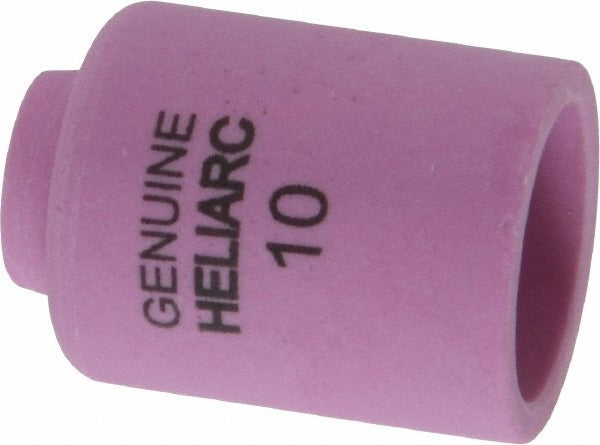
Esab 0588000440 Alumina Tig Torch Nozzle Size 10 16mm

Availability:
In Stock
Ships same day if ordered by 12 pm
- $58.21
- $58.21
- Unit price
- / per
✓
Better Price in Cart
Manufacturer pricing rules prevent us from advertising our discount — no account or email required to see it.
-
Secure Payments
-
Easy Returns
-
Expert Advice
-
Fast Shipping
Product Description
The ESAB 0588000440 is an alumina ceramic nozzle designed for TIG welding torches, specifically sized at 16mm (5/8 inch) orifice diameter and classified as a Size 10 nozzle. Alumina construction provides excellent heat resistance and electrical insulation, making it well-suited for sustained TIG welding operations where the nozzle is exposed to high arc temperatures. This nozzle directs shielding gas flow around the tungsten electrode and weld pool to protect the arc zone from atmospheric contamination. It corresponds to industry standard number 13N13, giving welders and supply shops a familiar cross-reference point. Installation and replacement are handled by TIG welders and skilled fabricators as part of routine torch maintenance.
This nozzle is designed for use with ESAB HW20 and 20A TIG torches. It suits light-to-medium duty TIG welding applications across fabrication shops, maintenance and repair operations, and field welding environments where those torch models are in service. The Size 10 designation indicates the nozzle bore size, which governs shielding gas coverage area and is selected based on tungsten diameter and weld joint access requirements. Welders working on aluminum, stainless steel, and other metals requiring clean, oxide-free welds will commonly use this nozzle configuration.
Key Features
- Alumina ceramic construction for high heat resistance and electrical insulation
- 16mm (5/8 inch) orifice diameter, Size 10 classification
- Compatible with ESAB HW20 and 20A TIG torches
- Cross-references to industry standard number 13N13
- Sold individually, single-piece packaging
Compatibility
Designed for use with ESAB HW20 and 20A TIG torches. Corresponds to industry standard nozzle number 13N13, which may assist in cross-referencing equivalent nozzles from other manufacturers.
Installation Notes
TIG nozzle replacement is performed by welders and welding maintenance technicians as part of standard torch upkeep. Before replacing the nozzle, ensure the torch is disconnected from the power source and the gas supply is shut off. Alumina nozzles are brittle and should be threaded on by hand without excessive force to avoid cracking. Inspect the collet body and back cap for wear or contamination whenever the nozzle is serviced.
Technical Specifications

Complete your install
We pulled together the parts most installs need for this unit, plus a few add-ons worth a look. Check what you need — nothing here blocks checkout.
Loading install accessories...
Add install kit to cart
—
Related Products
- Choosing a selection results in a full page refresh.