


Search
-
HVAC Equipment
-
Ductless Mini Splits
- Ductless Mini Splits
- Shop By Zone
- Shop by BTU
- Shop By Brand
- Components
- Accessories
-
HVAC Parts & Supplies
- HVAC Parts & Supplies
- HVAC Supplies
- HVAC Tools
-
HVAC Replacement Parts
- Blower Housing & Assemblies
- Blower Wheels
- Breakers, Contactors & Disconnects
- Capacitors & Transformers
- Control & Circuit Boards
- Filter Driers & Accumulators
- Gas Valves & Conversion Kits
- Heat Exchangers
- Thermal Expansion Valves (TXV)
- Temperature Controls
- Wall Brackets & Parts
- Miscellaneous Parts
- O-Rings & Gaskets
- Hydronics
- Motors
- Thermostats & Zoning
-
Plumbing
-
Pool
-
Electrical
-
Air Quality
-
Tools & Supplies
-
Door Security & Hardware


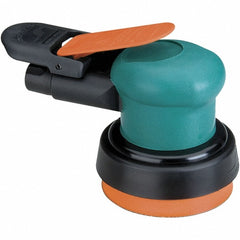
Dynabrade 59000 Air Orbital Sander 3.5 Inch Pad 12000 Opm
Availability:
In Stock

Ships same day if ordered by 12 pm
- $348.29
- $348.29
- Unit price
- / per
✓
Better Price in Cart
Manufacturer pricing rules prevent us from advertising our discount — no account or email required to see it.
-
Secure Payments
-
Easy Returns
-
Expert Advice
-
Fast Shipping
Product Description
The DYNABRADE 59000 is a pneumatic palm-style random orbital sander built for production finishing work in automotive, woodworking, and general fabrication environments. It runs on compressed air at 90 psi and spins a 3.5-inch round urethane sanding pad at 12,000 orbits per minute with a 3/8-inch orbit diameter. At 0.25 HP and 1.4 pounds, it sits comfortably in one hand for extended use. Air consumption runs at 14 CFM through a 1/4-inch NPT inlet, so a properly sized air line and compressor are required for consistent performance. The rear exhaust location keeps airflow directed away from the work surface. This tool is installed and serviced by automotive body technicians, industrial painters, and finish carpenters.
The 59000 is suited for flat and contoured surface sanding where a random orbital pattern is required to minimize swirl marks. The compact palm grip and 6-inch overall length make it practical in tight spaces and on vertical surfaces. Typical applications include primer leveling, seam blending, and surface prep before topcoat application in both shop and field settings. It ships with a premium urethane weight-mated sanding pad installed, so it is ready for use once connected to an air supply meeting the required pressure and flow specifications.
Key Features
- Random orbital action at 12,000 OPM with a 3/8-inch orbit diameter for swirl-free surface finishing
- 3.5-inch round pad accepts standard hook-and-loop abrasive discs
- Palm sander form factor at 6 inches overall length and 1.4 pounds for reduced operator fatigue
- Includes premium urethane weight-mated sanding pad for balanced operation
- 1/4-inch NPT rear-exhaust inlet compatible with standard shop air fittings
- Rear exhaust directs air away from the workpiece to reduce surface contamination
Compatibility
Designed as an OEM-style pneumatic palm sander compatible with standard 3.5-inch round hook-and-loop abrasive discs. Requires a compressed air supply delivering at least 90 psi and 14 CFM through a minimum 1/4-inch diameter air hose.
Installation Notes
Connection and servicing should be performed by personnel trained in pneumatic tool operation. Before connecting or disconnecting the air line, shut off the compressed air supply and bleed any residual pressure from the hose. Verify the air supply meets the minimum 90 psi and 14 CFM requirements, and use a properly rated inline filter-regulator-lubricator to protect tool internals and maintain consistent performance. Follow applicable shop safety guidelines and manufacturer service documentation when replacing the sanding pad or performing internal maintenance.
Technical Specifications

Complete your install
We pulled together the parts most installs need for this unit, plus a few add-ons worth a look. Check what you need — nothing here blocks checkout.
Loading install accessories...
Add install kit to cart
—
Related Products
- Choosing a selection results in a full page refresh.