


Search
-
HVAC Equipment
-
Ductless Mini Splits
- Ductless Mini Splits
- Shop By Zone
- Shop by BTU
- Shop By Brand
- Components
- Accessories
-
HVAC Parts & Supplies
- HVAC Parts & Supplies
- HVAC Supplies
- HVAC Tools
-
HVAC Replacement Parts
- Blower Housing & Assemblies
- Blower Wheels
- Breakers, Contactors & Disconnects
- Capacitors & Transformers
- Control & Circuit Boards
- Filter Driers & Accumulators
- Gas Valves & Conversion Kits
- Heat Exchangers
- Thermal Expansion Valves (TXV)
- Temperature Controls
- Wall Brackets & Parts
- Miscellaneous Parts
- O-Rings & Gaskets
- Hydronics
- Motors
- Thermostats & Zoning
-
Plumbing
-
Pool
-
Electrical
-
Air Quality
-
Tools & Supplies
-
Door Security & Hardware


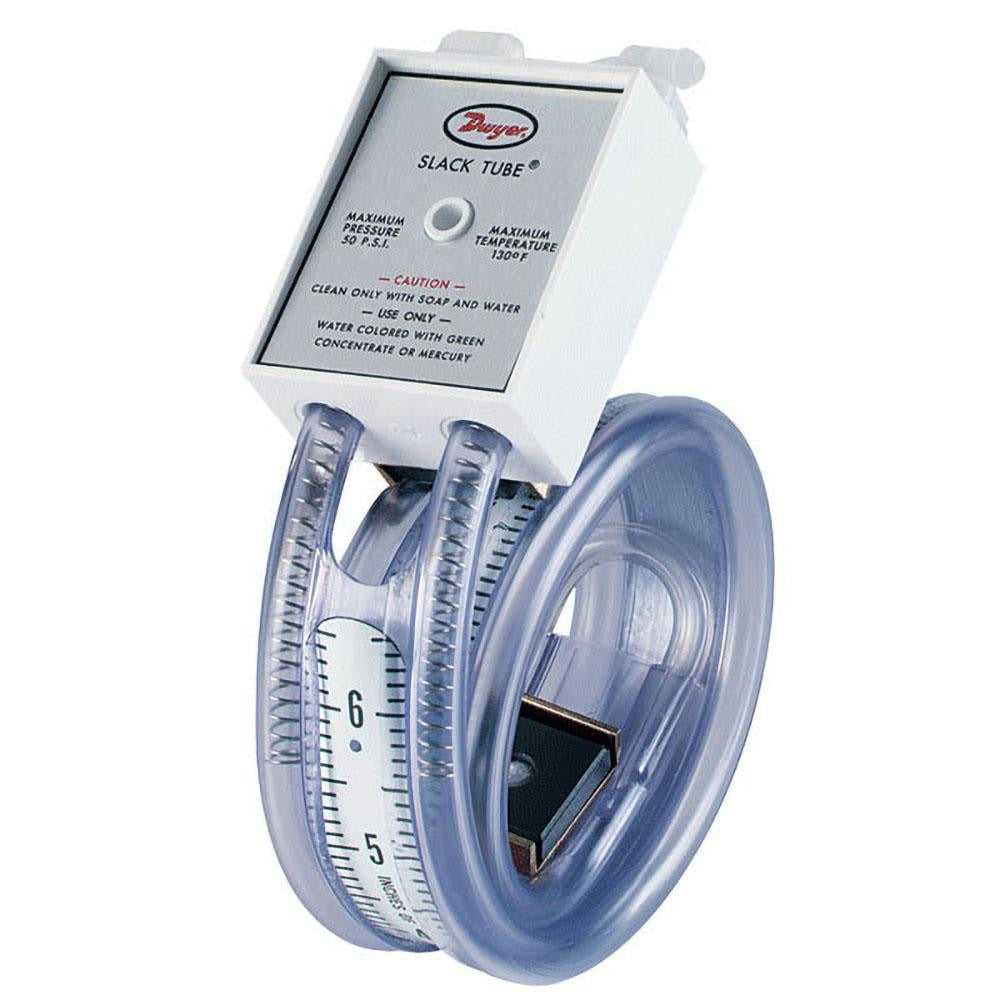
Dwyer 1211-12 Slack Tube Manometer 50 Psi Max

Availability:
In Stock
Ships same day if ordered by 12 pm
- $219.77
- $219.77
- Unit price
- / per
✓
Better Price in Cart
Manufacturer pricing rules prevent us from advertising our discount — no account or email required to see it.
-
Secure Payments
-
Easy Returns
-
Expert Advice
-
Fast Shipping
Product Description
The DWYER 1211-12 is a slack tube manometer designed for measuring low-pressure differentials in HVAC, plumbing, and mechanical system applications. It reads across a range of -6 to 6 inches water column and is rated for a maximum of 50 psi. The plastic body and case construction keep the instrument lightweight at 1.8125 pounds, making it easy to carry on service calls. HVAC technicians and mechanical contractors use this instrument to verify airflow, check static pressure, and balance duct systems. The 20.75-inch overall height and sloped tube design allow for clear, accurate readings without additional tools.
This manometer is well-suited for residential and light commercial HVAC service work, including air balancing, filter pressure drop checks, and combustion air verification. The -6 to 6 inch water column measurement range covers the low-pressure differentials typical in duct systems, furnace heat exchangers, and ventilation equipment. A maximum operating temperature of 130 degrees F makes it appropriate for environments near warm air equipment. Technicians typically use it alongside a pitot tube or pressure probe to take inline readings at test ports or duct taps.
Key Features
- Measurement range of -6 to 6 inches water column for low-pressure differential readings
- 50 psi maximum rated pressure for safe connection to pressurized systems
- 130 degrees F maximum operating temperature suits warm-air HVAC environments
- Plastic body and case construction reduce weight for field portability
- 0.13-inch connection size compatible with standard pressure tubing and fittings
- Compact 2.17-inch width fits easily in a tool bag or service kit
Compatibility
Designed as an OEM-style field instrument for use with residential and light commercial HVAC duct systems, air handlers, and ventilation equipment requiring low-pressure differential measurement in the inch water column range.
Installation Notes
This instrument is typically installed and used by licensed HVAC technicians performing system commissioning, air balancing, or diagnostic work. Before connecting, ensure the system is at a stable operating condition and that connection ports are de-pressurized or within the rated pressure range of the instrument. Use appropriate tubing rated for the system pressure and temperature. Do not exceed the 50 psi maximum pressure rating or the 130 degrees F temperature limit, as doing so may damage the plastic housing or cause inaccurate readings.
Technical Specifications

Complete your install
We pulled together the parts most installs need for this unit, plus a few add-ons worth a look. Check what you need — nothing here blocks checkout.
Loading install accessories...
Add install kit to cart
—
Related Products
- Choosing a selection results in a full page refresh.