


Search
-
HVAC Equipment
-
Ductless Mini Splits
- Ductless Mini Splits
- Shop By Zone
- Shop by BTU
- Shop By Brand
- Components
- Accessories
-
HVAC Parts & Supplies
- HVAC Parts & Supplies
- HVAC Supplies
- HVAC Tools
-
HVAC Replacement Parts
- Blower Housing & Assemblies
- Blower Wheels
- Breakers, Contactors & Disconnects
- Capacitors & Transformers
- Control & Circuit Boards
- Filter Driers & Accumulators
- Gas Valves & Conversion Kits
- Heat Exchangers
- Thermal Expansion Valves (TXV)
- Temperature Controls
- Wall Brackets & Parts
- Miscellaneous Parts
- O-Rings & Gaskets
- Hydronics
- Motors
- Thermostats & Zoning
-
Plumbing
-
Pool
-
Electrical
-
Air Quality
-
Tools & Supplies
-
Door Security & Hardware


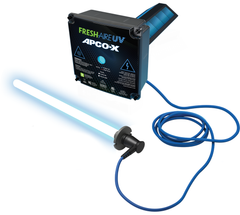
Diversitech TUV-APCOX-DI3 In-duct Dual Uv-c System 110-270V

Availability:
Out Of Stock
- $986.35
- $986.35
- Unit price
- / per
✓
Better Price in Cart
Manufacturer pricing rules prevent us from advertising our discount — no account or email required to see it.
-
Secure Payments
-
Easy Returns
-
Expert Advice
-
Fast Shipping
Product Description
The DIVERSITECH TUV-APCOX-DI3 is a dual-bulb, in-duct UV-C air treatment system designed for continuous whole-system air sanitation in forced-air HVAC installations. Operating across a wide voltage range of 110 to 270 volts, it accommodates both residential and light commercial electrical configurations without requiring a dedicated transformer or step-down device. The system uses two high-output UV-C lamps rated for a 3-year service life, reducing the frequency of lamp replacement compared to standard annual-change units. It targets mold, bacteria, and odors in circulating air, treating air at the duct level before it reaches occupied spaces. Licensed HVAC technicians are the typical installers for this type of in-duct equipment.
This system is intended for installation directly into HVAC supply or return ductwork where airflow is continuous during system operation. It suits residential forced-air systems as well as light commercial applications where duct access is available and UV-C treatment is specified. The 110-270V operating range makes it appropriate for a broad range of existing electrical infrastructure. Because treatment occurs inside the duct, it works independently of the air handler or furnace brand and does not require modification to the coil, blower, or control board. Installers specify this type of unit when a client requires in-duct biological and odor control as part of an IAQ upgrade.
Key Features
- Dual high-output UV-C lamps for broad-spectrum in-duct air treatment
- 3-year rated lamp service life reduces maintenance intervals compared to standard 1-year lamps
- Wide voltage range of 110 to 270 volts supports residential and light commercial installations
- In-duct mounting treats circulating air continuously during system operation
- Targets mold, bacteria, and airborne odors without impeding airflow or system performance
Compatibility
Designed as an in-duct UV-C air treatment system suitable for installation in standard forced-air HVAC ductwork across a wide range of residential and light commercial applications.
Installation Notes
Installation is performed by a licensed HVAC technician. Power to the air handler and associated circuits must be shut off and locked out before cutting into ductwork or making any electrical connections. UV-C lamps produce radiation that is hazardous to eyes and skin — the system must be fully enclosed and the access panel secured before restoring power. Follow applicable local codes and manufacturer instructions for duct penetration, mounting orientation, and wiring.
Technical Specifications

Complete your install
We pulled together the parts most installs need for this unit, plus a few add-ons worth a look. Check what you need — nothing here blocks checkout.
Loading install accessories...
Add install kit to cart
—
Related Products
- Choosing a selection results in a full page refresh.