


Search
-
HVAC Equipment
-
Ductless Mini Splits
- Ductless Mini Splits
- Shop By Zone
- Shop by BTU
- Shop By Brand
- Components
- Accessories
-
HVAC Parts & Supplies
- HVAC Parts & Supplies
- HVAC Supplies
- HVAC Tools
-
HVAC Replacement Parts
- Blower Housing & Assemblies
- Blower Wheels
- Breakers, Contactors & Disconnects
- Capacitors & Transformers
- Control & Circuit Boards
- Filter Driers & Accumulators
- Gas Valves & Conversion Kits
- Heat Exchangers
- Thermal Expansion Valves (TXV)
- Temperature Controls
- Wall Brackets & Parts
- Miscellaneous Parts
- O-Rings & Gaskets
- Hydronics
- Motors
- Thermostats & Zoning
-
Plumbing
-
Pool
-
Electrical
-
Air Quality
-
Tools & Supplies
-
Door Security & Hardware


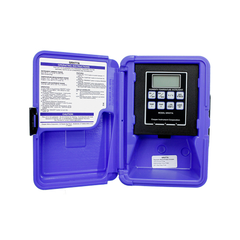
Diversitech CT-SRH77A Super Heat Wet Bulb Kit

Availability:
In Stock
Ships same day if ordered by 12 pm
- $945.92
- $945.92
- Unit price
- / per
✓
Better Price in Cart
Manufacturer pricing rules prevent us from advertising our discount — no account or email required to see it.
-
Secure Payments
-
Easy Returns
-
Expert Advice
-
Fast Shipping
Product Description
The DIVERSITECH CT-SRH77A is a superheat and wet bulb diagnostic kit designed for HVAC technicians performing refrigerant system analysis and airside performance checks. The kit includes a digital temperature and humidity meter with a backlit display and sealed keypad, a stainless steel puncture probe, an aluminum pipe strap surface probe, and a dedicated humidity probe. The meter measures temperatures from 40 degrees F to 300 degrees F and relative humidity from approximately 10% to 95%. Built-in wet bulb calculation and temperature differential measurement make it a capable tool for evaluating system performance without additional instruments.
This kit is suited for residential and light commercial HVAC service work where accurate superheat and wet bulb readings are required during system commissioning, refrigerant charging, and diagnostic calls. The multi-zone monitoring capability allows a technician to track conditions across several measurement points in a single session. The sealed keypad resists moisture and debris common in field service environments. The combination of three probe types in one kit covers suction line surface readings, refrigerant line puncture access, and ambient humidity measurement in a single package.
Key Features
- Temperature range: 40 degrees F to 300 degrees F for broad system coverage
- Relative humidity measurement from approximately 10% to 95%
- Built-in wet bulb calculation eliminates manual psychrometric chart lookup
- Temperature differential measurement supports superheat and subcooling diagnostics
- Min/max memory function records peak and low readings during a service call
- Backlit display and sealed keypad for readability and durability in field conditions
- Includes stainless steel puncture probe, aluminum pipe strap surface probe, and humidity probe
Compatibility
Designed as a field diagnostic instrument for use with residential and light commercial HVAC refrigerant systems requiring superheat, wet bulb, and humidity measurement during service and commissioning work.
Installation Notes
This instrument does not require installation in a fixed system and is used as a handheld field diagnostic tool. Licensed HVAC technicians should follow EPA Section 608 protocols when working near refrigerant lines and should de-energize equipment where safe before attaching probes to pressurized or energized components. The puncture probe is intended for use on insulated line sets per standard field practice — follow probe manufacturer guidelines for safe puncture depth and line material compatibility. Store probes capped when not in use to protect tips and prevent cross-contamination between measurement points.
Technical Specifications

Complete your install
We pulled together the parts most installs need for this unit, plus a few add-ons worth a look. Check what you need — nothing here blocks checkout.
Loading install accessories...
Add install kit to cart
—
Related Products
- Choosing a selection results in a full page refresh.