


Search
-
HVAC Equipment
-
Ductless Mini Splits
- Ductless Mini Splits
- Shop By Zone
- Shop by BTU
- Shop By Brand
- Components
- Accessories
-
HVAC Parts & Supplies
- HVAC Parts & Supplies
- HVAC Supplies
- HVAC Tools
-
HVAC Replacement Parts
- Blower Housing & Assemblies
- Blower Wheels
- Breakers, Contactors & Disconnects
- Capacitors & Transformers
- Control & Circuit Boards
- Filter Driers & Accumulators
- Gas Valves & Conversion Kits
- Heat Exchangers
- Thermal Expansion Valves (TXV)
- Temperature Controls
- Wall Brackets & Parts
- Miscellaneous Parts
- O-Rings & Gaskets
- Hydronics
- Motors
- Thermostats & Zoning
-
Plumbing
-
Pool
-
Electrical
-
Air Quality
-
Tools & Supplies
-
Door Security & Hardware


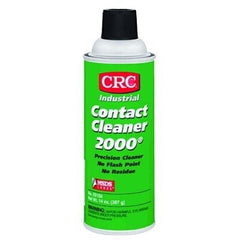

Crc Industries 1003418 Contact Cleaner 2000 16 Oz Aerosol

Availability:
In Stock
Ships same day if ordered by 12 pm
- $48.52
- $48.52
- Unit price
- / per
✓
Better Price in Cart
Manufacturer pricing rules prevent us from advertising our discount — no account or email required to see it.
-
Secure Payments
-
Easy Returns
-
Expert Advice
-
Fast Shipping
Product Description
The CRC INDUSTRIES 1003418 Contact Cleaner 2000 is a fast-evaporating solvent cleaner formulated to remove contaminants from electrical and electronic contacts. It targets dirt, dust, flux, and oxides that cause degraded conductivity and unreliable performance in electrical systems. The formula leaves no residue after evaporation, eliminating the need for a secondary cleaning step. VOC content is 57.5% and the propellant is HFC. Packaged in a 16 oz aerosol can, it delivers a precision spray suitable for tight or sensitive areas. Licensed electricians, industrial maintenance technicians, and electronics service professionals are the primary users of this product.
Contact Cleaner 2000 is suited for industrial and commercial electrical maintenance applications. Typical use cases include cleaning busbars, circuit breakers, electrical contacts, and edge connectors where contamination buildup leads to voltage drop, arcing, or intermittent connection faults. The aerosol delivery makes it practical for in-place cleaning without full component disassembly. It is safe for use on metal surfaces but should not be applied directly to sensitive or solvent-reactive plastics. It is appropriate for both spot maintenance and scheduled preventive cleaning programs in plant, facility, and field service environments.
Key Features
- Removes dirt, dust, flux, and oxides from electrical contacts and connectors
- Fast-evaporating formula leaves zero residue — no secondary wipe-down required
- HFC propellant with 57.5% VOC content
- Precision aerosol spray in a 16 oz can for controlled application
- Safe for use on metal surfaces including busbars, breakers, and edge connectors
- Not for use on solvent-sensitive plastics
Compatibility
Designed for use on electrical and electronic metal contact surfaces including busbars, circuit breakers, electrical contacts, and edge connectors in industrial and commercial settings.
Installation Notes
Always de-energize and lock out electrical equipment before applying any contact cleaner to live or exposed conductors — follow NFPA 70E arc flash and shock hazard protocols. Allow the solvent to fully evaporate before re-energizing the circuit. Apply in a well-ventilated area and avoid prolonged inhalation of aerosol vapors. Do not spray directly onto plastics or insulation materials that may be reactive to solvent-based cleaners.
Technical Specifications

Complete your install
We pulled together the parts most installs need for this unit, plus a few add-ons worth a look. Check what you need — nothing here blocks checkout.
Loading install accessories...
Add install kit to cart
—
Related Products
- Choosing a selection results in a full page refresh.