


Search
-
HVAC Equipment
-
Ductless Mini Splits
- Ductless Mini Splits
- Shop By Zone
- Shop by BTU
- Shop By Brand
- Components
- Accessories
-
HVAC Parts & Supplies
- HVAC Parts & Supplies
- HVAC Supplies
- HVAC Tools
-
HVAC Replacement Parts
- Blower Housing & Assemblies
- Blower Wheels
- Breakers, Contactors & Disconnects
- Capacitors & Transformers
- Control & Circuit Boards
- Filter Driers & Accumulators
- Gas Valves & Conversion Kits
- Heat Exchangers
- Thermal Expansion Valves (TXV)
- Temperature Controls
- Wall Brackets & Parts
- Miscellaneous Parts
- O-Rings & Gaskets
- Hydronics
- Motors
- Thermostats & Zoning
-
Plumbing
-
Pool
-
Electrical
-
Air Quality
-
Tools & Supplies
-
Door Security & Hardware


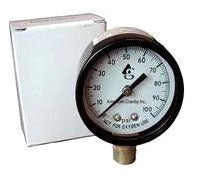
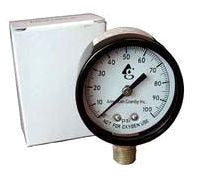
Copeland IPG1002-4LNL Pressure Gauge 100 Psi 2in Lead-free

Availability:
Out Of Stock
- $14.99
- $14.99
- Unit price
- / per
✓
Better Price in Cart
Manufacturer pricing rules prevent us from advertising our discount — no account or email required to see it.
-
Secure Payments
-
Easy Returns
-
Expert Advice
-
Fast Shipping
Product Description
The COPELAND IPG1002-4LNL is a lead-free pressure gauge rated from 0 to 100 PSI, designed for air and water service applications in residential and light commercial plumbing systems. The gauge features a 2-inch dial diameter with a clear dial face and a lower-mount 1/4-inch male NPT connection, making it straightforward to read and install in tight spaces. A phosphor bronze Bourdon tube serves as the sensing element, housed in a stainless steel enclosure built to withstand demanding service environments. Accuracy is rated at plus or minus 3 percent full scale, with plus or minus 2 percent mid-scale accuracy. Licensed plumbers and HVAC technicians regularly specify this gauge for pressure monitoring on water lines, hydronic systems, and compressed air circuits.
This pressure gauge is suited for residential and commercial plumbing and HVAC applications where a compact, reliable pressure-monitoring device is required. Its bottom-entry NPT connection is a common configuration in boiler systems, water supply lines, pump stations, and air compressor outlets. The lead-free construction meets NSF/ANSI 372 requirements, making it appropriate for use in potable water systems where lead-free components are mandated by code. The stainless steel enclosure stands up to moisture and mild chemical exposure common in mechanical room environments.
Key Features
- 0 to 100 PSI operating range with clear dial readout
- 2-inch dial diameter for easy at-a-glance pressure monitoring
- Lead-free construction compliant with NSF/ANSI 372 and applicable potable water standards
- Phosphor bronze Bourdon tube sensing element for reliable, repeatable readings
- Stainless steel enclosure for corrosion resistance in wet or humid environments
- 1/4-inch lower-mount male NPT connection for direct inline installation
Compatibility
Designed as an OEM-style replacement or new-installation pressure gauge for plumbing, HVAC hydronic, and compressed air systems requiring a 1/4-inch male NPT bottom-connection gauge rated to 100 PSI.
Installation Notes
Installation should be performed by a licensed plumber or qualified HVAC technician in accordance with applicable local codes and IPC or IFGC requirements. Shut off system pressure and depressurize the line completely before removing an existing gauge or installing a new one. Apply thread sealant or PTFE tape to the male NPT threads before installation — do not overtighten, as this can crack the gauge body or distort the socket. Verify zero reading before pressurizing the system and confirm no leaks are present at the connection point.
Technical Specifications

Complete your install
We pulled together the parts most installs need for this unit, plus a few add-ons worth a look. Check what you need — nothing here blocks checkout.
Loading install accessories...
Add install kit to cart
—
Related Products
- Choosing a selection results in a full page refresh.