


Search
-
HVAC Equipment
-
Ductless Mini Splits
- Ductless Mini Splits
- Shop By Zone
- Shop by BTU
- Shop By Brand
- Components
- Accessories
-
HVAC Parts & Supplies
- HVAC Parts & Supplies
- HVAC Supplies
- HVAC Tools
-
HVAC Replacement Parts
- Blower Housing & Assemblies
- Blower Wheels
- Breakers, Contactors & Disconnects
- Capacitors & Transformers
- Control & Circuit Boards
- Filter Driers & Accumulators
- Gas Valves & Conversion Kits
- Heat Exchangers
- Thermal Expansion Valves (TXV)
- Temperature Controls
- Wall Brackets & Parts
- Miscellaneous Parts
- O-Rings & Gaskets
- Hydronics
- Motors
- Thermostats & Zoning
-
Plumbing
-
Pool
-
Electrical
-
Air Quality
-
Tools & Supplies
-
Door Security & Hardware


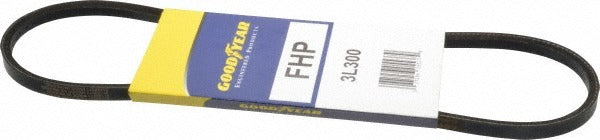

Continental Contitech 20042698 Cogged V-belt 3L 30 in
Availability:
In Stock

Ships same day if ordered by 12 pm
- $15.42
- $15.42
- Unit price
- / per
✓
Better Price in Cart
Manufacturer pricing rules prevent us from advertising our discount — no account or email required to see it.
-
Secure Payments
-
Easy Returns
-
Expert Advice
-
Fast Shipping
Product Description
The CONTINENTAL CONTITECH 20042698 is a fractional horsepower cogged V-belt designed for light-duty power transmission in HVAC, agricultural, and general industrial applications. Built from high-traction rubber, this belt runs in the 3L section profile with a 30-inch outside length and a 29.30-inch internal length. The cogged construction reduces bending resistance and heat buildup, improving efficiency over standard wrapped belts. Rated for operating temperatures from -40 degrees F to 284 degrees F (140 degrees C), it handles demanding environments without cracking or glazing. Installation is handled by HVAC technicians, equipment mechanics, and facilities maintenance professionals.
This belt fits fractional horsepower drives commonly found in residential and light commercial HVAC blower assemblies, fan drives, small compressors, and general power transmission equipment using the 3L belt section. Its abrasion-resistant and ozone-resistant compound makes it suitable for both indoor and outdoor installations where belt degradation from environmental exposure is a concern. The belt number 3L300 is an industry-standard designation and may be used to cross-reference compatible sheave and pulley pairings.
Key Features
- Cogged design reduces flexing resistance and heat generation compared to wrapped V-belts
- High-traction rubber compound resists abrasion and ozone degradation
- Wide operating temperature range: -40 degrees C to 140 degrees C
- Standard 3L section profile for fractional horsepower drive systems
- 30-inch outside length with 29.30-inch internal length for precise drive alignment
Compatibility
Designed as an OEM-style replacement for fractional horsepower V-belt drives using the 3L section profile. Industry belt designation 3L300 may be used to cross-reference matching sheaves and pulleys.
Installation Notes
Power down and lock out the equipment before replacing any drive belt. Loosen the drive motor or idler to release tension before removing the old belt — never pry a V-belt over a sheave flange, as this damages the cord structure. Re-tension the replacement belt to the drive manufacturer's deflection specification after installation, then recheck tension after the first few hours of operation. Belt installation on HVAC blower assemblies should follow manufacturer service procedures and applicable equipment codes.
Technical Specifications

Complete your install
We pulled together the parts most installs need for this unit, plus a few add-ons worth a look. Check what you need — nothing here blocks checkout.
Loading install accessories...
Add install kit to cart
—
Related Products
- Choosing a selection results in a full page refresh.