


Search
-
HVAC Equipment
-
Ductless Mini Splits
- Ductless Mini Splits
- Shop By Zone
- Shop by BTU
- Shop By Brand
- Components
- Accessories
-
HVAC Parts & Supplies
- HVAC Parts & Supplies
- HVAC Supplies
- HVAC Tools
-
HVAC Replacement Parts
- Blower Housing & Assemblies
- Blower Wheels
- Breakers, Contactors & Disconnects
- Capacitors & Transformers
- Control & Circuit Boards
- Filter Driers & Accumulators
- Gas Valves & Conversion Kits
- Heat Exchangers
- Thermal Expansion Valves (TXV)
- Temperature Controls
- Wall Brackets & Parts
- Miscellaneous Parts
- O-Rings & Gaskets
- Hydronics
- Motors
- Thermostats & Zoning
-
Plumbing
-
Pool
-
Electrical
-
Air Quality
-
Tools & Supplies
-
Door Security & Hardware


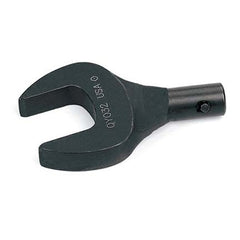
Cdi Torque TCQYO72 Torque Wrench Head 2-1/4 in Open End Sae
Ships in 4 - 5 Weeks
- $430.25
- $430.25
- Unit price
- / per
✓
Better Price in Cart
Manufacturer pricing rules prevent us from advertising our discount — no account or email required to see it.

Secure Payments
-
Easy Returns
-
Expert Advice
-
Fast Shipping
Product Description
The CDI TORQUE TCQYO72 is an open-end torque wrench head designed for high-torque fastening applications where a standard torque wrench cannot reach. Sized at 2-1/4 inches, it features a Y-type shank with a 0.560-inch shank diameter and delivers a maximum torque output of 160 ft-lb. The center-of-fastener to retaining pin distance measures 3 inches, which is critical for calculating the corrected torque value when using the head in combination with a torque wrench handle. Mechanics, HVAC technicians, and industrial service techs rely on this type of crowfoot-style head for tight-clearance fastener work on flanges, fittings, and large-diameter nuts.
This torque wrench head is suited for professional service work requiring precise torque application on large SAE fasteners. Typical applications include flanged pipe fittings, compressor service, large equipment assemblies, and any situation where direct socket access is obstructed. It is sold as an individual head and pairs with a standard torque wrench handle using a compatible Y-type shank connection. SAE measurement type makes it appropriate for inch-standard fastener work common in domestic HVAC, plumbing, and mechanical equipment.
Key Features
- 2-1/4 inch open-end head size for large SAE fasteners
- Maximum torque rating of 160 ft-lb
- Y-type shank with 0.560-inch shank diameter for torque wrench compatibility
- Center-of-fastener to retaining pin distance of 3 inches for accurate torque correction calculations
- SAE measurement type for inch-standard fastener applications
- Compact profile allows access in restricted or obstructed fastener locations
Compatibility
Designed for use with torque wrench handles accepting a Y-type shank with a 0.560-inch shank diameter. Verify shank size and type compatibility with the torque wrench handle before use.
Installation Notes
This head is installed by a qualified mechanic or service technician familiar with torque wrench head correction factor calculations. When using an offset torque wrench head, the effective torque applied to the fastener differs from the wrench handle reading — always calculate the corrected torque setting using the measured center-of-fastener to retaining pin distance before tightening. Ensure the fastener and mating surfaces are clean and free of debris before applying torque. Follow all applicable equipment manufacturer torque specifications and relevant industry service codes.
Technical Specifications

Complete your install
We pulled together the parts most installs need for this unit, plus a few add-ons worth a look. Check what you need — nothing here blocks checkout.
Loading install accessories...
Add install kit to cart
—
Related Products
- Choosing a selection results in a full page refresh.