


Search
-
HVAC Equipment
-
Ductless Mini Splits
- Ductless Mini Splits
- Shop By Zone
- Shop by BTU
- Shop By Brand
- Components
- Accessories
-
HVAC Parts & Supplies
- HVAC Parts & Supplies
- HVAC Supplies
- HVAC Tools
-
HVAC Replacement Parts
- Blower Housing & Assemblies
- Blower Wheels
- Breakers, Contactors & Disconnects
- Capacitors & Transformers
- Control & Circuit Boards
- Filter Driers & Accumulators
- Gas Valves & Conversion Kits
- Heat Exchangers
- Thermal Expansion Valves (TXV)
- Temperature Controls
- Wall Brackets & Parts
- Miscellaneous Parts
- O-Rings & Gaskets
- Hydronics
- Motors
- Thermostats & Zoning
-
Plumbing
-
Pool
-
Electrical
-
Air Quality
-
Tools & Supplies
-
Door Security & Hardware


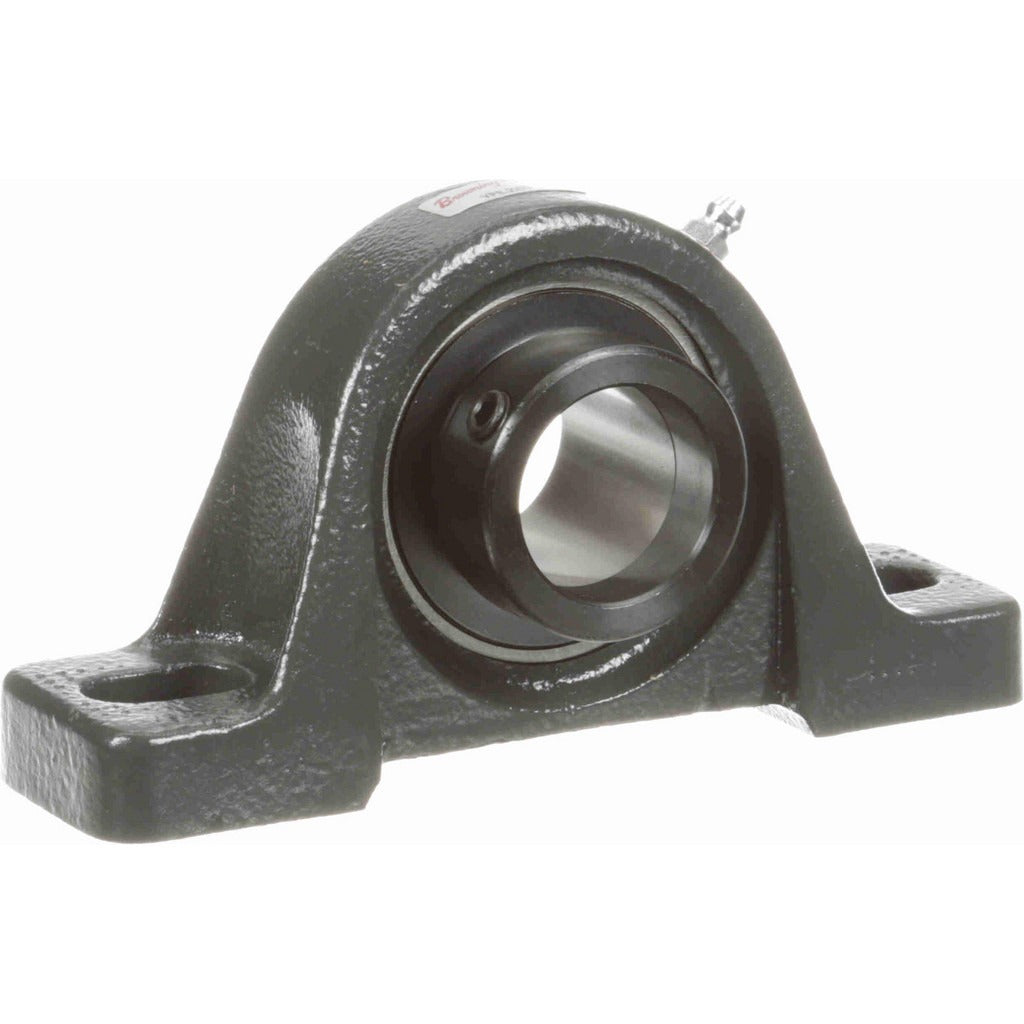
Browning 767637 Pillow Block Bearing 1-1/4 Inch Id

Availability:
Out Of Stock
- $301.11
- $301.11
- Unit price
- / per
✓
Better Price in Cart
Manufacturer pricing rules prevent us from advertising our discount — no account or email required to see it.
-
Secure Payments
-
Easy Returns
-
Expert Advice
-
Fast Shipping
Product Description
The BROWNING 767637 is a VPE 200 series pillow block bearing designed for industrial power transmission applications. It features a 1-1/4 inch straight bore with an eccentric lock collar and a cast iron housing that provides rigidity and resistance to wear in demanding operating environments. The bearing insert is manufactured from 52100 bearing steel, a high-carbon chromium alloy widely used for its fatigue and load resistance. With a static load capacity of 2,567 pounds and a dynamic load capacity of 4,381 pounds, this unit is suited for moderate-to-heavy radial loads. Licensed HVAC and mechanical contractors, millwrights, and industrial maintenance technicians are the primary installers of this bearing type.
The 767637 pillow block is used in industrial and commercial mechanical systems where a shaft-mounted bearing support is required. Typical applications include conveyor drives, fan shaft supports, pump assemblies, and general power transmission equipment. The two-bolt mounting pattern with 4-5/8 inch center-to-center spacing simplifies retrofit installations on existing equipment bases. The unit measures 6-3/16 inches in overall length and 3-9/32 inches in overall height, making it compatible with standard machinery frames that accept VPE 200 series footprints. Maximum operating speed is rated at 4,500 RPM.
Key Features
- 1-1/4 inch straight bore with eccentric locking collar for positive shaft retention
- 52100 bearing steel insert rated to 4,381 pounds dynamic load capacity
- Cast iron housing for structural rigidity in industrial environments
- Two-bolt base with 4-5/8 inch mounting hole center-to-center spacing
- Maximum rated speed of 4,500 RPM
- VPE 200 series design for straightforward OEM and retrofit replacement
Compatibility
Designed as an OEM-style replacement pillow block bearing for industrial and commercial machinery requiring a two-bolt, 1-1/4 inch bore unit within the VPE 200 series footprint.
Installation Notes
Installation is typically performed by millwrights or mechanical maintenance technicians. Before servicing, de-energize all connected drive equipment and follow applicable lockout/tagout procedures in accordance with OSHA 29 CFR 1910.147. Ensure the mounting surface is flat and clean before torquing bolts to avoid housing distortion. The eccentric collar should be locked in the direction of shaft rotation; do not over-drive the locking collar with impact tools.
Technical Specifications

Complete your install
We pulled together the parts most installs need for this unit, plus a few add-ons worth a look. Check what you need — nothing here blocks checkout.
Loading install accessories...
Add install kit to cart
—
Related Products
- Choosing a selection results in a full page refresh.