


Search
-
HVAC Equipment
-
Ductless Mini Splits
- Ductless Mini Splits
- Shop By Zone
- Shop by BTU
- Shop By Brand
- Components
- Accessories
-
HVAC Parts & Supplies
- HVAC Parts & Supplies
- HVAC Supplies
- HVAC Tools
-
HVAC Replacement Parts
- Blower Housing & Assemblies
- Blower Wheels
- Breakers, Contactors & Disconnects
- Capacitors & Transformers
- Control & Circuit Boards
- Filter Driers & Accumulators
- Gas Valves & Conversion Kits
- Heat Exchangers
- Thermal Expansion Valves (TXV)
- Temperature Controls
- Wall Brackets & Parts
- Miscellaneous Parts
- O-Rings & Gaskets
- Hydronics
- Motors
- Thermostats & Zoning
-
Plumbing
-
Pool
-
Electrical
-
Air Quality
-
Tools & Supplies
-
Door Security & Hardware


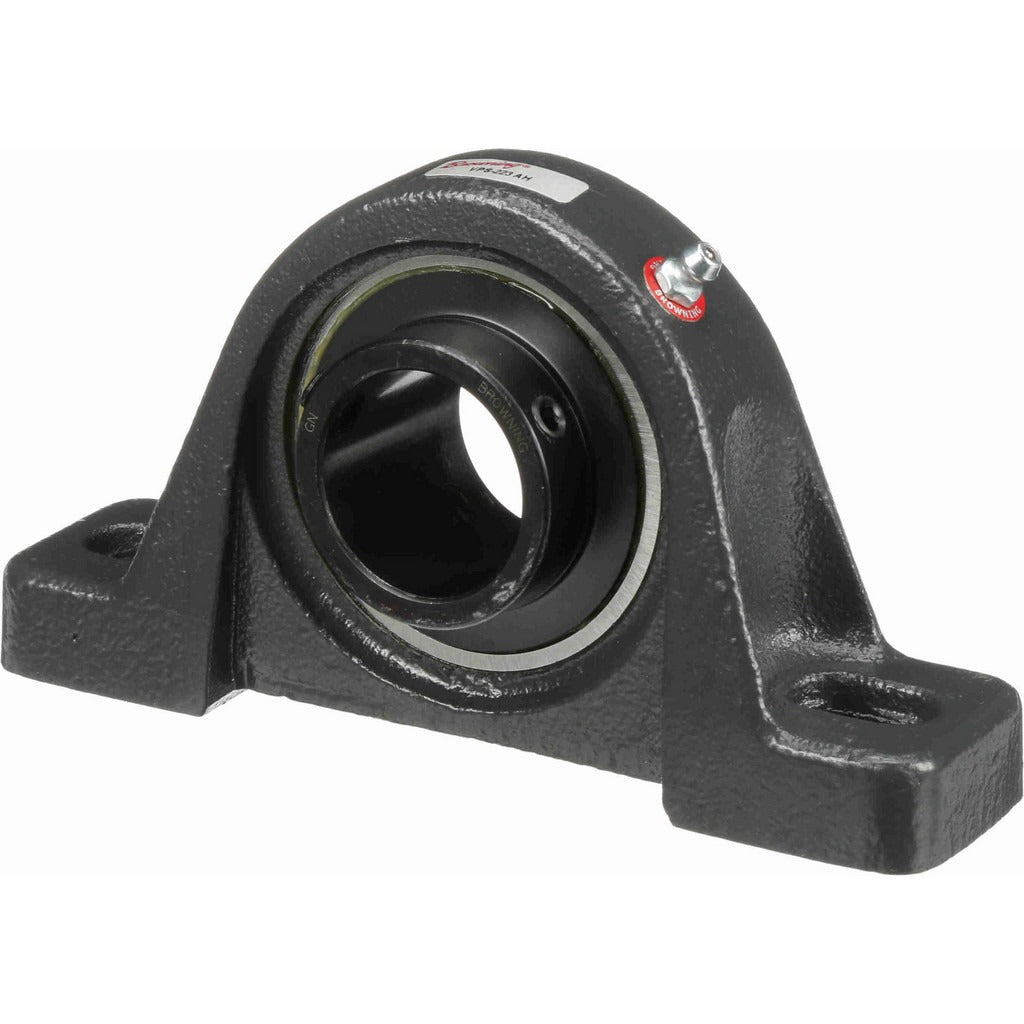
Browning 765811 Pillow Block Bearing 1-7/16 in Air Handling

Availability:
In Stock
Ships same day if ordered by 12 pm
- $176.72
- $176.72
- Unit price
- / per
✓
Better Price in Cart
Manufacturer pricing rules prevent us from advertising our discount — no account or email required to see it.
-
Secure Payments
-
Easy Returns
-
Expert Advice
-
Fast Shipping
Product Description
The BROWNING 765811 is a two-bolt pillow block bearing designed for air handling applications in commercial and industrial HVAC systems. Built around a 1-7/16 inch bore, this unit houses a 52100 bearing steel ball insert secured by a set screw lock type. The cast iron housing delivers the structural rigidity required in fan shaft and blower wheel assemblies. Static load capacity is rated at 3,493 pounds and dynamic load capacity at 5,782 pounds, making it well-suited for continuous-duty fan and blower service. Maximum speed is rated at 4,000 RPM. Mechanical contractors and HVAC technicians install this bearing during new equipment builds and replacement service on air handling units.
This pillow block bearing is used in air handling units, fan coil assemblies, centrifugal blowers, and similar rotating equipment found in commercial and light industrial settings. The straight bore and set screw locking design accommodate standard-diameter fan shafts and allow for straightforward shaft positioning during installation. The VPS 200 series construction is engineered for the vibration and load cycles typical of air handling fan applications. Contractors replacing worn or failed bearings on AHU fan decks will find the mounting footprint and bore size directly relevant to common shaft configurations in this class of equipment.
Key Features
- 1-7/16 inch straight bore with set screw lock for secure shaft retention
- 52100 bearing steel ball insert for long service life under continuous load
- Cast iron housing for rigidity and vibration resistance in fan applications
- Static load capacity of 3,493 pounds and dynamic load capacity of 5,782 pounds
- 4,000 RPM maximum speed rating suitable for AHU fan and blower service
- Two-bolt mounting with 5 inch center-to-center hole spacing for straightforward installation
Compatibility
Designed as an OEM-style replacement pillow block bearing for two-bolt air handling fan shaft applications requiring a 1-7/16 inch bore and 5 inch bolt hole center-to-center spacing.
Installation Notes
Installation should be performed by a licensed mechanical contractor or qualified HVAC technician. De-energize and lock out the fan motor and disconnect all power before removing the existing bearing or working on the shaft assembly. Ensure the shaft and housing mounting surfaces are clean and free of debris before seating the bearing. Set screws should be tightened to the shaft per the manufacturer torque specification on the bearing insert documentation; do not over-tighten in a way that deforms the shaft.
Technical Specifications

Complete your install
We pulled together the parts most installs need for this unit, plus a few add-ons worth a look. Check what you need — nothing here blocks checkout.
Loading install accessories...
Add install kit to cart
—
Related Products
- Choosing a selection results in a full page refresh.