


Search
-
HVAC Equipment
-
Ductless Mini Splits
- Ductless Mini Splits
- Shop By Zone
- Shop by BTU
- Shop By Brand
- Components
- Accessories
-
HVAC Parts & Supplies
- HVAC Parts & Supplies
- HVAC Supplies
- HVAC Tools
-
HVAC Replacement Parts
- Blower Housing & Assemblies
- Blower Wheels
- Breakers, Contactors & Disconnects
- Capacitors & Transformers
- Control & Circuit Boards
- Filter Driers & Accumulators
- Gas Valves & Conversion Kits
- Heat Exchangers
- Thermal Expansion Valves (TXV)
- Temperature Controls
- Wall Brackets & Parts
- Miscellaneous Parts
- O-Rings & Gaskets
- Hydronics
- Motors
- Thermostats & Zoning
-
Plumbing
-
Pool
-
Electrical
-
Air Quality
-
Tools & Supplies
-
Door Security & Hardware


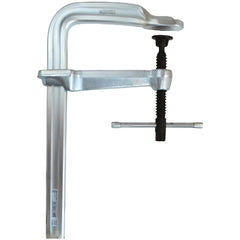
Bessey STB-12 Sliding Arm Bar Clamp 12 in F-style
Availability:
Out Of Stock
- $246.15
- $246.15
- Unit price
- / per
✓
Better Price in Cart
Manufacturer pricing rules prevent us from advertising our discount — no account or email required to see it.

Secure Payments
-
Easy Returns
-
Expert Advice
-
Fast Shipping
Product Description
The BESSEY STB-12 is an F-style sliding arm bar clamp rated for a maximum clamping capacity of 12 inches and a throat depth of 7 inches. It delivers 4,880 pounds of clamping pressure through a 0.85-inch diameter high carbon steel spindle, making it well suited for heavy-duty fabrication, woodworking, and metalworking tasks. The T-handle design gives the operator firm, controlled grip when applying load. The electrogalvanized finish provides corrosion resistance for shop and job-site environments. Weighing 12 pounds, this is a substantial, production-grade tool intended for professional tradespeople and skilled fabricators who need repeatable, high-force clamping.
The STB-12 is used in professional woodworking shops, metal fabrication facilities, and general construction assembly where a wide throat clearance and high clamping force are required. The 7-inch throat depth accommodates thicker workpieces and deeper reach applications. The standard rail profile with a swivel pad allows the clamp to self-adjust to irregular or angled surfaces, reducing workpiece marring during assembly operations. This clamp is a common tool in cabinet shops, structural steel fabrication, and HVAC ductwork assembly jigs where repeatable square clamping is critical.
Key Features
- F-style sliding arm design with 12-inch maximum clamping capacity
- 7-inch throat depth for deep-reach clamping on thick or wide workpieces
- 4,880 pounds of clamping pressure for heavy-duty production use
- Forged steel T-handle for controlled, high-torque tightening
- High carbon steel spindle at 0.85 inches in diameter for strength and durability
- Electrogalvanized finish resists corrosion in shop and job-site conditions
- Includes standard rail profile and swivel pad for surface conformance
Compatibility
Designed as a standard F-style bar clamp for use with flat, parallel, or slightly angled workpieces in woodworking, metalworking, and fabrication applications. Part of the BESSEY STB series.
Installation Notes
No power tools or electrical shutoff is required for clamp use; however, confirm the workpiece is stable and supported before applying full clamping load. Avoid overtightening on finished surfaces even with the swivel pad in place, as the heavy-duty steel pads can leave impressions under high pressure. Inspect the spindle threads and sliding arm mechanism periodically for debris or damage that could reduce clamping accuracy. Standard shop-safety practices apply when working with high-force clamping tools.
Technical Specifications

Complete your install
We pulled together the parts most installs need for this unit, plus a few add-ons worth a look. Check what you need — nothing here blocks checkout.
Loading install accessories...
Add install kit to cart
—
Related Products
- Choosing a selection results in a full page refresh.